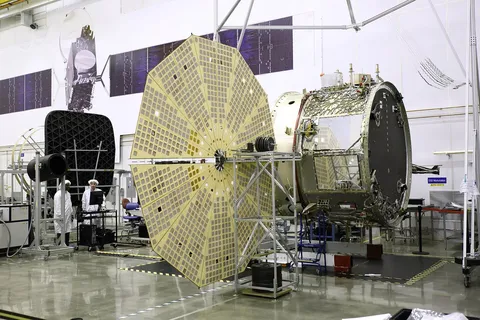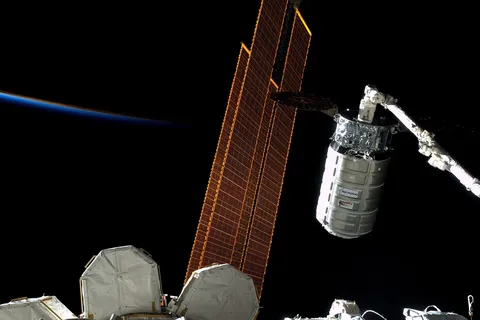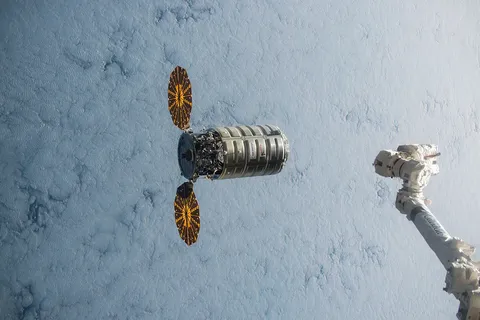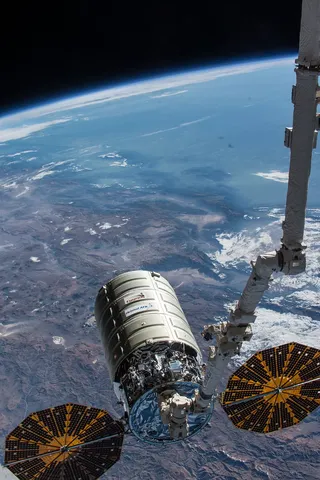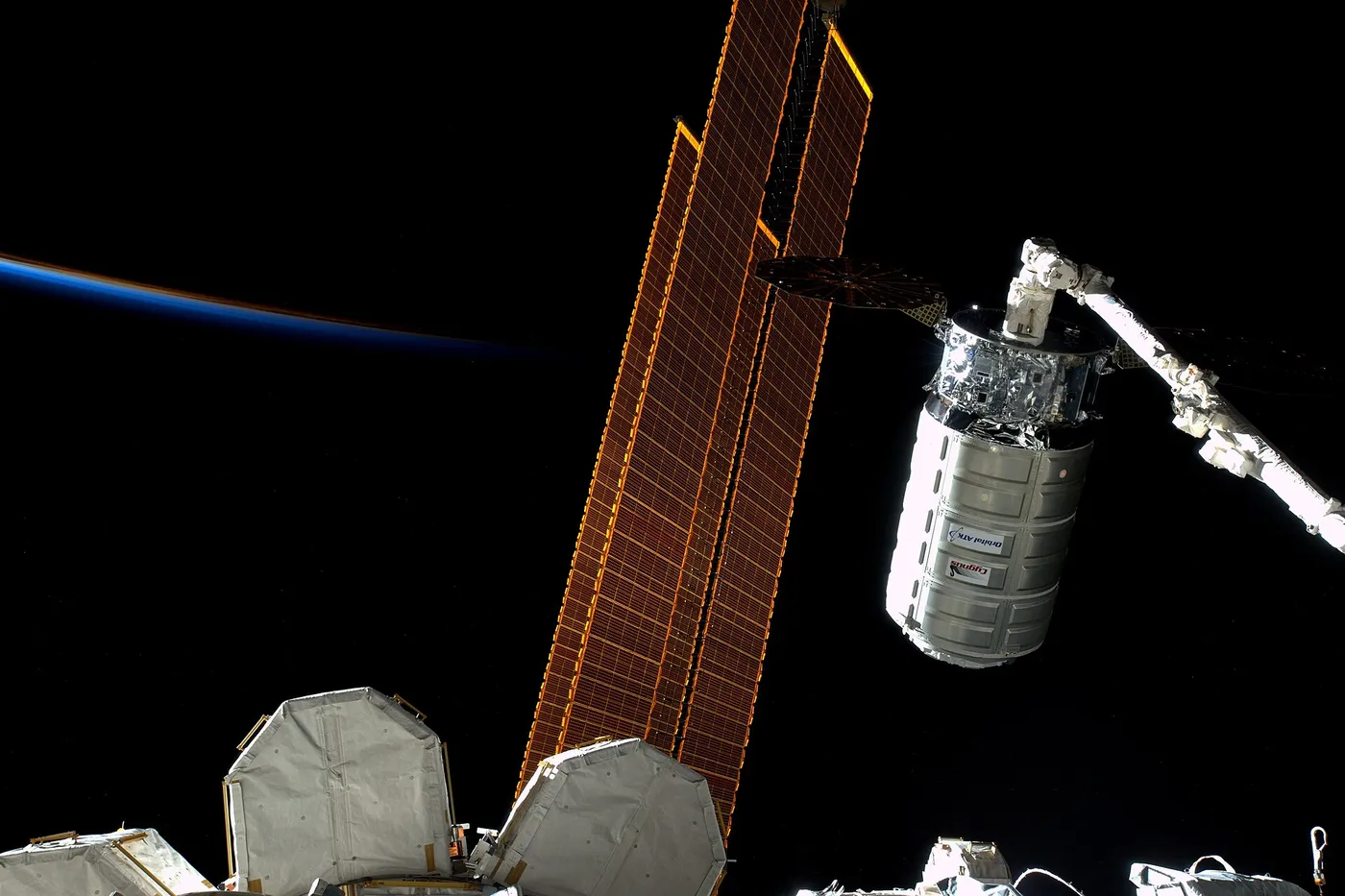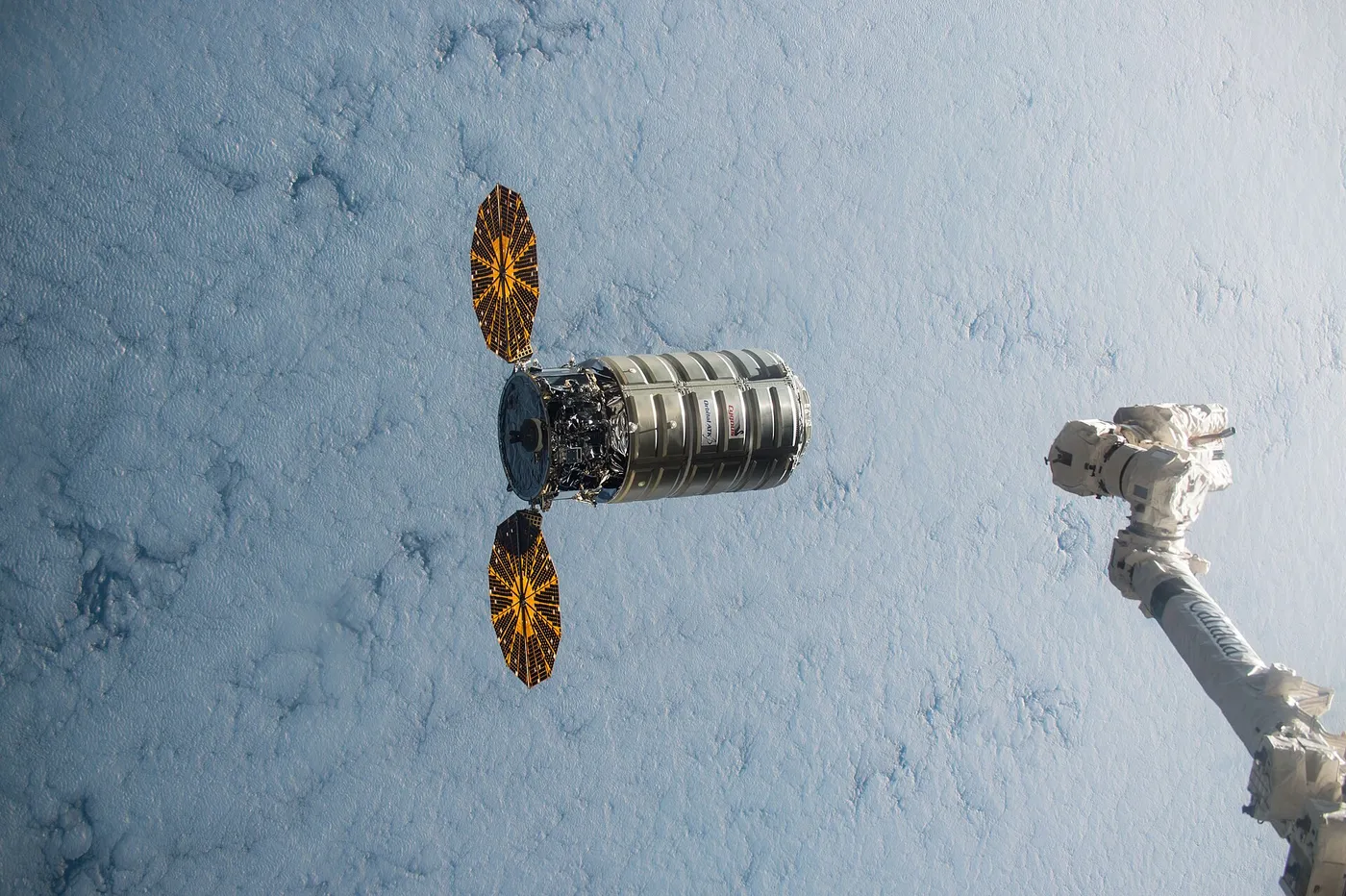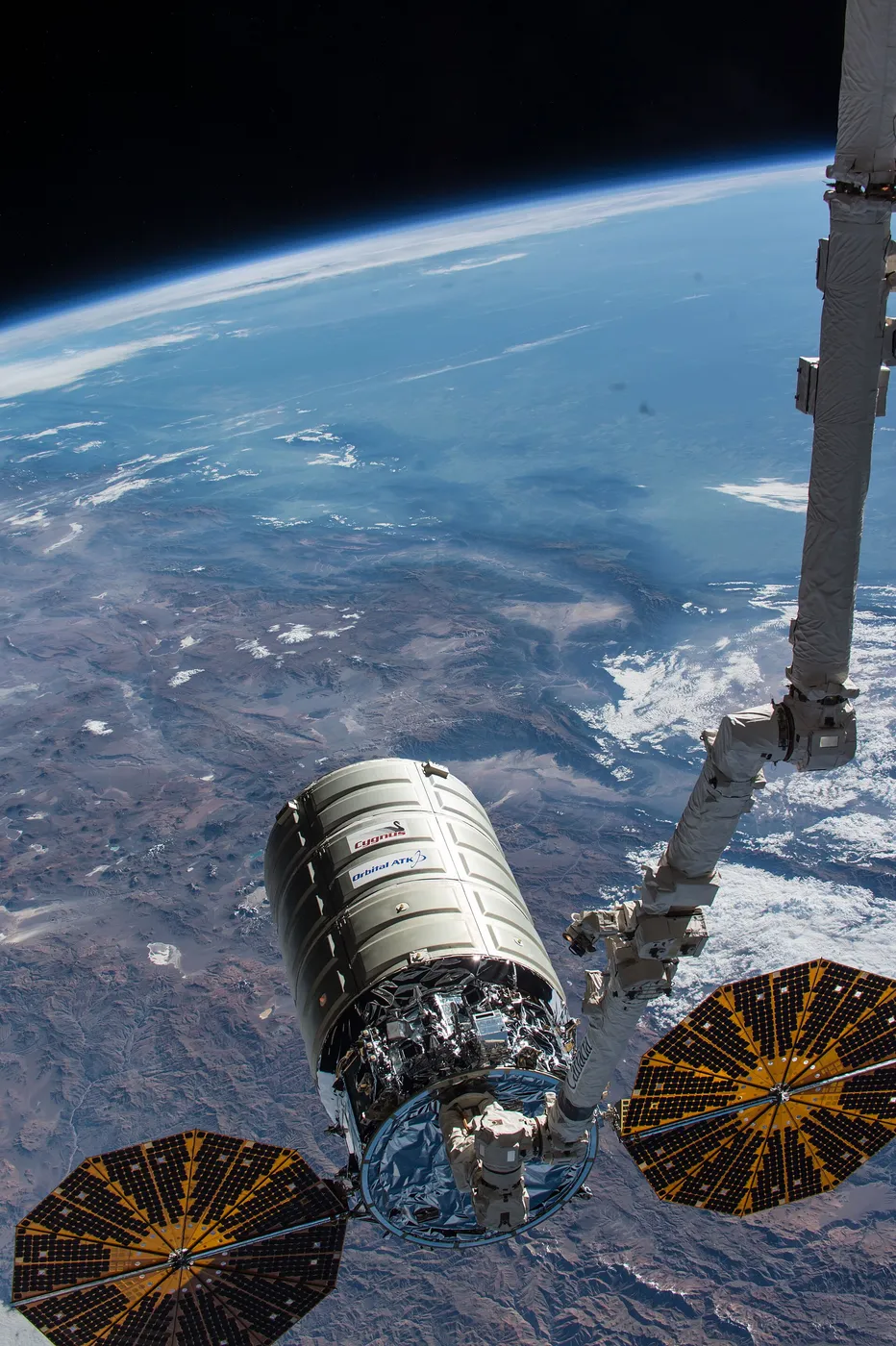

OA-9 was the last flight under the Orbital ATK name. The company was acquired by Northrop Grumman during the mission, and subsequent spacecraft carried the new designation — a corporate transition visible in the mission numbering and nowhere else.
It delivered around 3,300 kilograms including a cold atom laboratory, an instrument that chills atoms to within a fraction of a degree of absolute zero to create Bose-Einstein condensates — a state of matter whose behaviour can be studied for far longer in weightlessness than in any terrestrial laboratory.
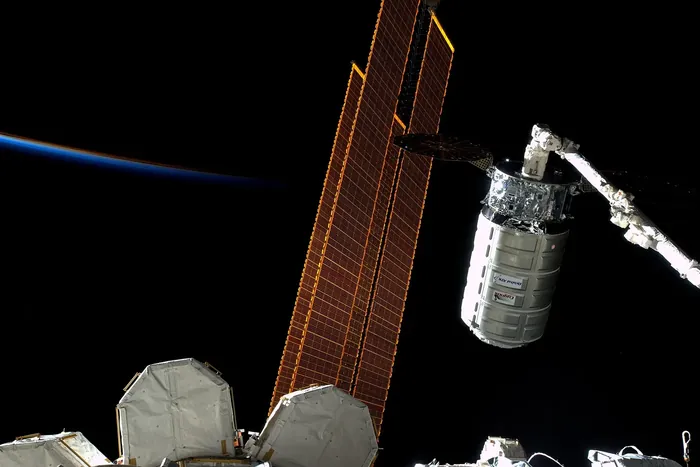
That experiment has since produced results genuinely unobtainable on Earth, where condensates fall out of their traps within milliseconds. In orbit they persist long enough for measurements that were previously impossible.
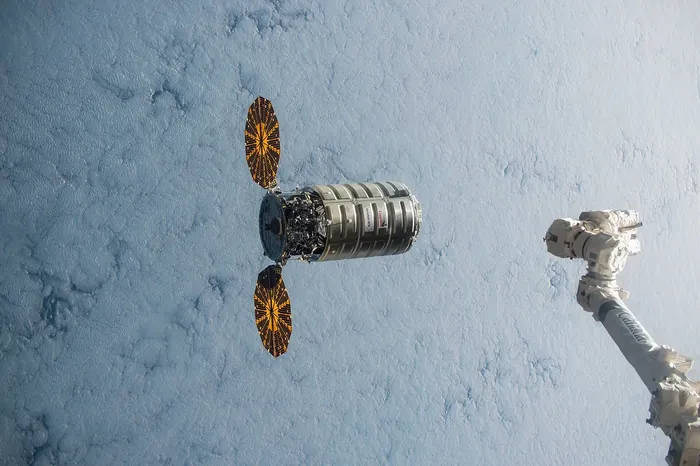
The mission also carried a plant habitat, an experiment on cement curing in microgravity, and a set of CubeSats deployed after departure.
The spacecraft was named for James Peake, a NASA flight director. It remained berthed for two months before departing to conduct a further series of experiments in free flight.