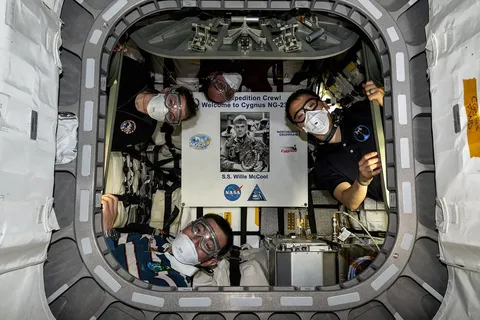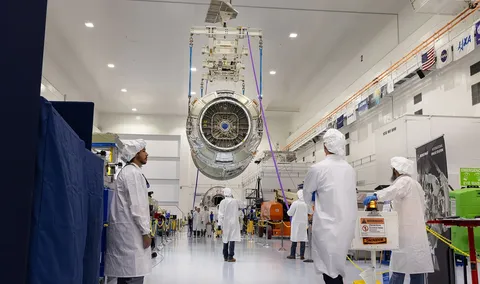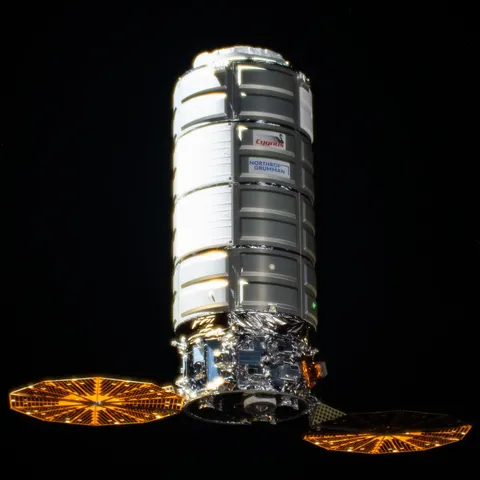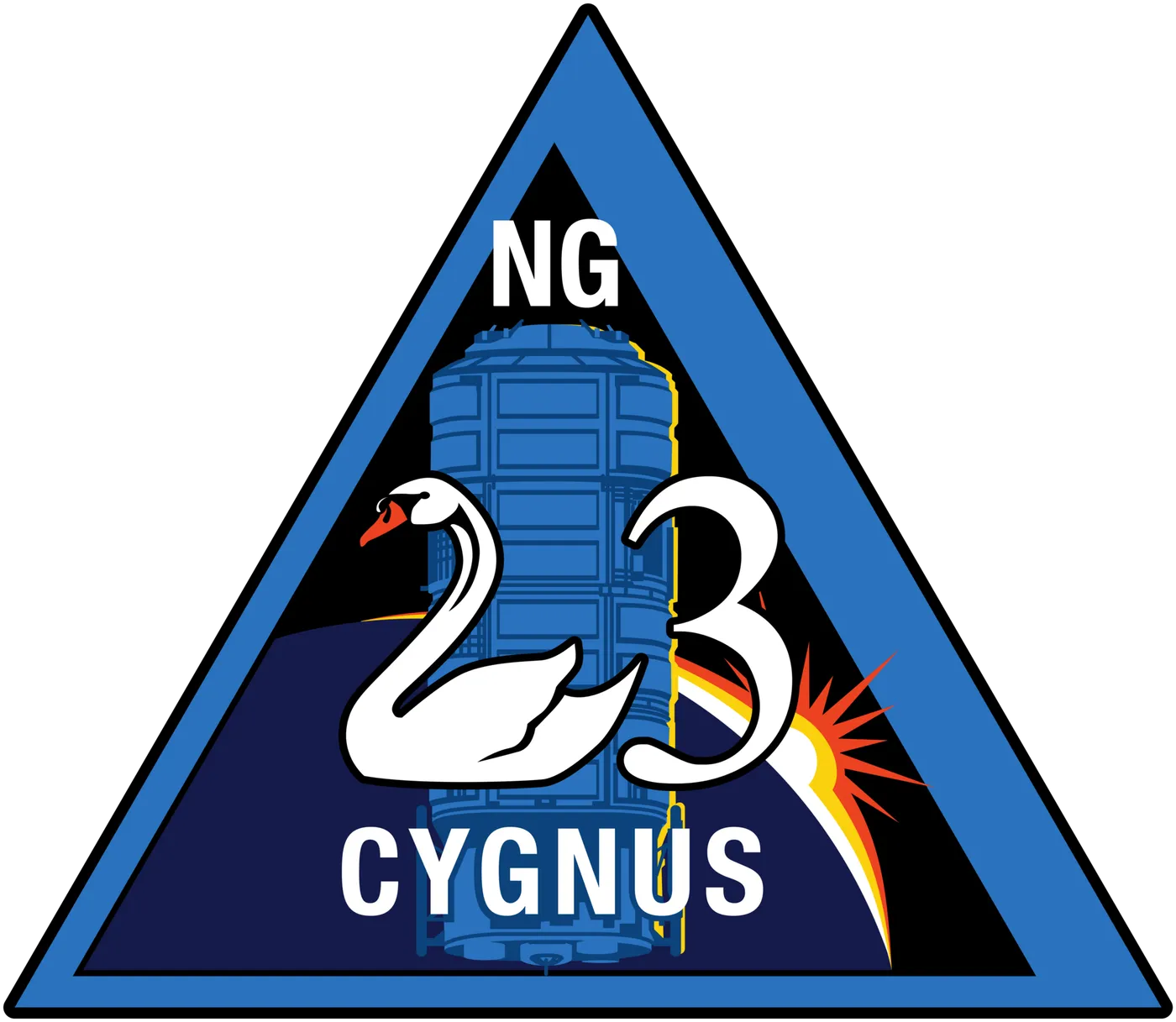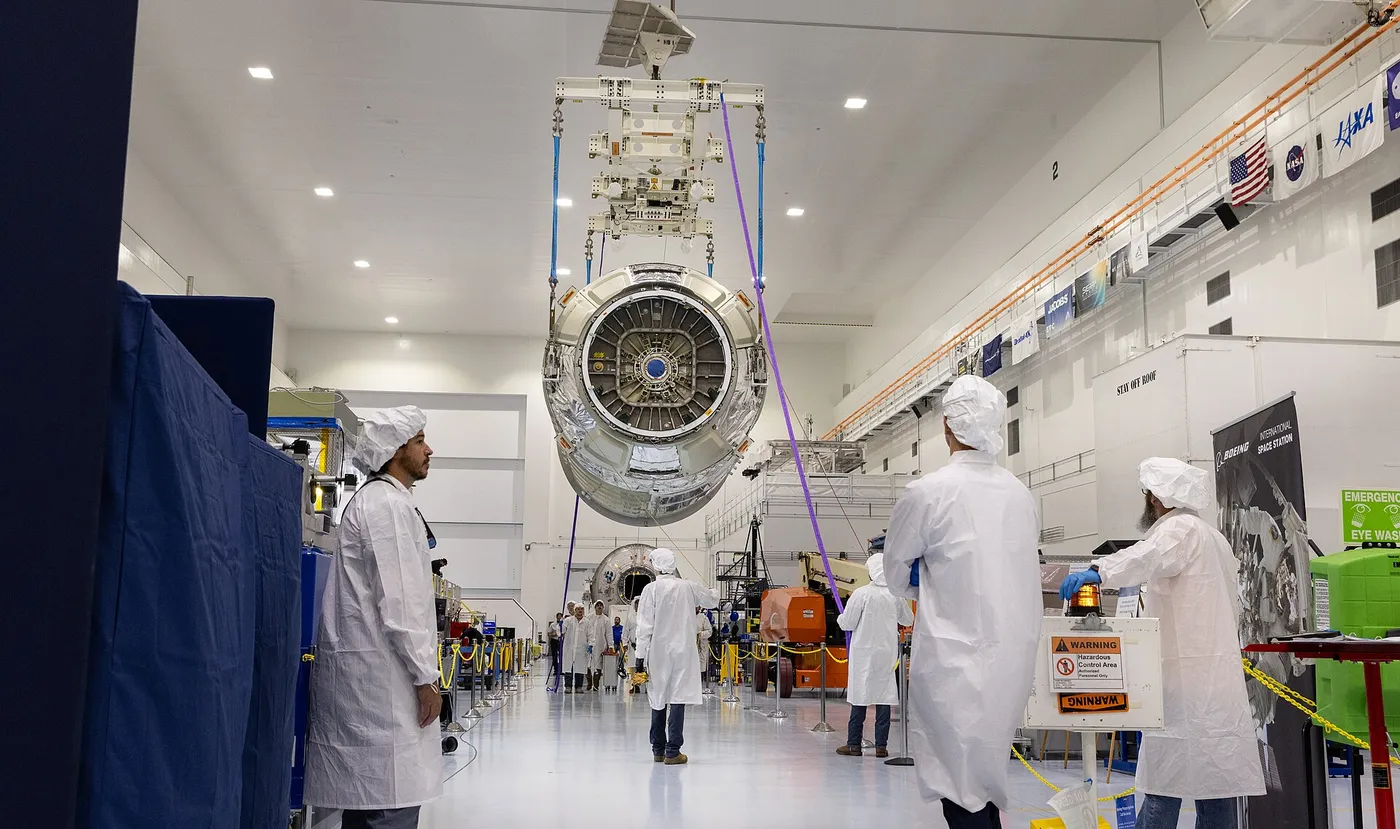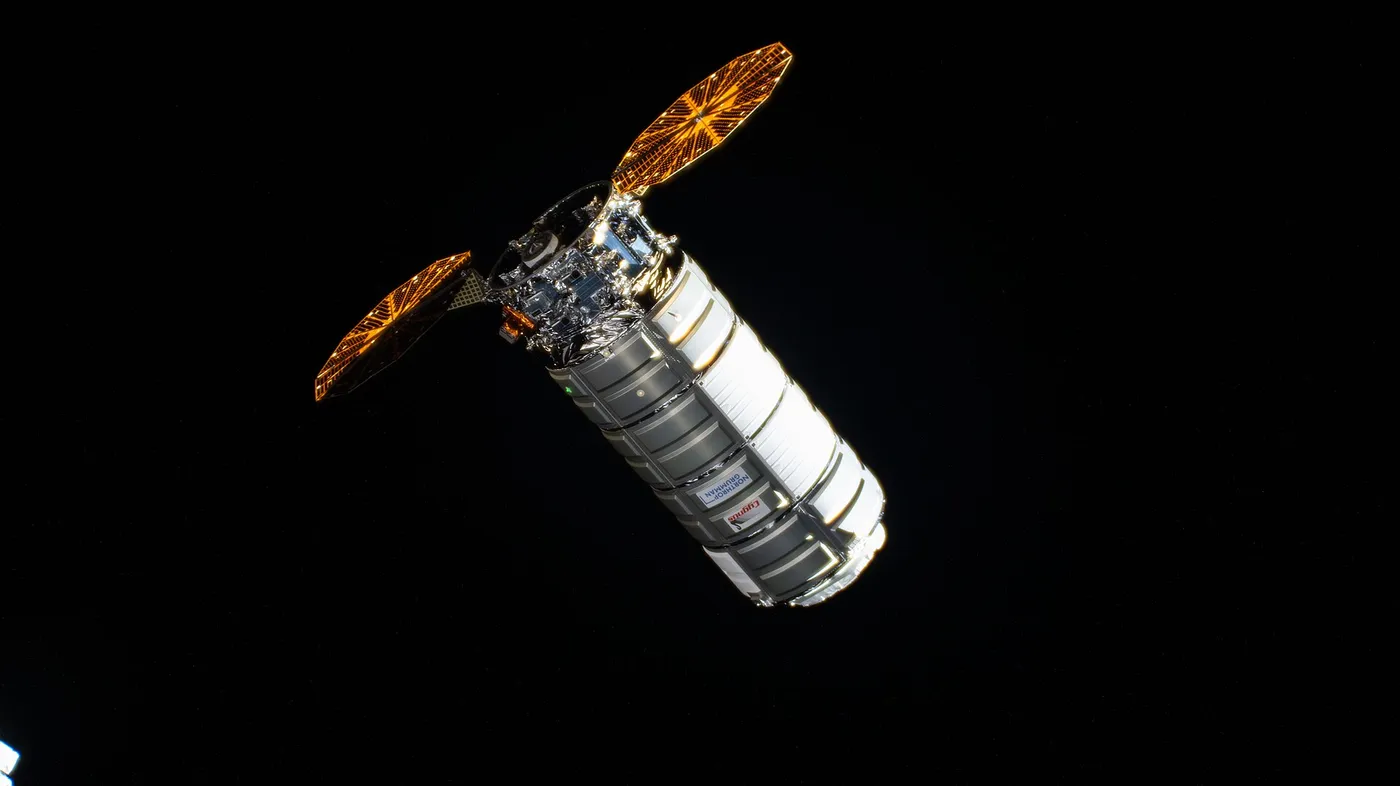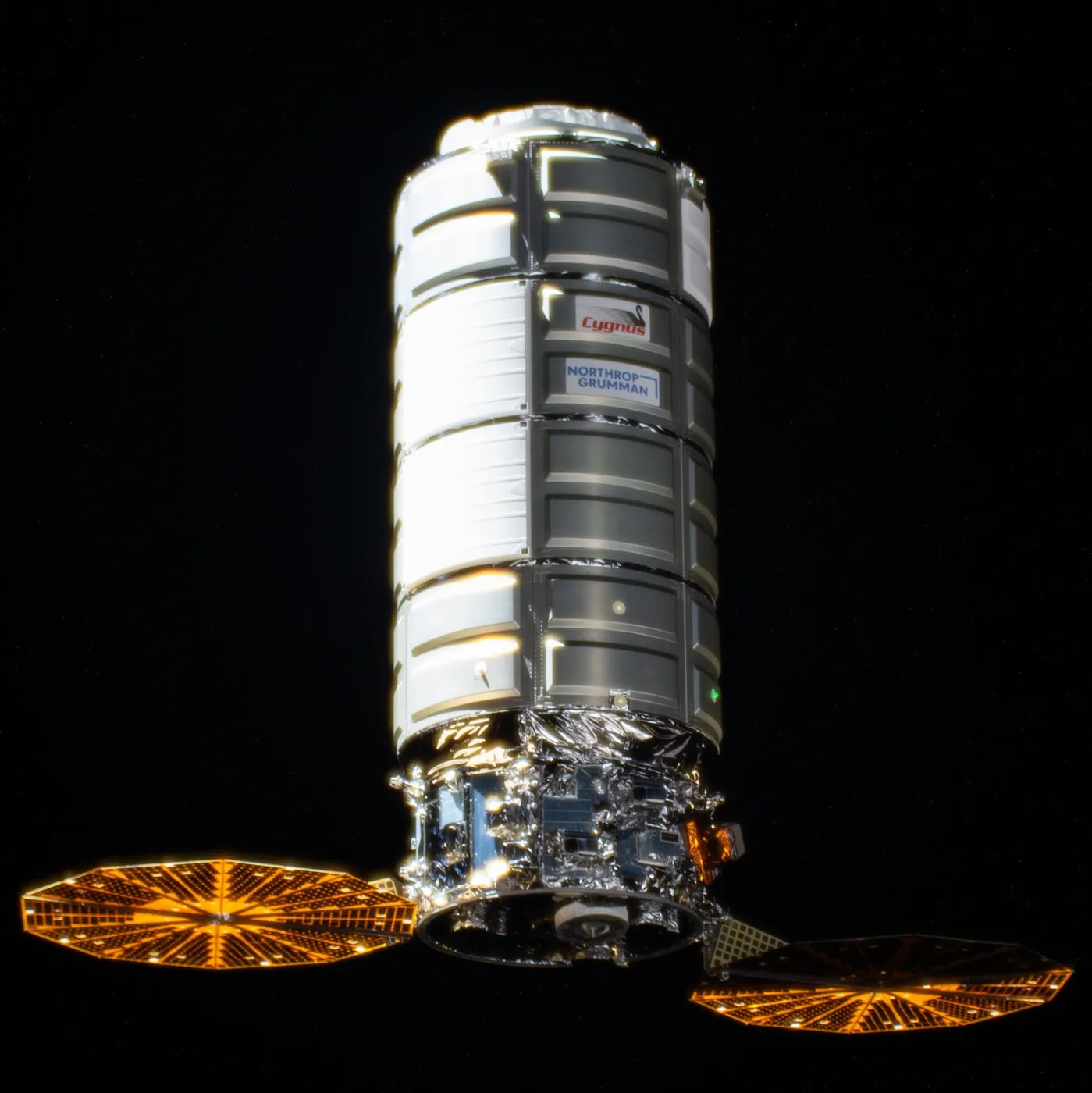
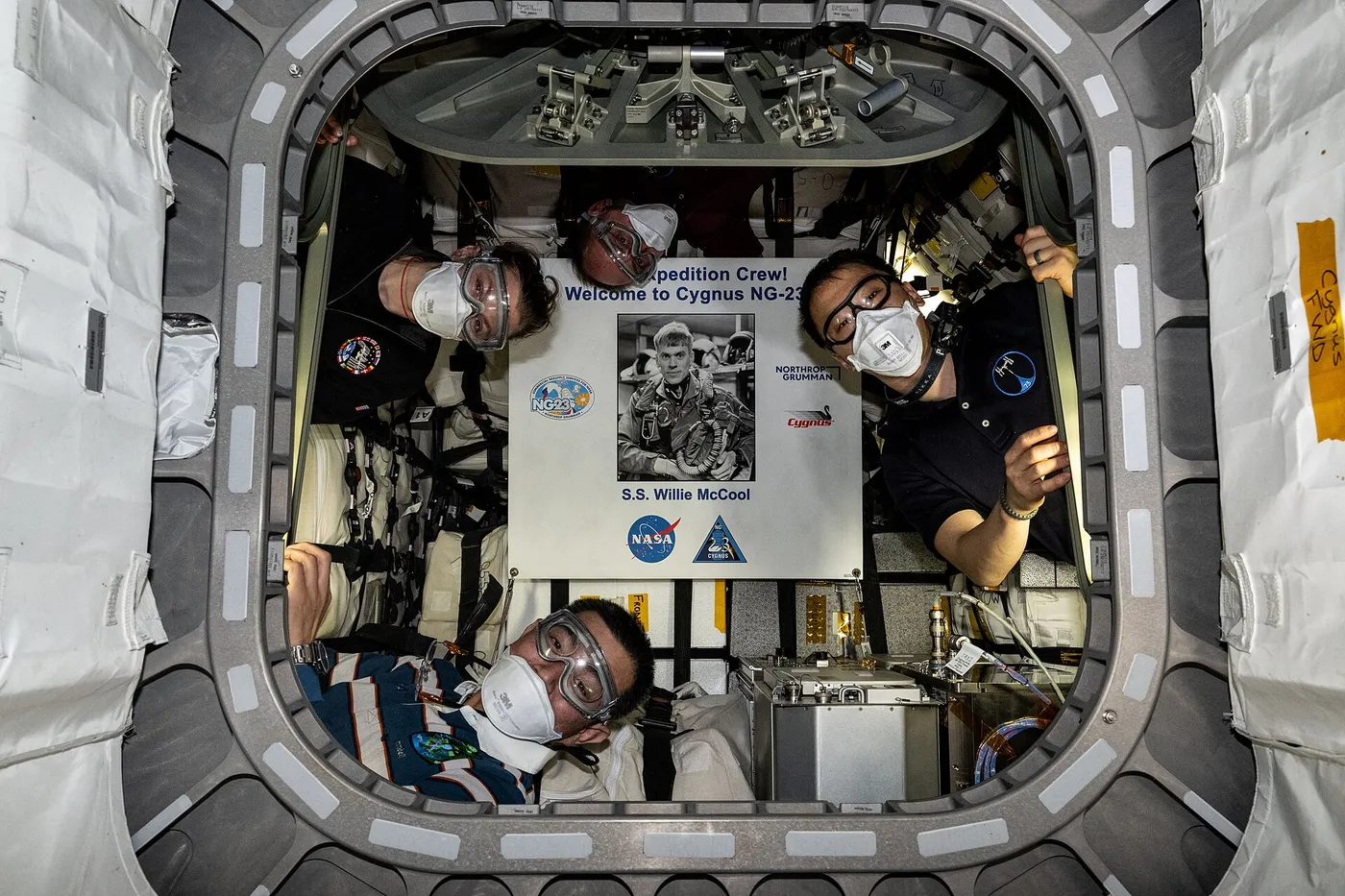

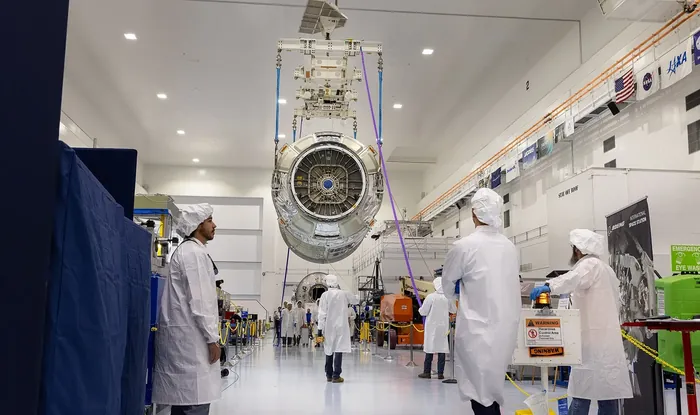
NG-23 followed an unusual gap. The preceding mission was cancelled after its pressurised cargo module was damaged during shipping — a reminder that spacecraft are at risk on roads and in containers as well as on rockets.
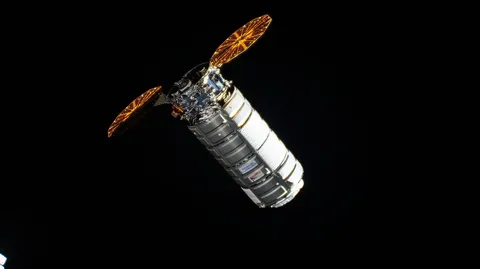
The flight introduced an enlarged version of the spacecraft with substantially greater pressurised volume, delivering around 5,000 kilograms — the heaviest load the vehicle had carried and among the largest single deliveries the station has received.
The additional capacity reflects the station's late-life needs: with operations funded to 2030 and a growing dependence on stockpiled spares, the ability to deliver more per flight reduces the number of launches required.
The cargo included scientific hardware, life-support components and provisions, along with equipment supporting the station's continuing research programme.
It launched on a Falcon 9, the replacement Antares still being in development. The arrangement by which one company's cargo ship rides its competitor's rocket to fulfil a government contract has become an unremarked feature of the industry.