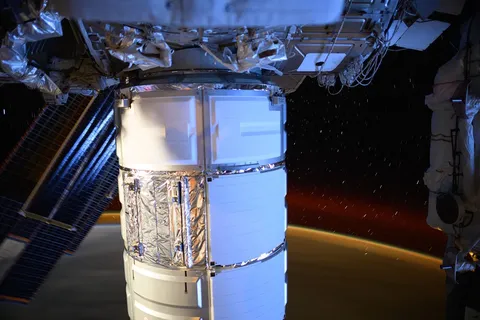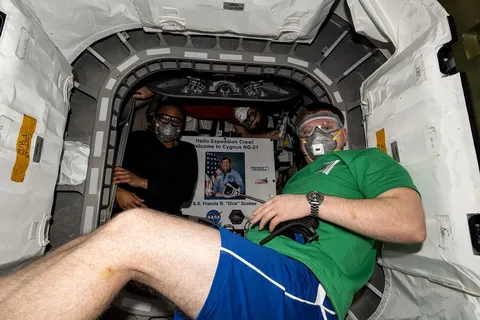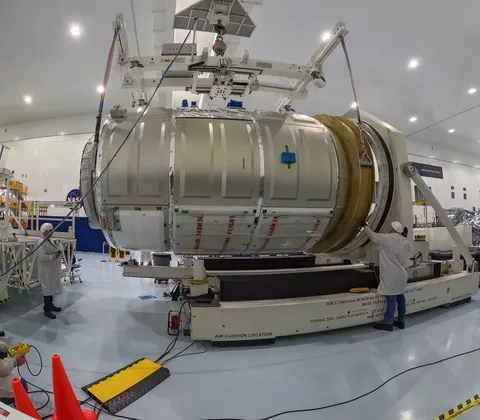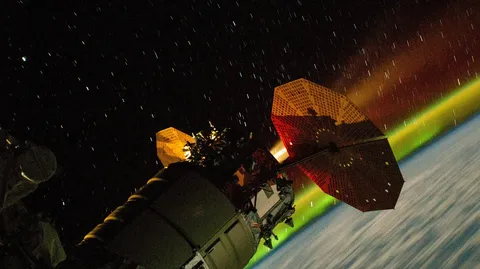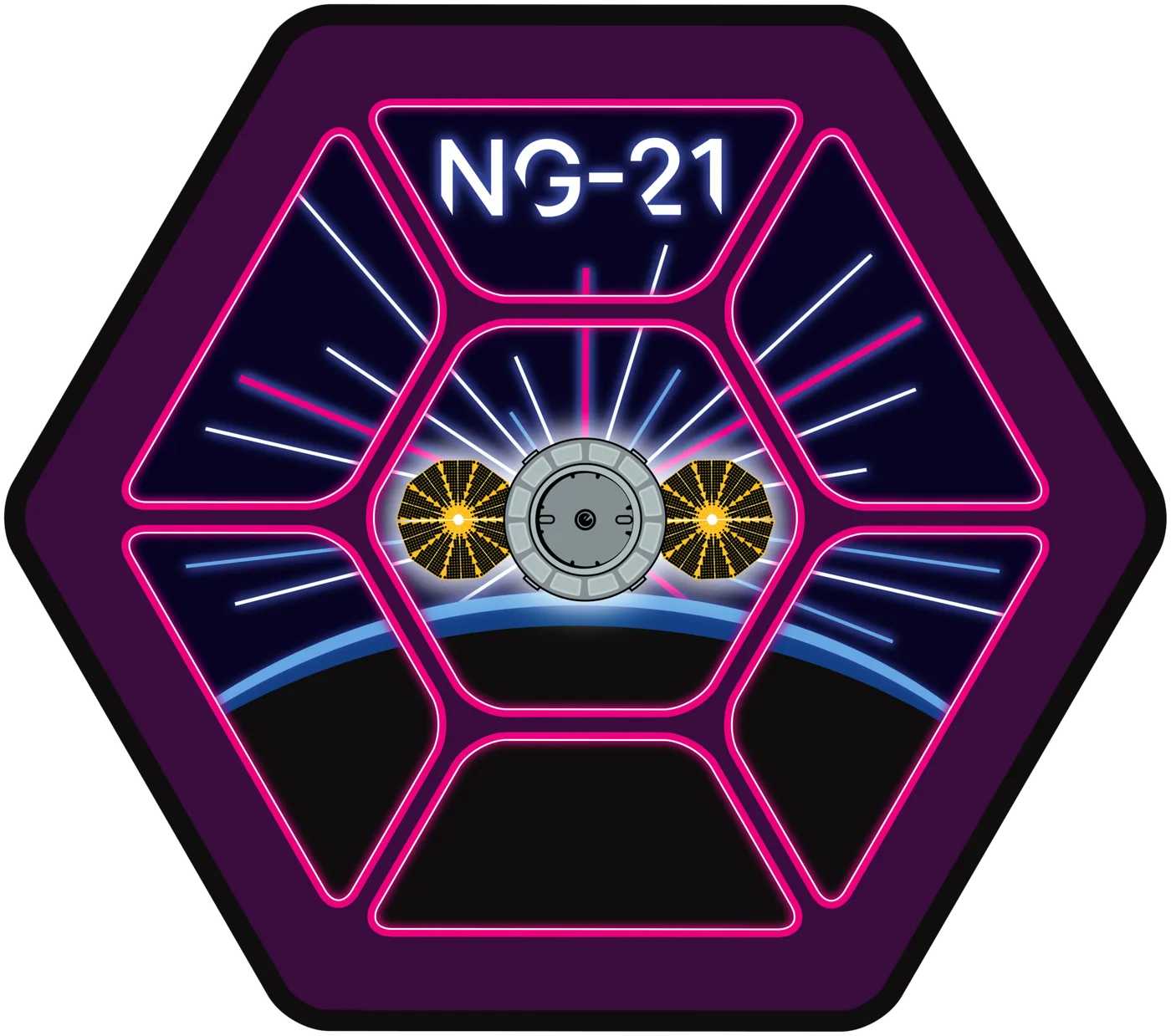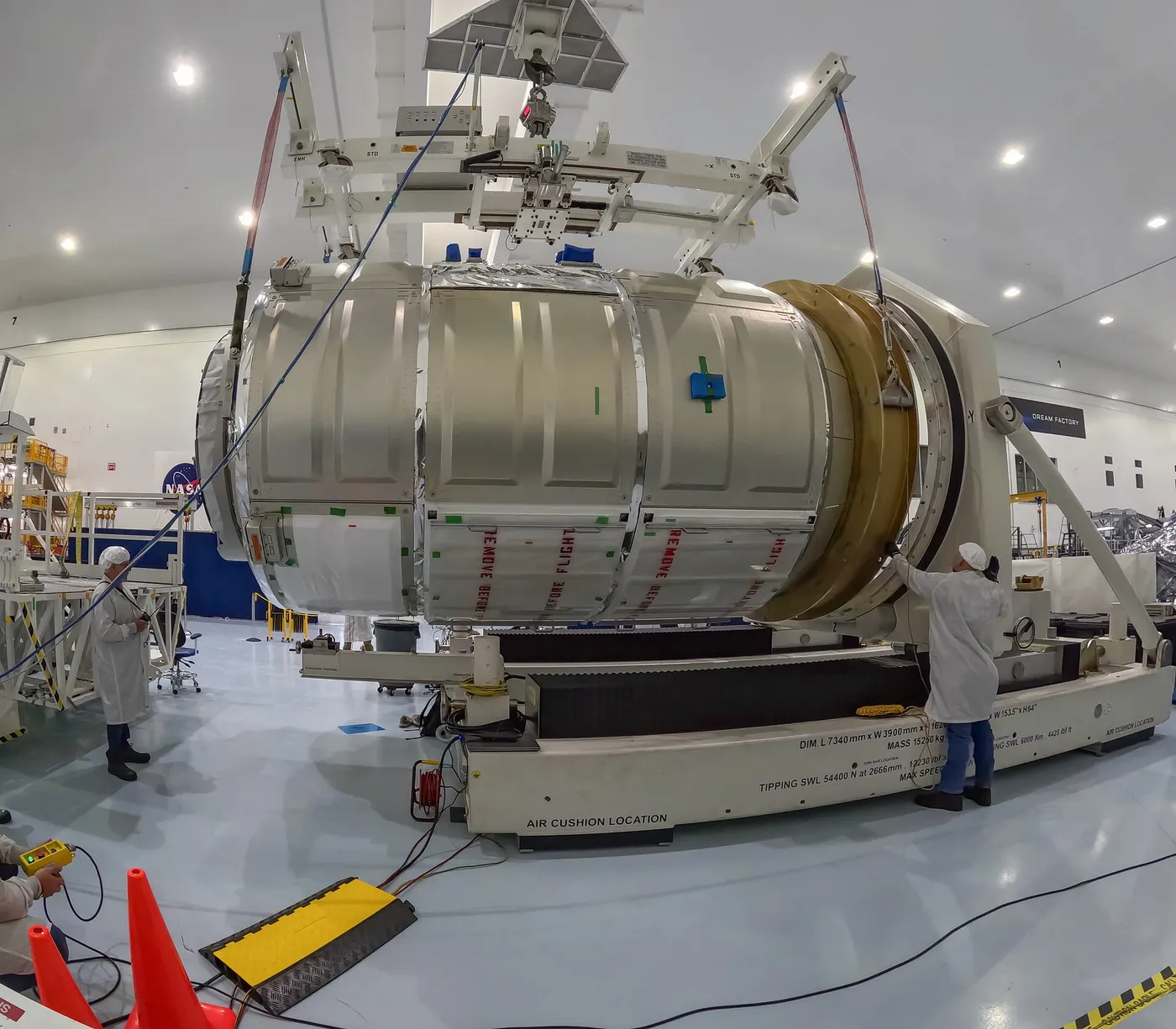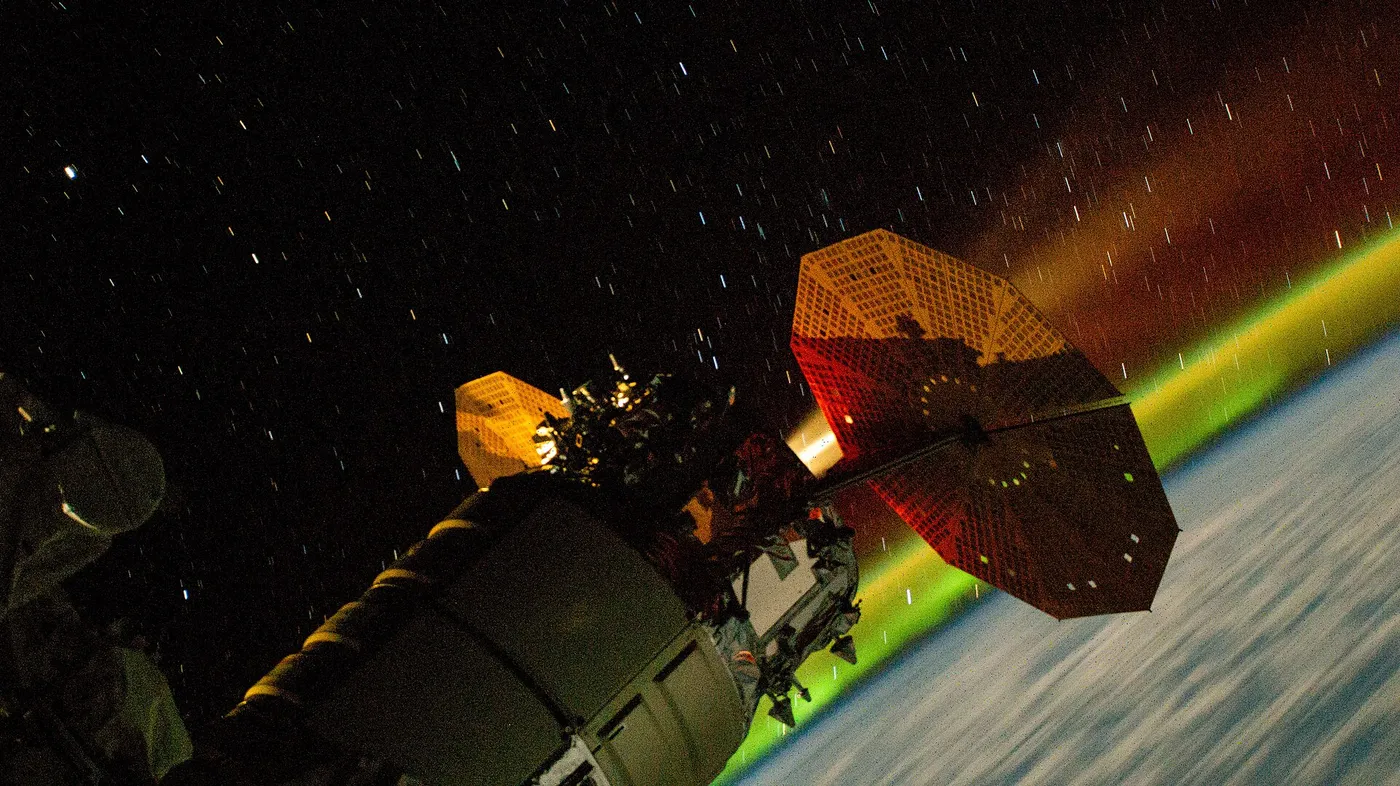
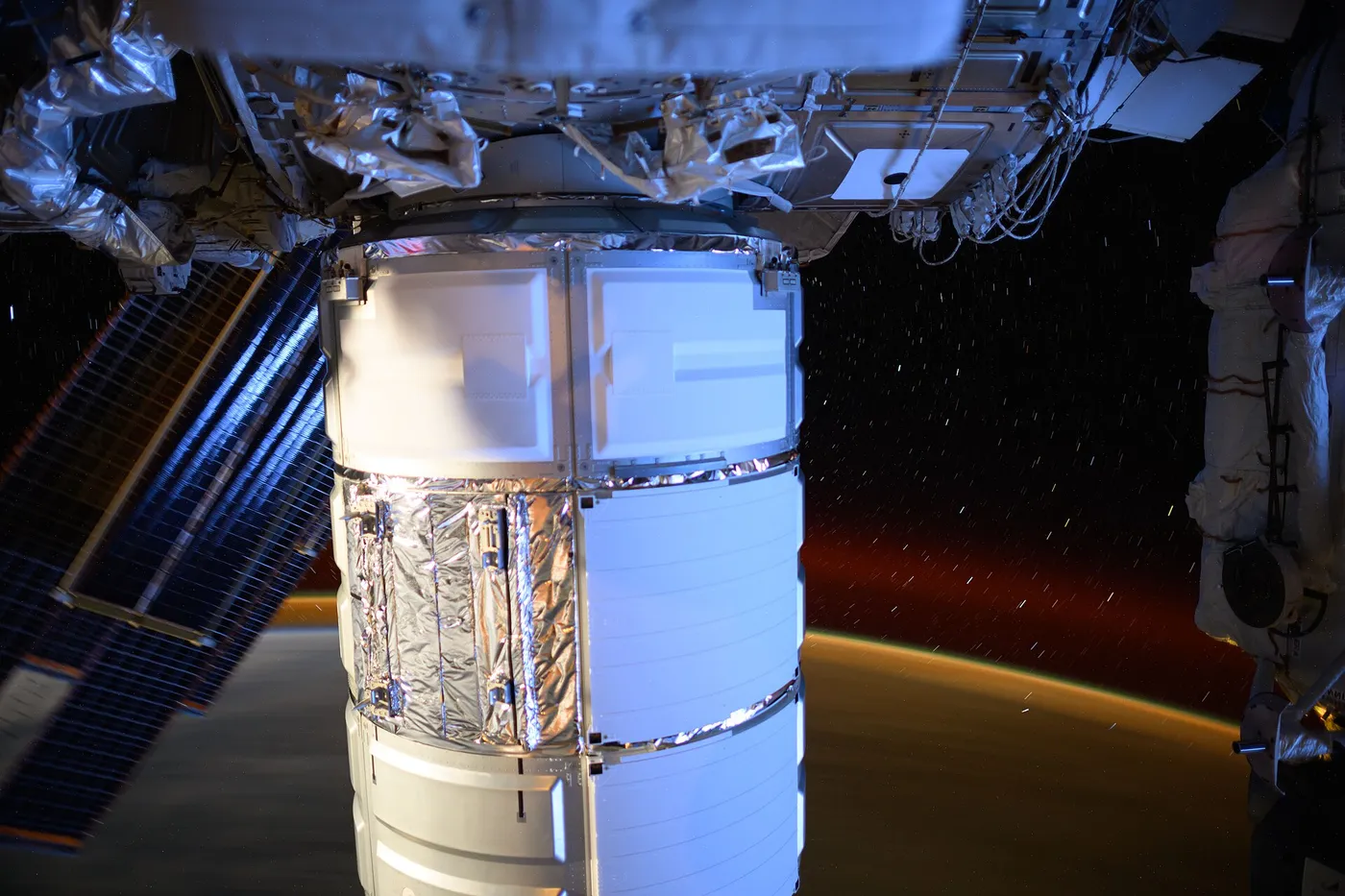

NG-21 flew on a Falcon 9 and delivered around 3,800 kilograms, among the largest Cygnus loads carried, including scientific hardware, spare parts and provisions for a station whose crew complement had been temporarily enlarged by the Starliner situation.
The cargo included experiments on water recovery, the behaviour of liquid droplets, and a study of how spaceflight affects blood vessel function — research feeding into the medical preparation for missions beyond low orbit.
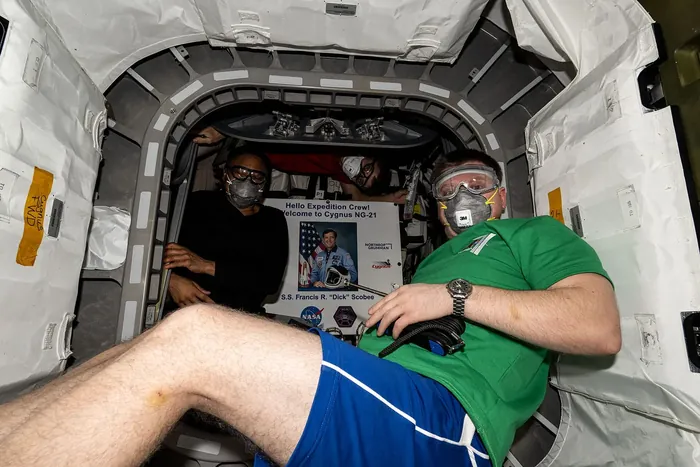
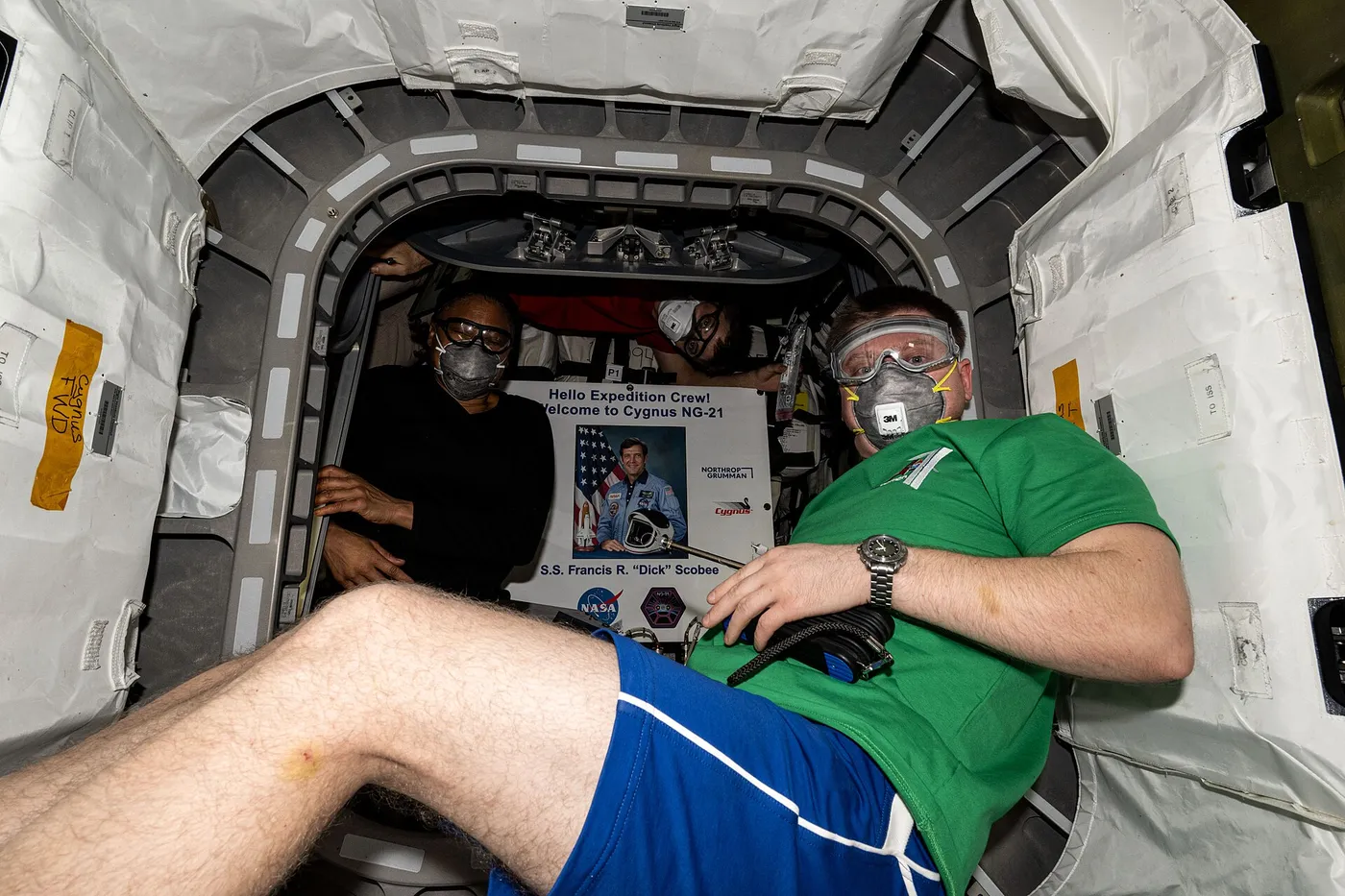
The spacecraft was named for Richard Francis Scobee, commander of Challenger's final flight.
It remained berthed for several months and performed reboost operations before departing with waste for destructive re-entry.
By this point the vehicle had made more than twenty flights across three corporate owners and four launch vehicles, delivering something over sixty tonnes to the station — a record that says as much about the durability of the contract structure as about the spacecraft.