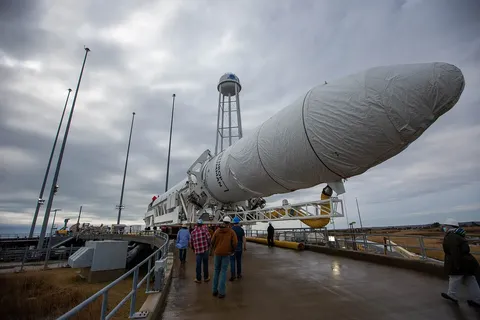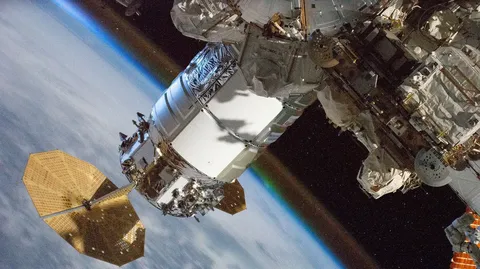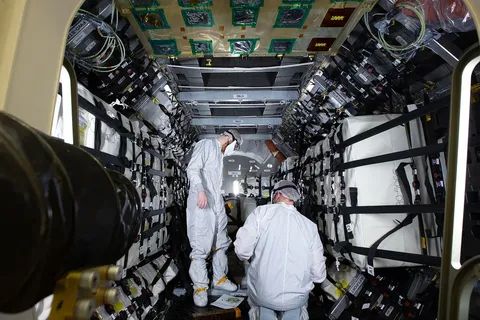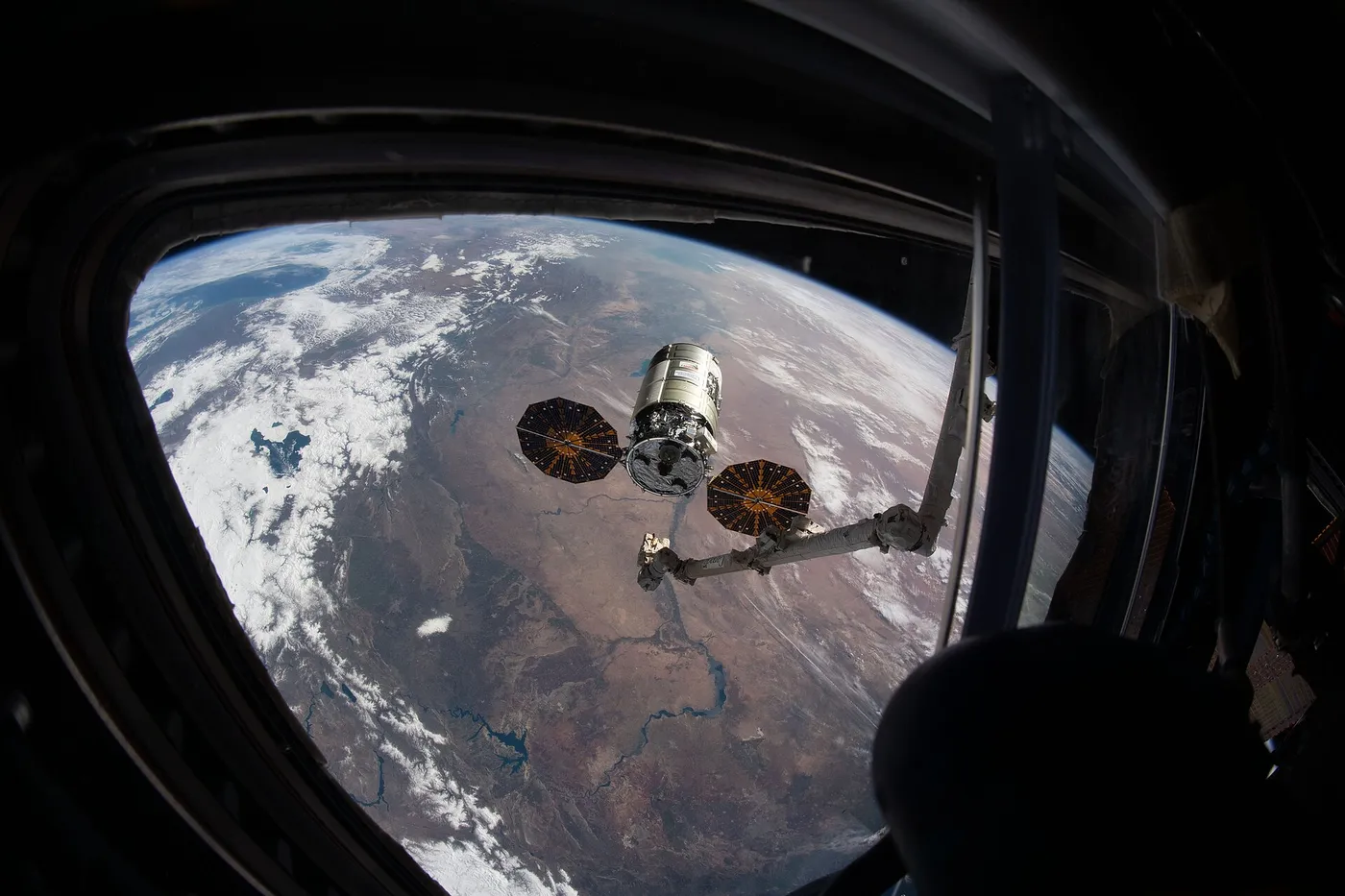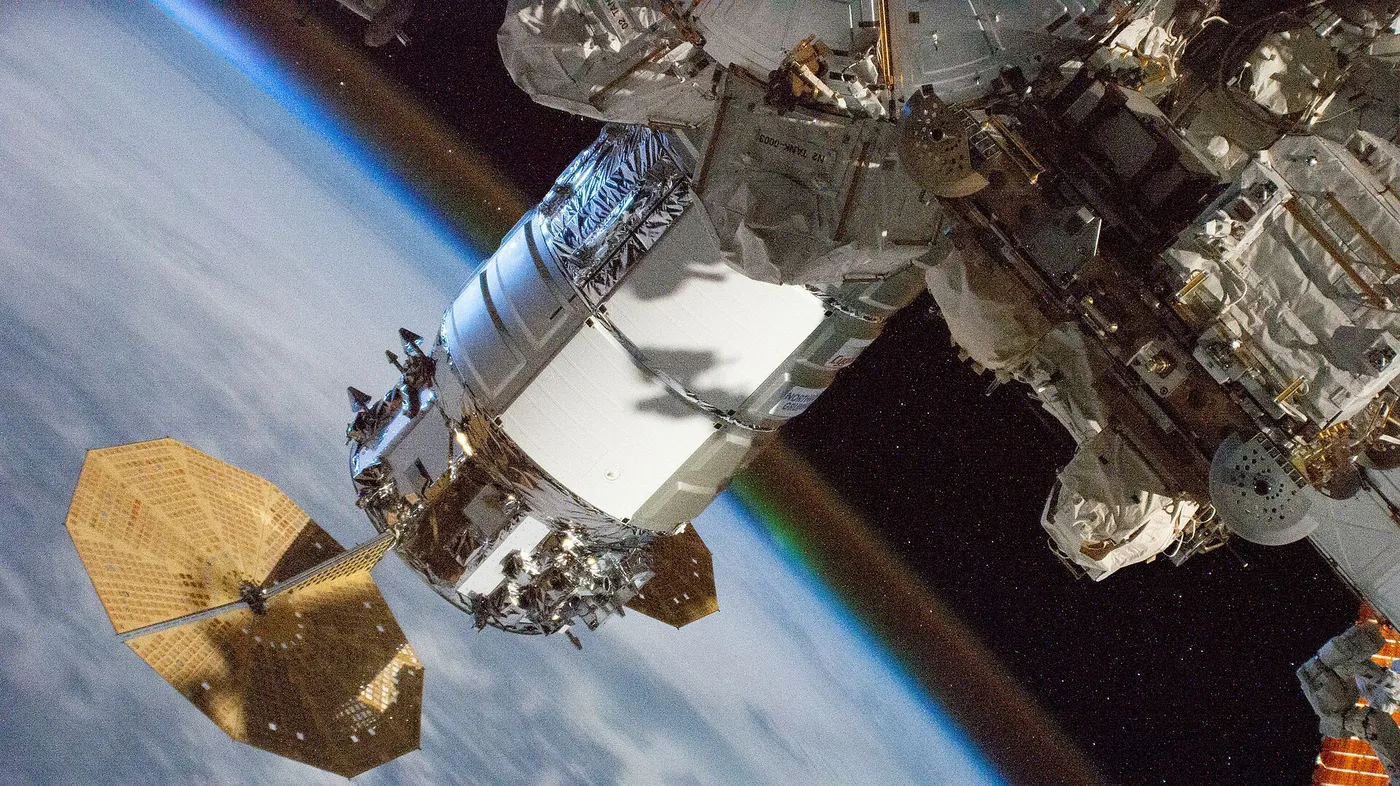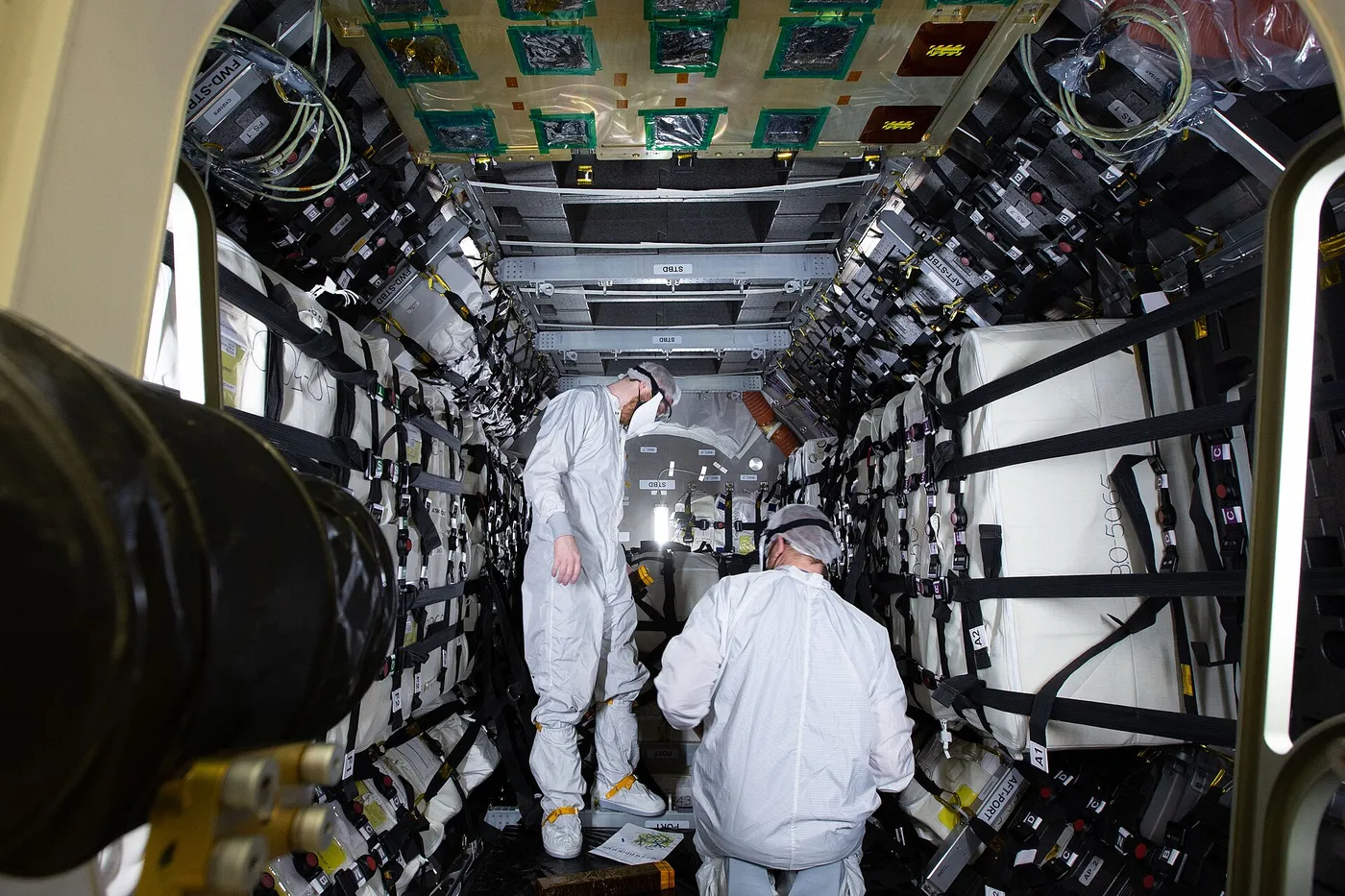
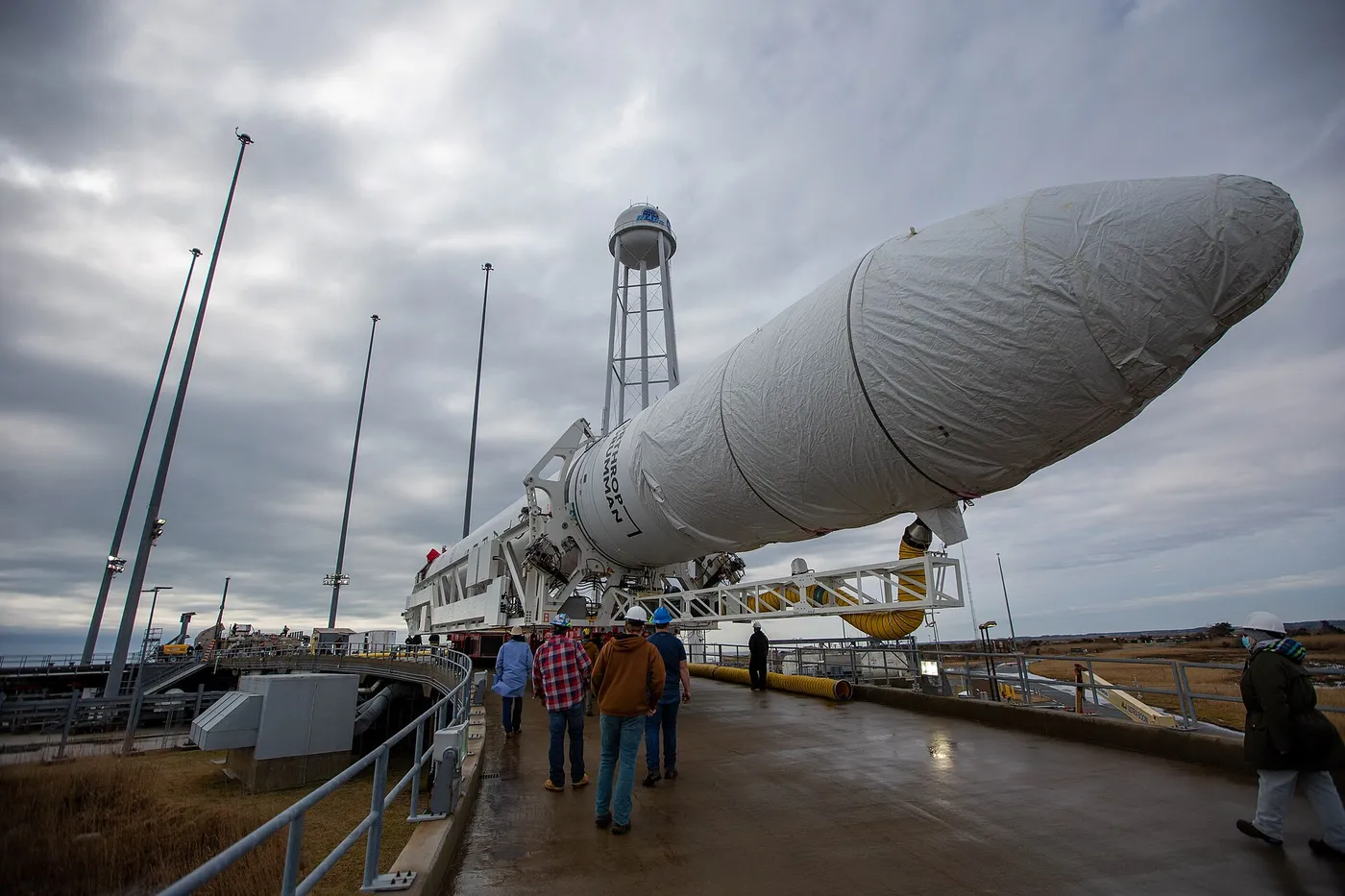

NG-15 delivered around 3,600 kilograms, including a facility for growing and studying tissue-like structures, hardware for a study of muscle atrophy using worms, and a commercial demonstration of manufacturing artificial retinas in weightlessness.
It also carried the components for an experiment testing how different materials burn in microgravity, conducted after departure in the by then well-established practice of using the outbound vehicle as a fire laboratory.

The spacecraft was named for Katherine Johnson, the mathematician whose orbital calculations John Glenn insisted on having verified by hand before his 1962 flight, and who had died the previous year at 101.

It remained berthed for several months and, before departing, was used to demonstrate a reboost of the station — firing its engines to raise the outpost's orbit, a service previously provided only by Russian vehicles.
That reboost capability became increasingly significant as relations between the partners deteriorated, since orbital maintenance had been one of the functions the American segment could not perform for itself.