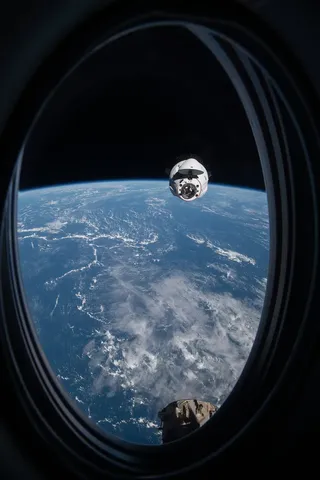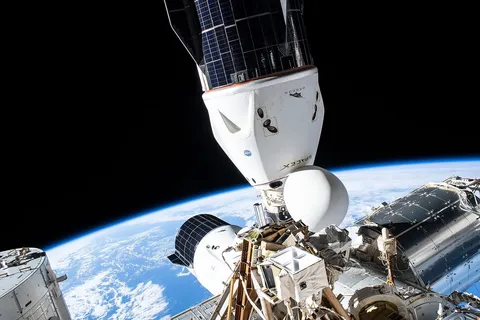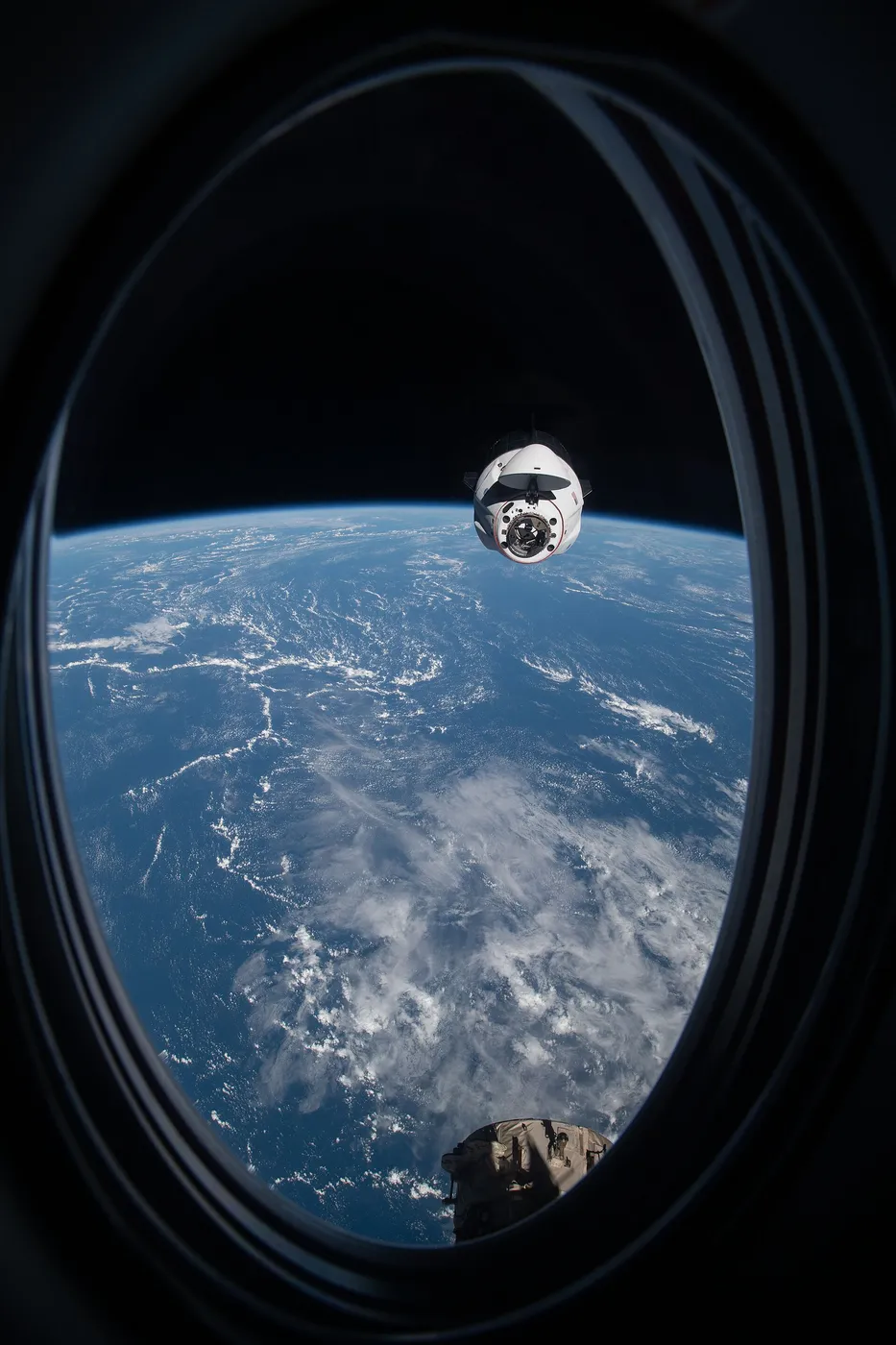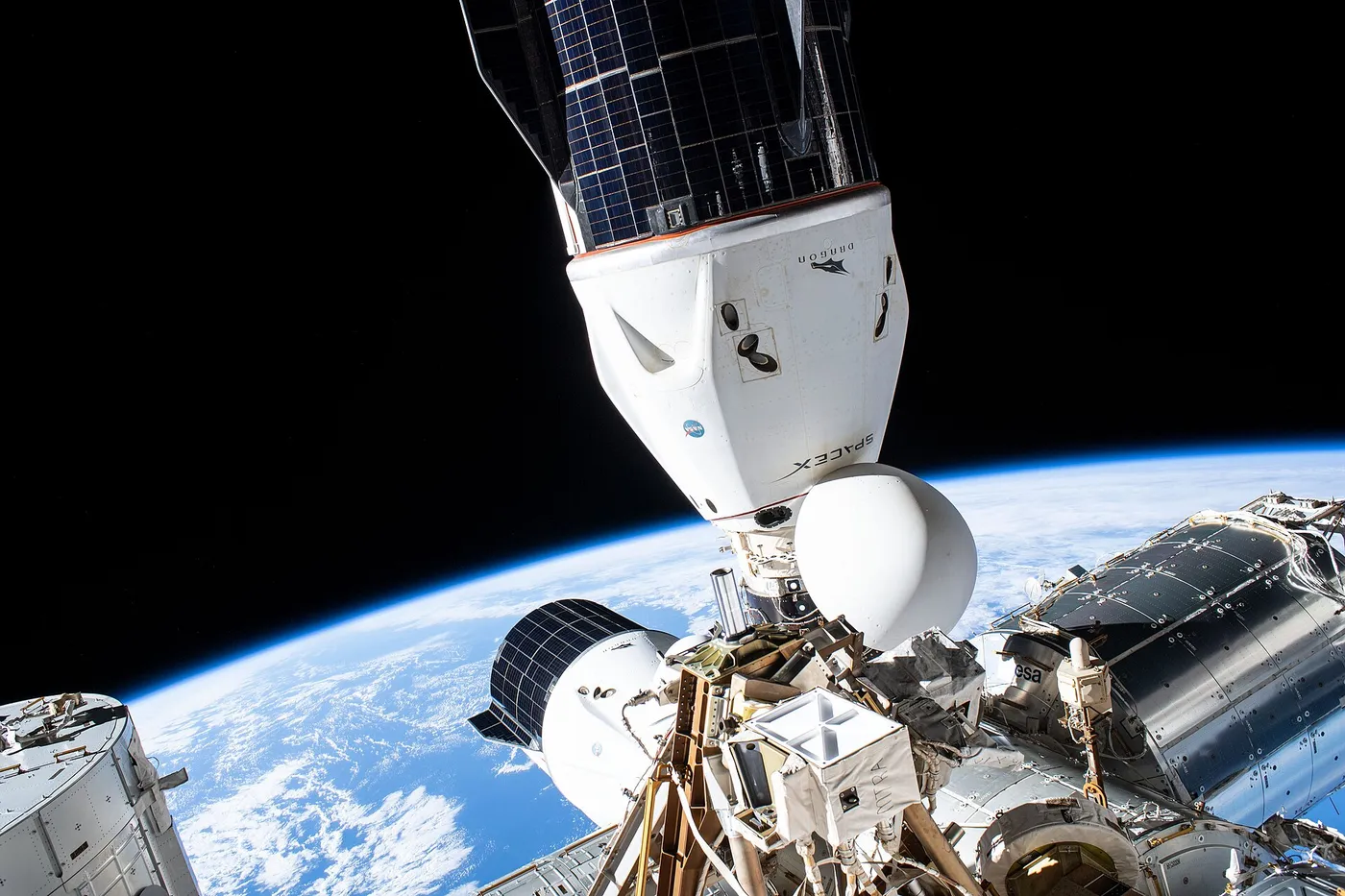

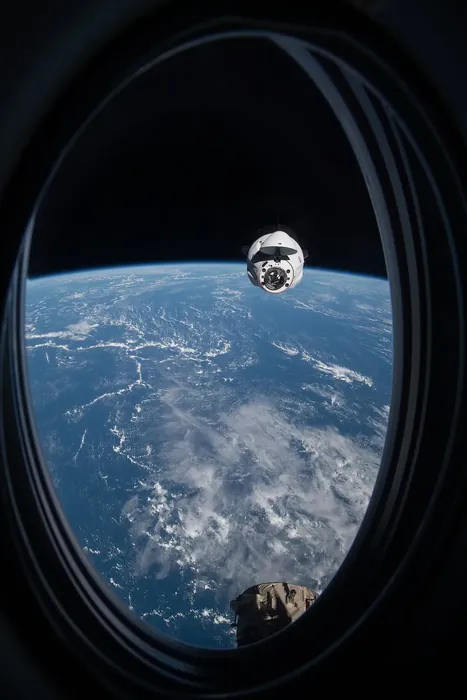
Crew-2 was the flight that made reuse routine for people. It launched in April 2021 on a Falcon 9 first stage that had flown before, in the Crew Dragon capsule Endeavour that had carried the Demo-2 astronauts the previous year — the first time either had been reflown with a crew aboard.
That is a larger step than it sounds. Reusing hardware for satellites is an economic question; reusing it for people is a certification question, requiring inspection standards, refurbishment procedures and life limits for components that had previously been discarded after a single use. NASA's willingness to accept it marked a real shift in institutional thinking.
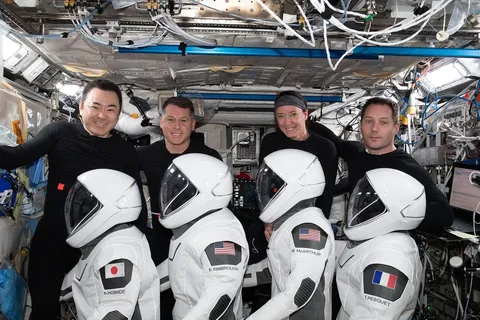
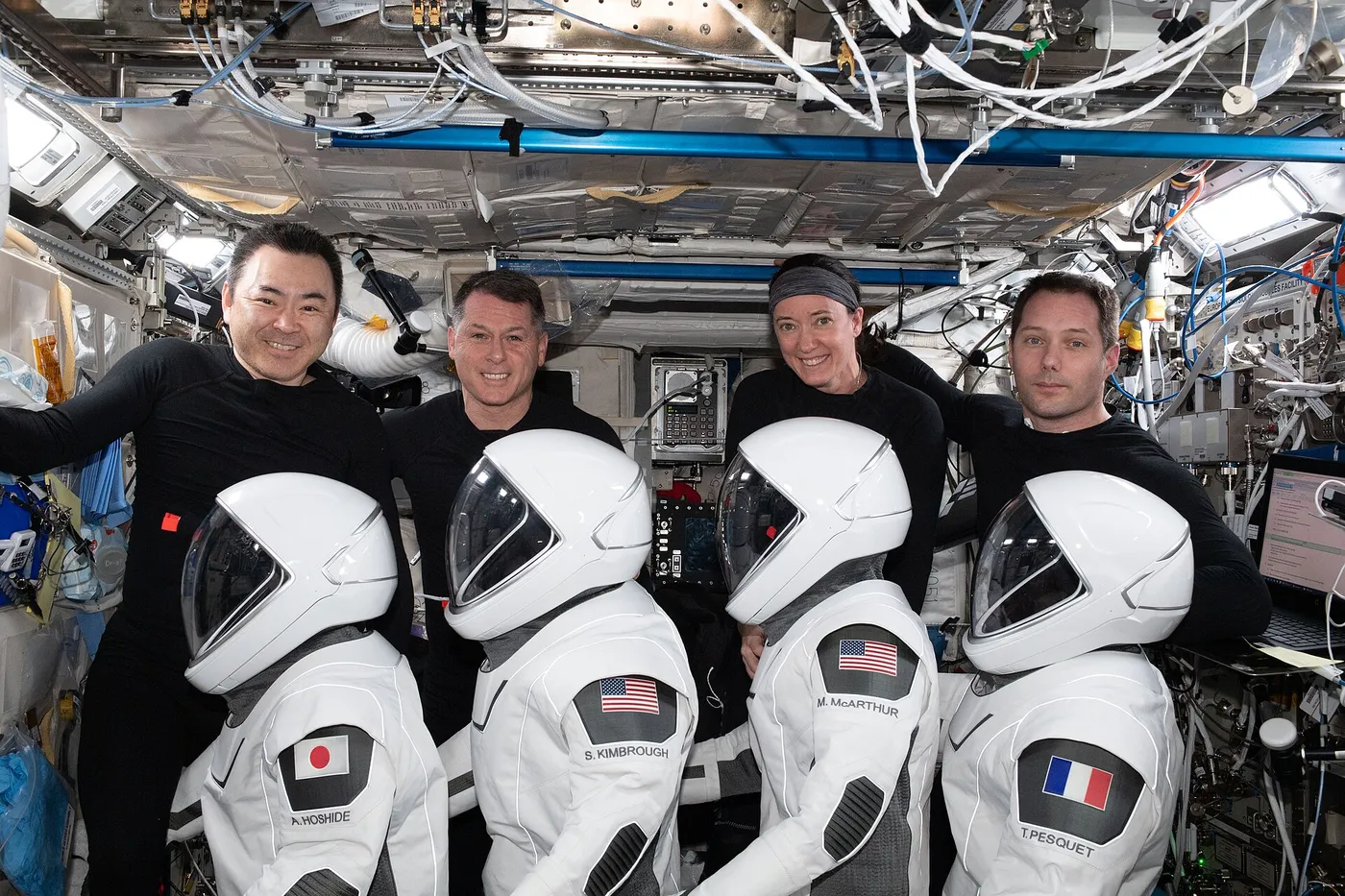
The crew was Shane Kimbrough and Megan McArthur with Akihiko Hoshide of Japan and Thomas Pesquet of France. McArthur flew in the same seat her husband, Bob Behnken, had occupied on Demo-2, which is a coincidence the families enjoyed rather more than the press did.
Their expedition included installing the first of the station's new roll-out solar arrays, compact flexible blankets unfurled over the existing wings to restore power lost as the originals degraded after two decades. It also coincided with an incident in which a newly arrived Russian module fired its thrusters unexpectedly and rotated the entire station one and a half times before control was regained.
Pesquet became the first European to command the station during the mission, and returned after 199 days. The flight is now unremarkable in retrospect, which is precisely its significance: within a year of the first crewed commercial flight, reused rockets and reused capsules carrying international crews had become the ordinary way of doing things.