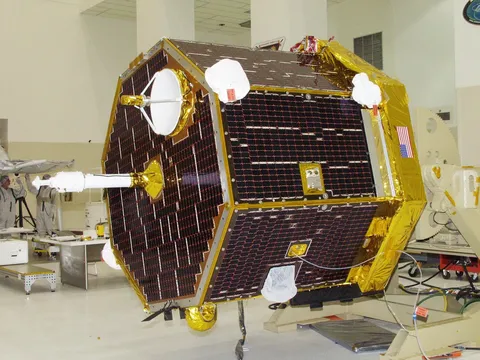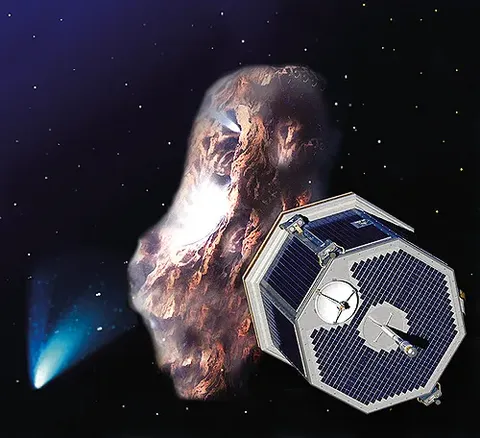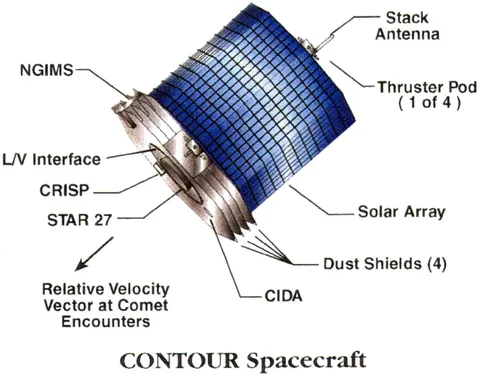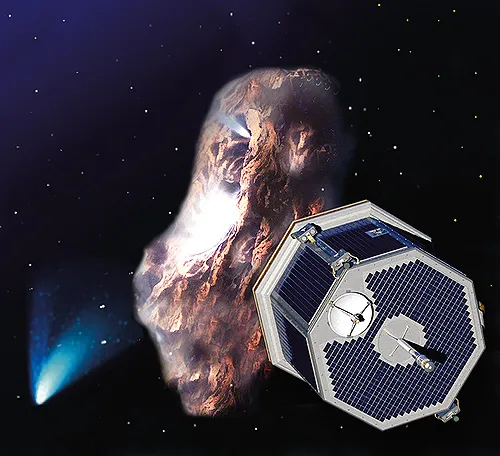
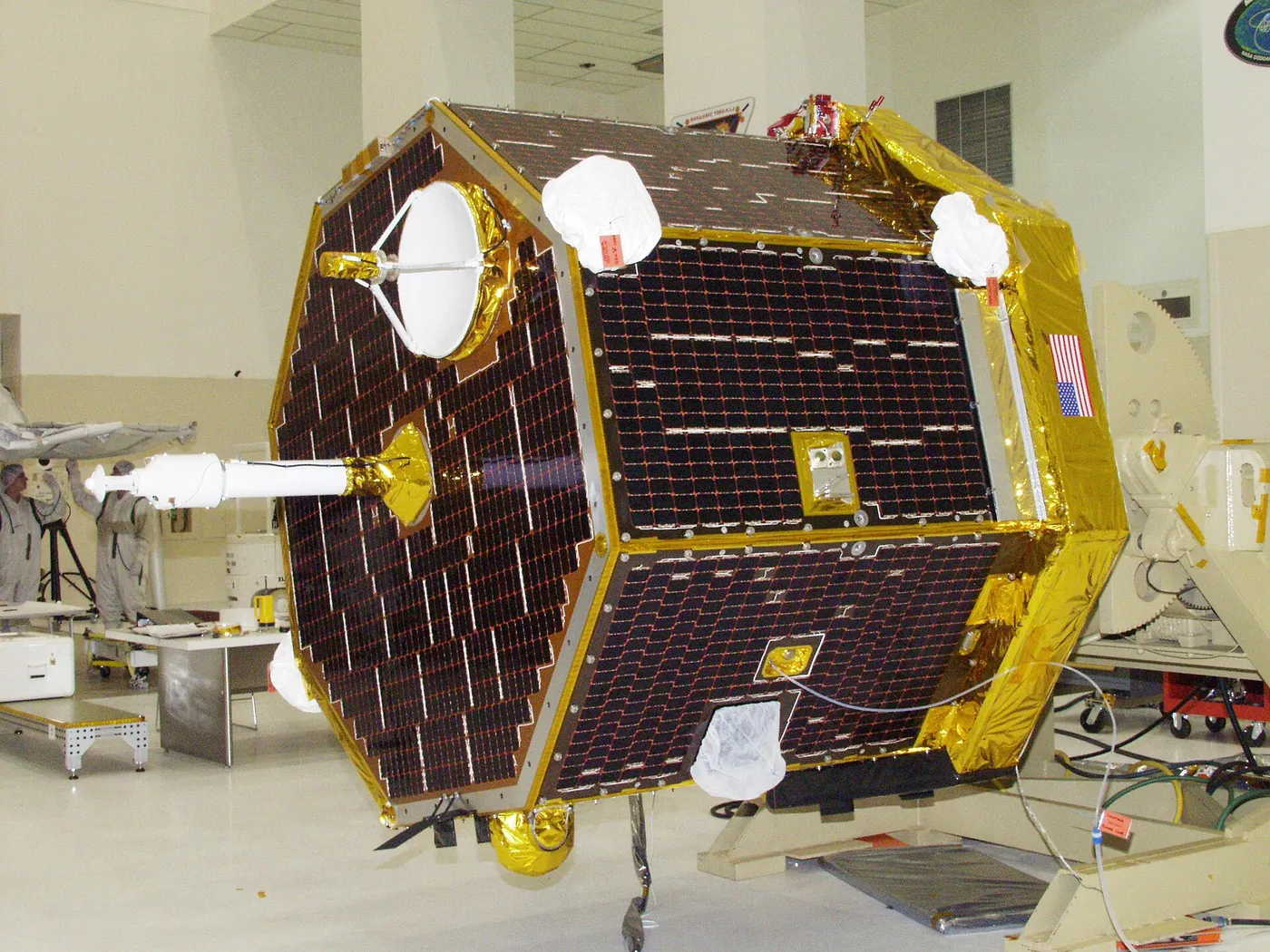

CONTOUR was designed to visit at least two comets and compare them directly. Cometary nuclei had been glimpsed individually — Halley by Giotto, Borrelly by Deep Space 1 — but nobody had examined two with the same instruments, which is the only way to know whether the differences between them are real or artefacts of different cameras.
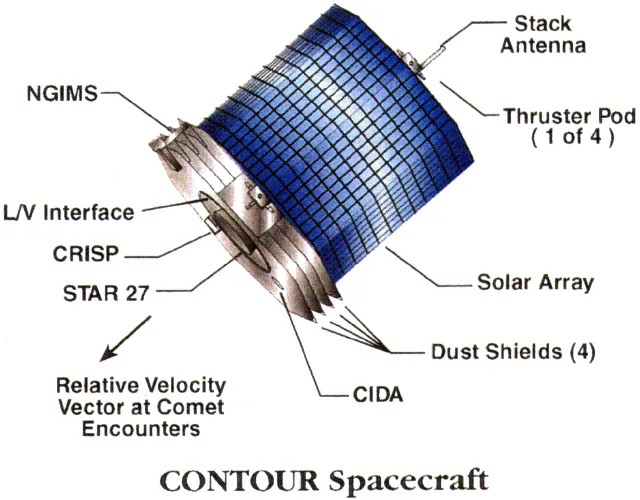
It was a Discovery-class mission, built to a fixed low cost, and it carried a solid rocket motor to boost itself out of Earth orbit after several weeks of checkout — a common enough arrangement, and the step at which everything went wrong.
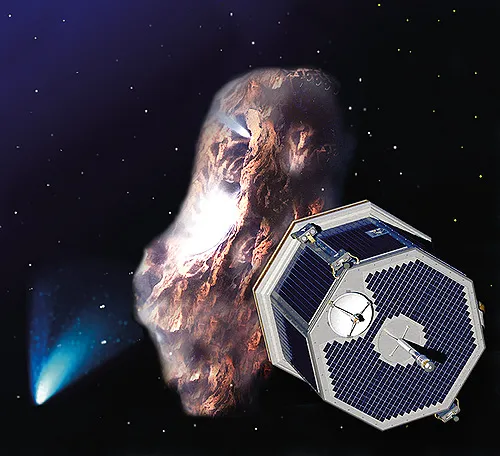
On 15 August 2002 the motor fired as planned, out of contact with the ground. The spacecraft was never heard from again. Ground telescopes subsequently found three objects moving along the expected trajectory, which is to say they found the pieces.
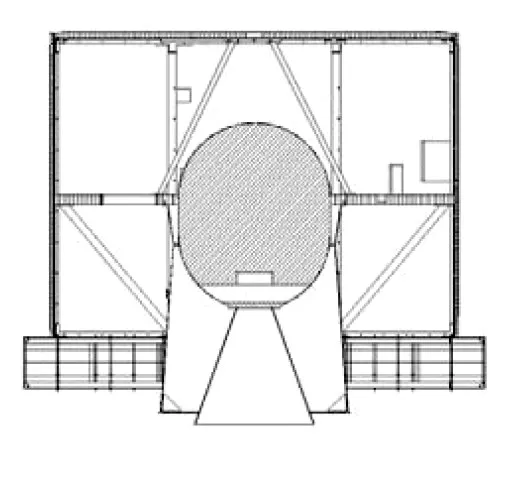
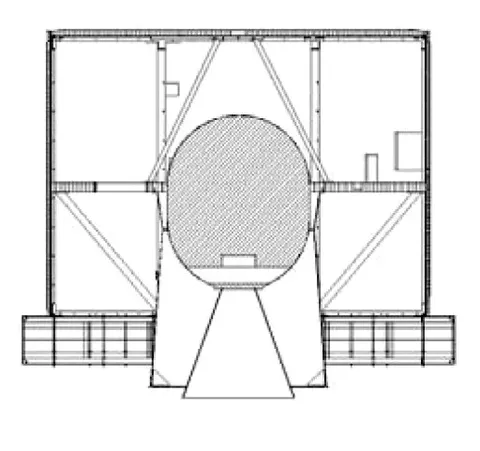
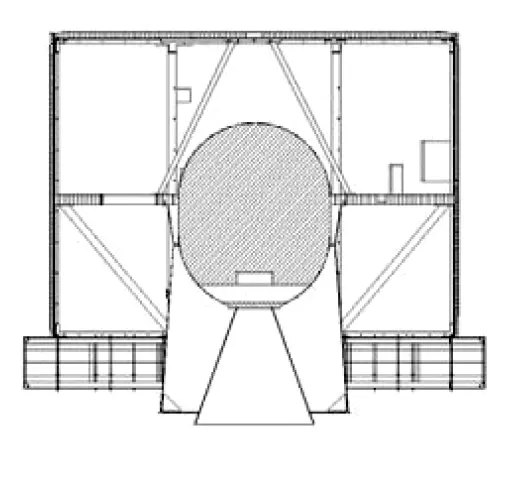
The investigation board's most probable cause was that the rocket motor's exhaust plume had impinged on the spacecraft structure, overheating and destroying it — the motor was embedded within the body of the spacecraft rather than mounted below it, and the thermal environment had been analysed by modelling rather than tested.
The board's broader criticism was of the process: an unproven configuration, no end-to-end test of the burn, and no telemetry during the most hazardous event of the mission. It was one of several failures that prompted a tightening of review standards for cost-capped missions, and the comet comparison it was built for has still not been made.