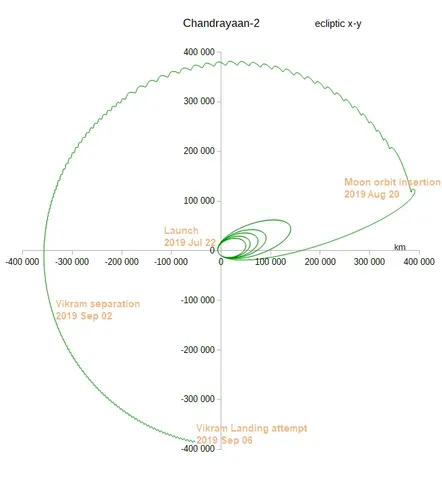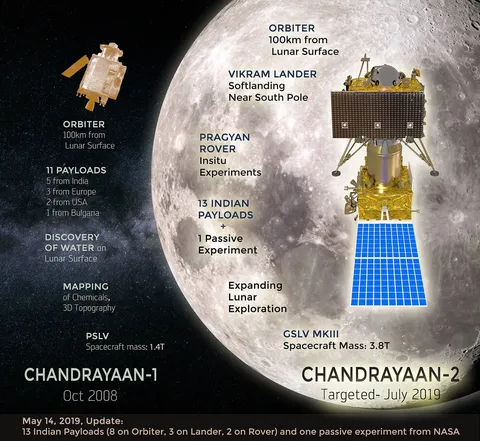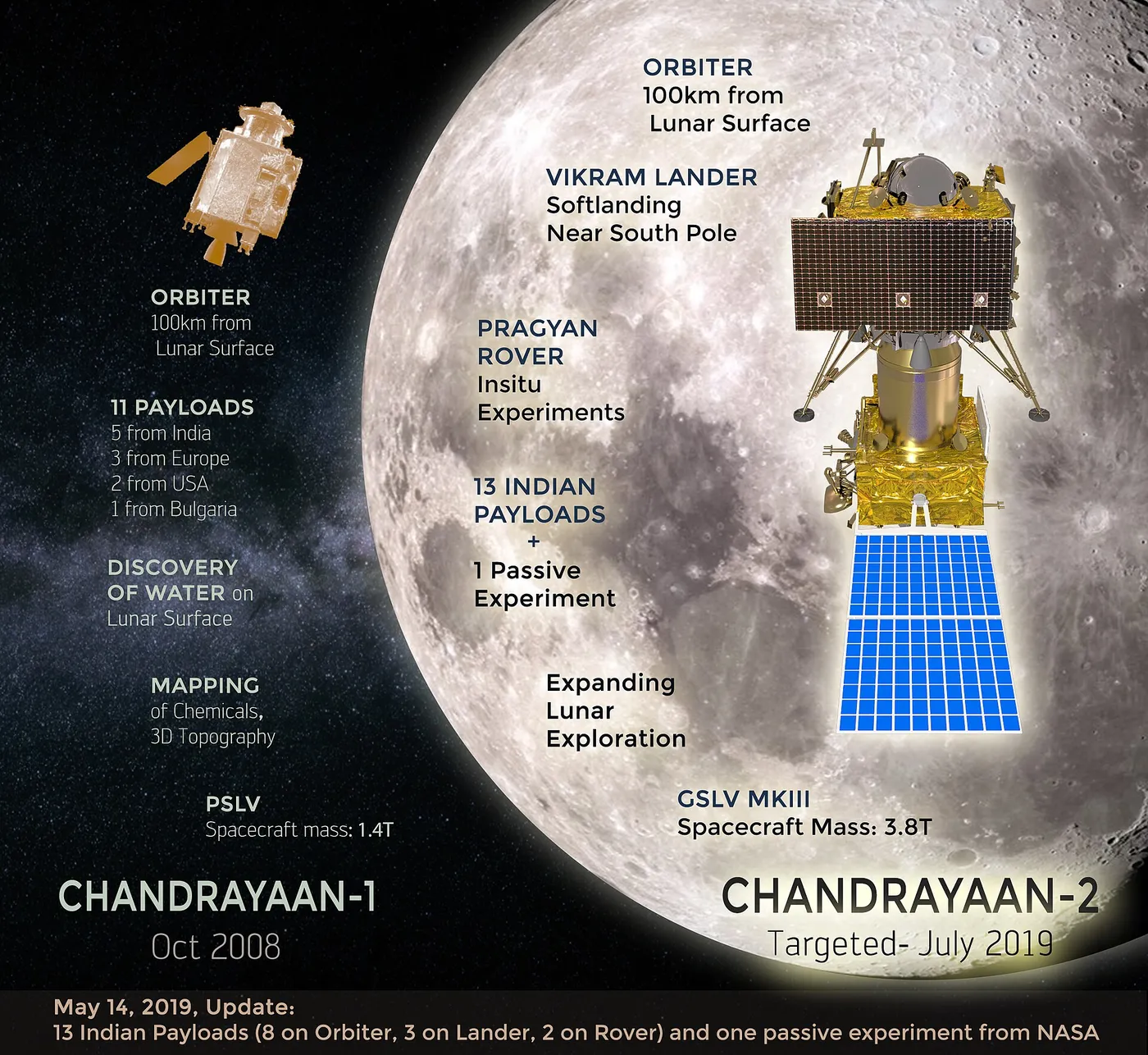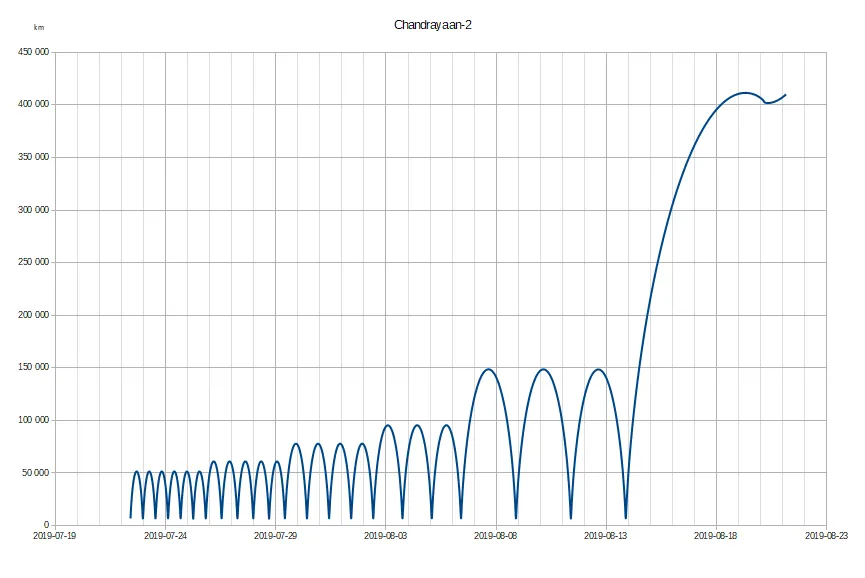
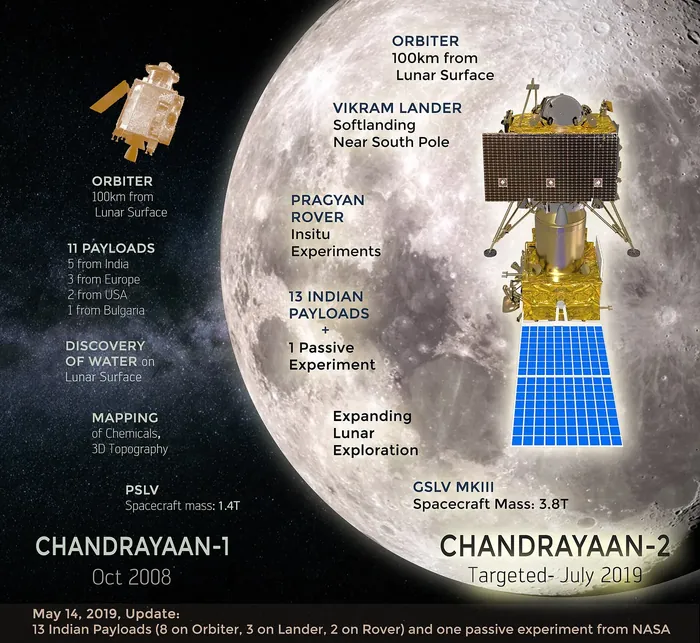
India's second lunar mission carried an orbiter, a lander and a small rover, and aimed for the south polar region — terrain no mission had landed in, chosen because the permanently shadowed craters there hold water ice and because the ancient highland rock records the Moon's early history.
The orbiter reached its station successfully in September 2019 and has operated ever since, carrying the highest-resolution camera ever flown to the Moon at 25 centimetres per pixel, along with instruments that have mapped surface water molecules, measured the exosphere and characterised the polar regions in detail.
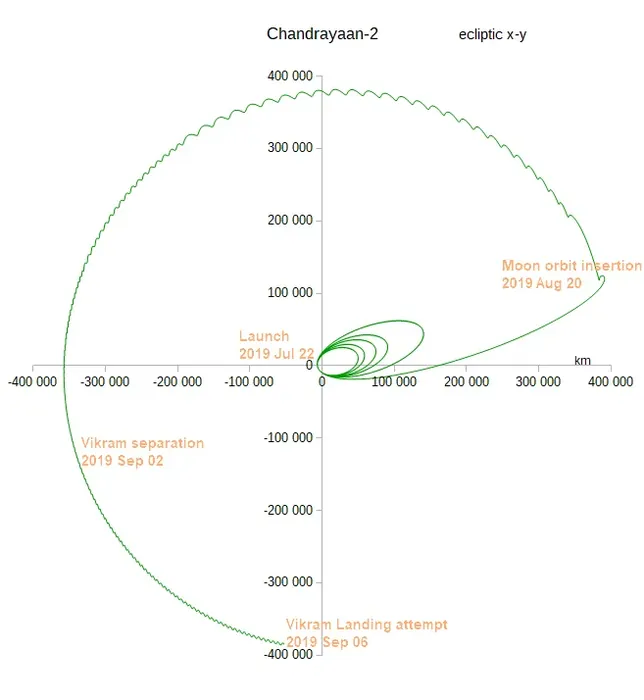
The lander did not survive. Vikram was descending normally until about 2.1 kilometres above the surface, when its velocity began to deviate from the plan — later attributed to the braking thrusters producing more thrust than modelled, combined with software that lacked the margin to correct for it. It struck the surface hard and was found weeks later by an American orbiter as a debris field.
ISRO's response was measured and specific. The failure was analysed publicly, the lander design was revised with wider landing margins, stronger legs, more fuel, additional sensors and — crucially — software able to accept much larger deviations without losing control, and the follow-on mission was rebuilt around what had gone wrong.
That successor landed successfully four years later, making India the first country to reach the lunar south polar region. The orbiter from this mission served as its communications relay, which gives the failure an unusually tidy resolution: the surviving half of a partly failed mission carried its replacement's data home.