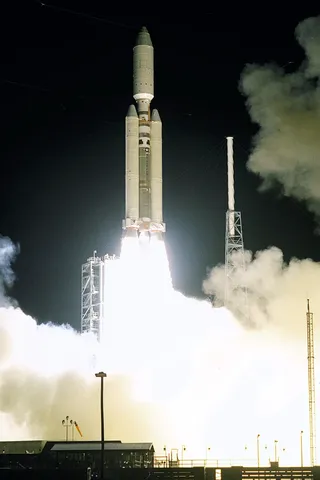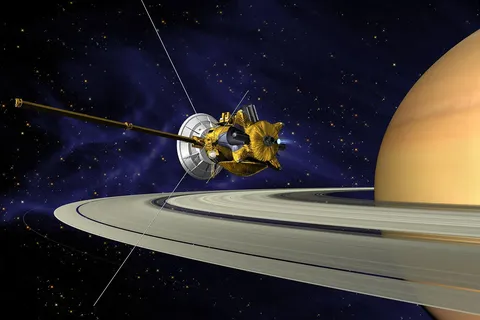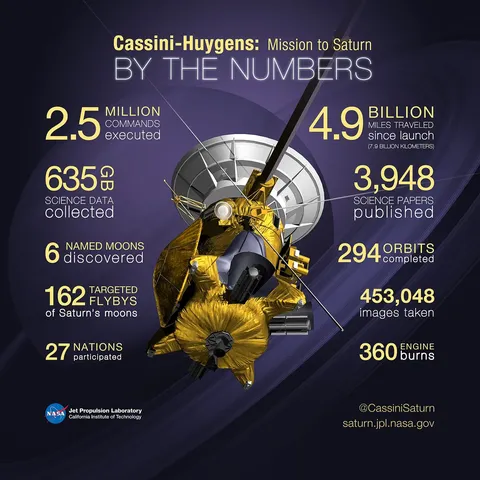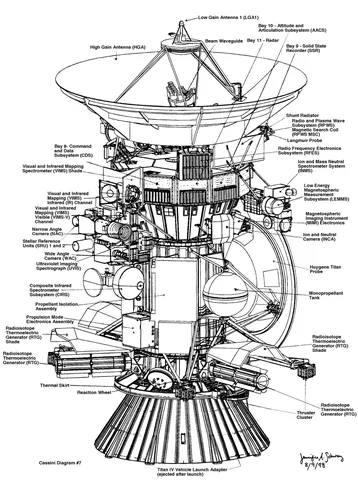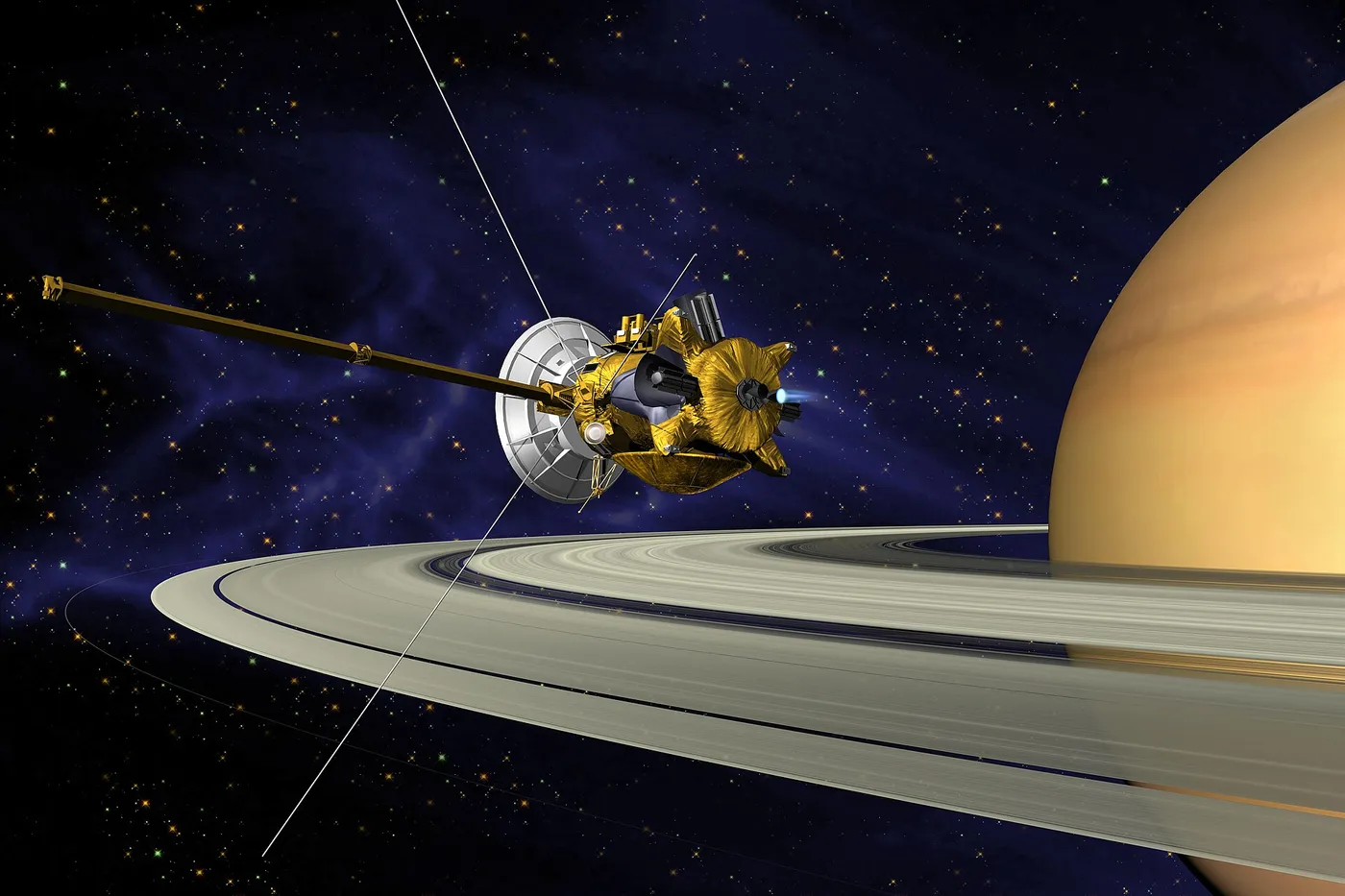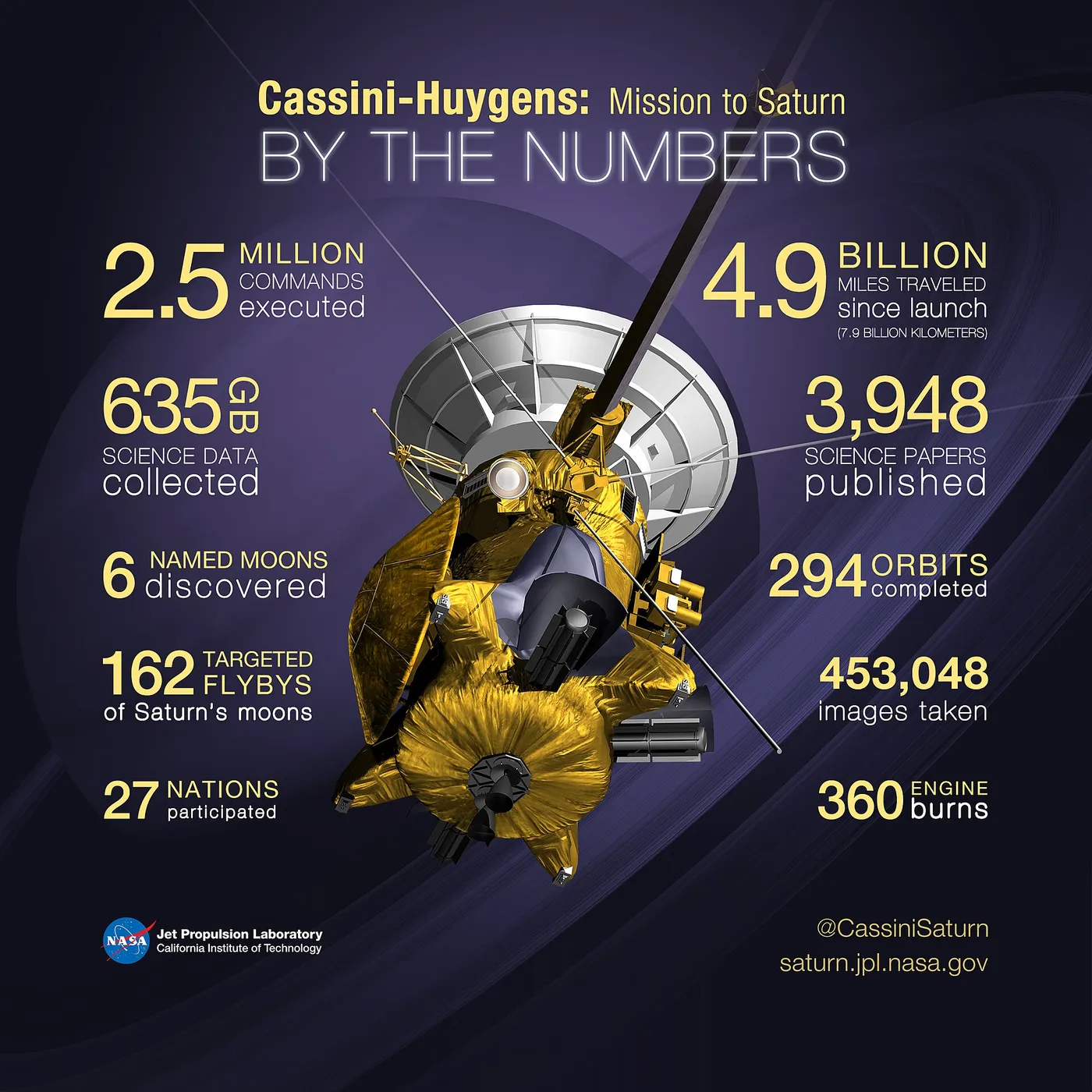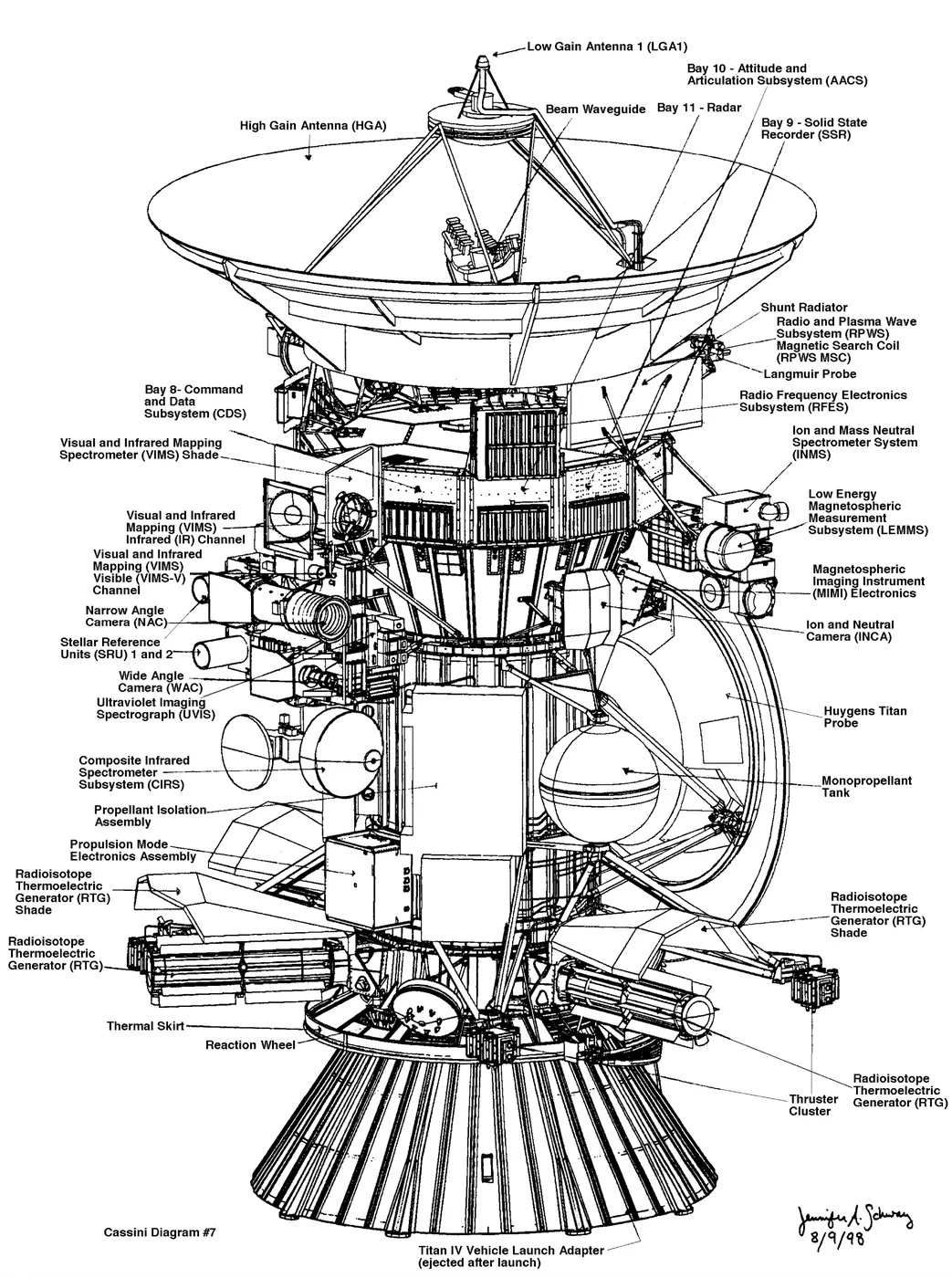
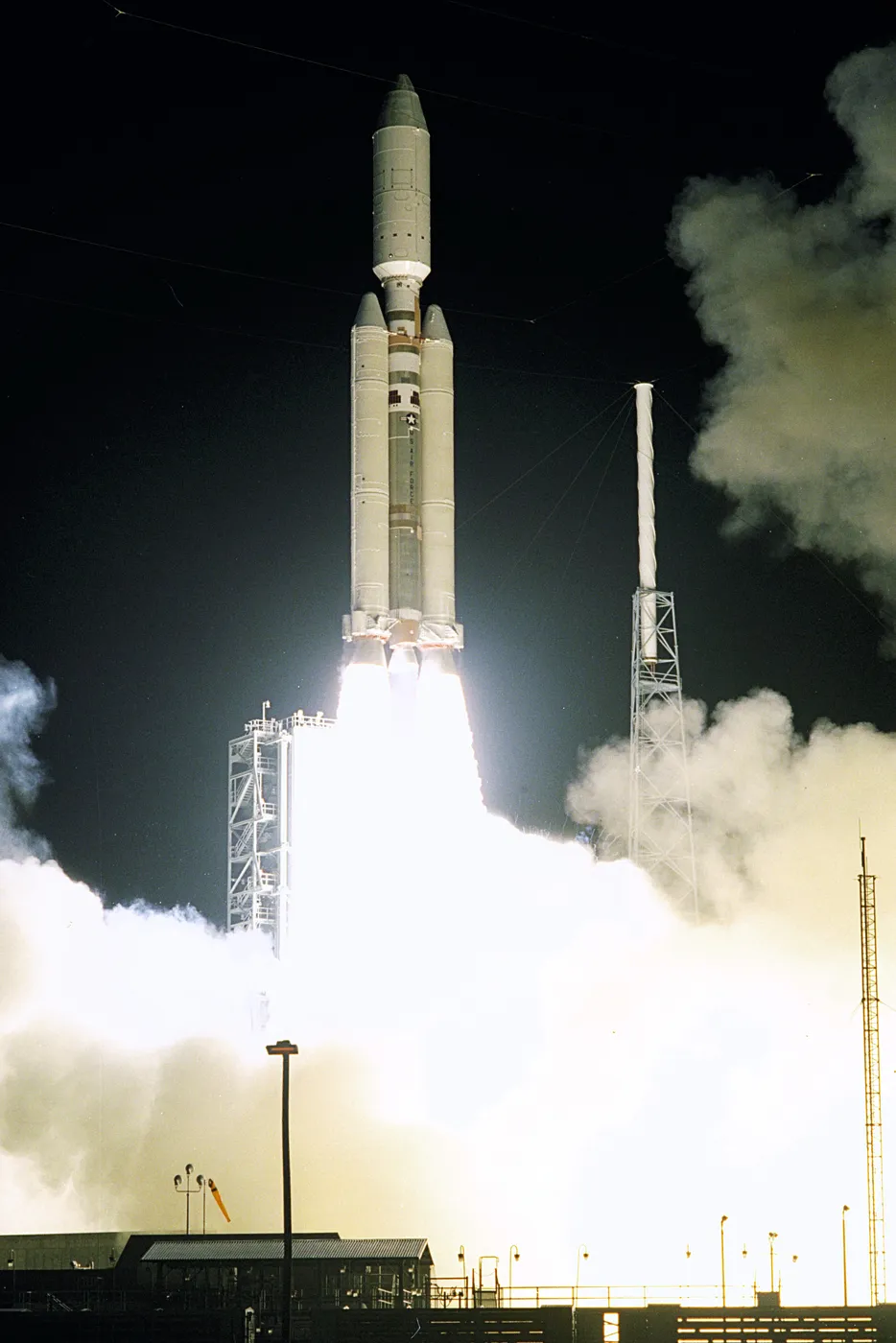

Cassini took seven years to reach Saturn, swinging past Venus twice, Earth once and Jupiter once to build up speed, and then spent thirteen years in the system. It was the last of the great flagship probes — a bus-sized, plutonium-powered, instrument-laden machine of a kind that the budget climate has not permitted since.
It carried a European lander. Huygens separated in December 2004 and descended by parachute through Titan's thick orange haze on 14 January 2005, transmitting for two and a half hours — the most distant landing ever made. It found a landscape of drainage channels, rounded cobbles of water ice, and a damp surface, on a world where the rain is liquid methane. The lander's data very nearly came home garbled: an engineer named Boris Smeds insisted on an in-flight end-to-end radio test that nobody had planned, and it exposed a Doppler-shift design error that would have destroyed one of the two data channels. The trajectory was redesigned to compensate.

The orbiter's greatest discovery was somewhere nobody was looking. Enceladus, a moon only 500 kilometres across, turned out to be venting plumes of water vapour and ice from fractures near its south pole. Cassini flew directly through them, tasting salt, silica and organic molecules, and established that a small icy moon holds a global subsurface ocean in contact with a rocky seafloor — one of the most promising places to look for life anywhere.
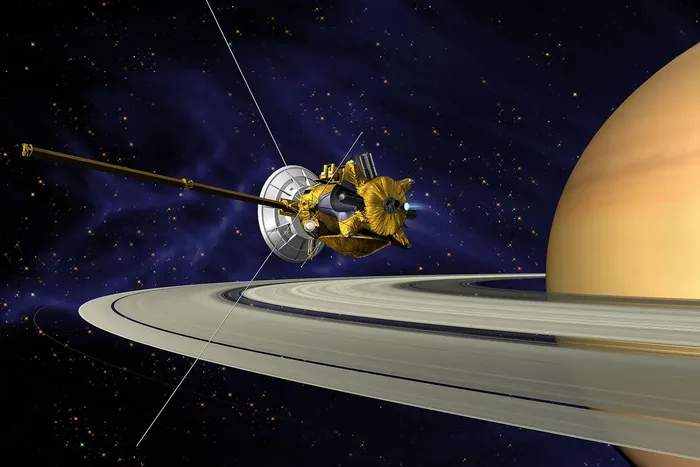
At Titan it mapped seas of liquid hydrocarbons near the north pole, the only stable surface liquid known beyond Earth, and watched their levels change with the seasons. It counted new moons, traced the ring system's waves and propellers, and photographed Saturn's polar hexagon — a persistent six-sided jet stream nobody has fully explained.
Because it had found an ocean on Enceladus, it could not be left to drift and eventually crash there. In 2017 controllers flew the Grand Finale: twenty-two dives through the 2,000-kilometre gap between Saturn and its innermost ring, sampling the atmosphere directly, before steering the spacecraft into the planet on 15 September. It transmitted until the moment it broke up, deliberately destroyed to protect a moon it had discovered was worth protecting.