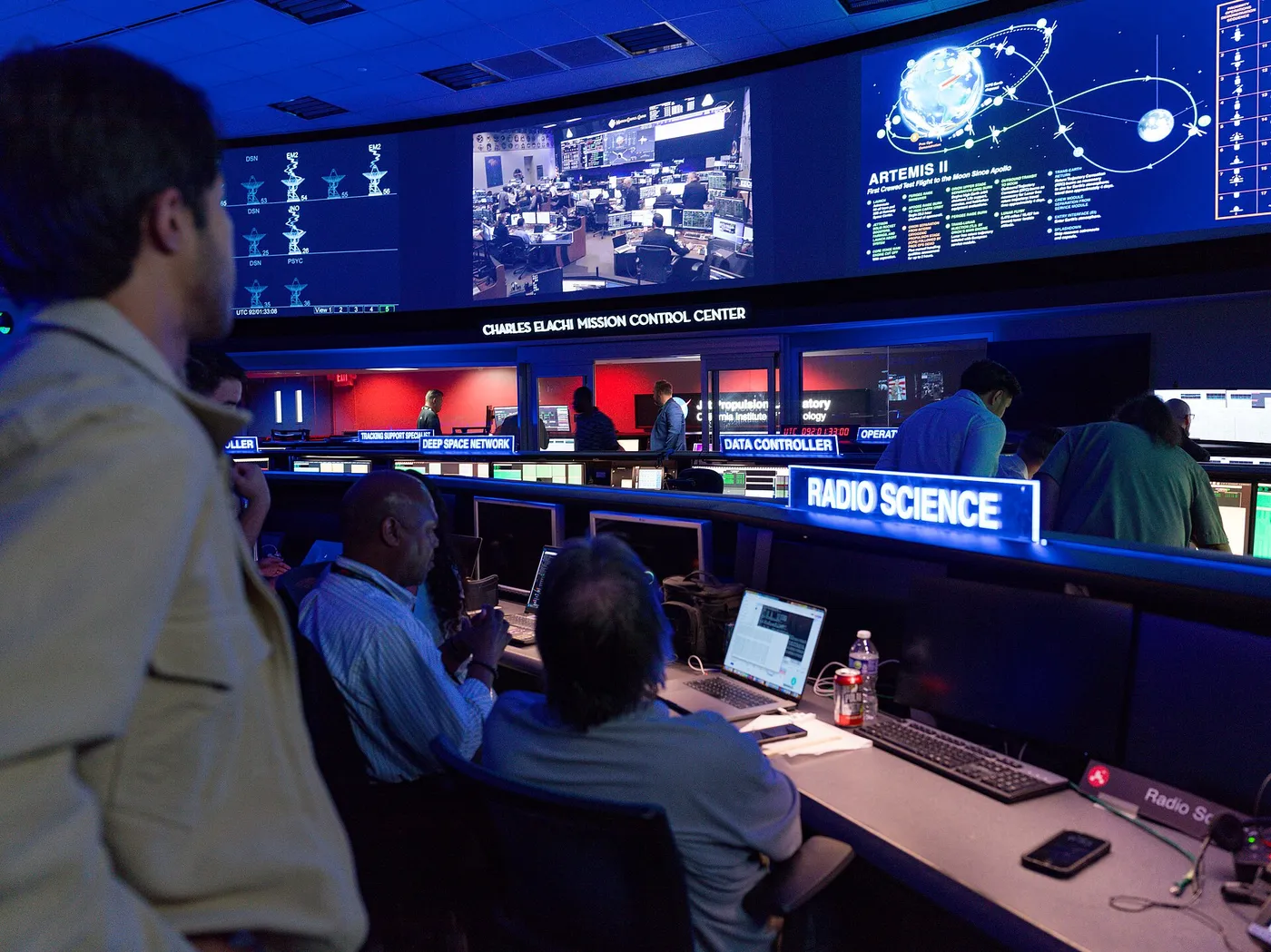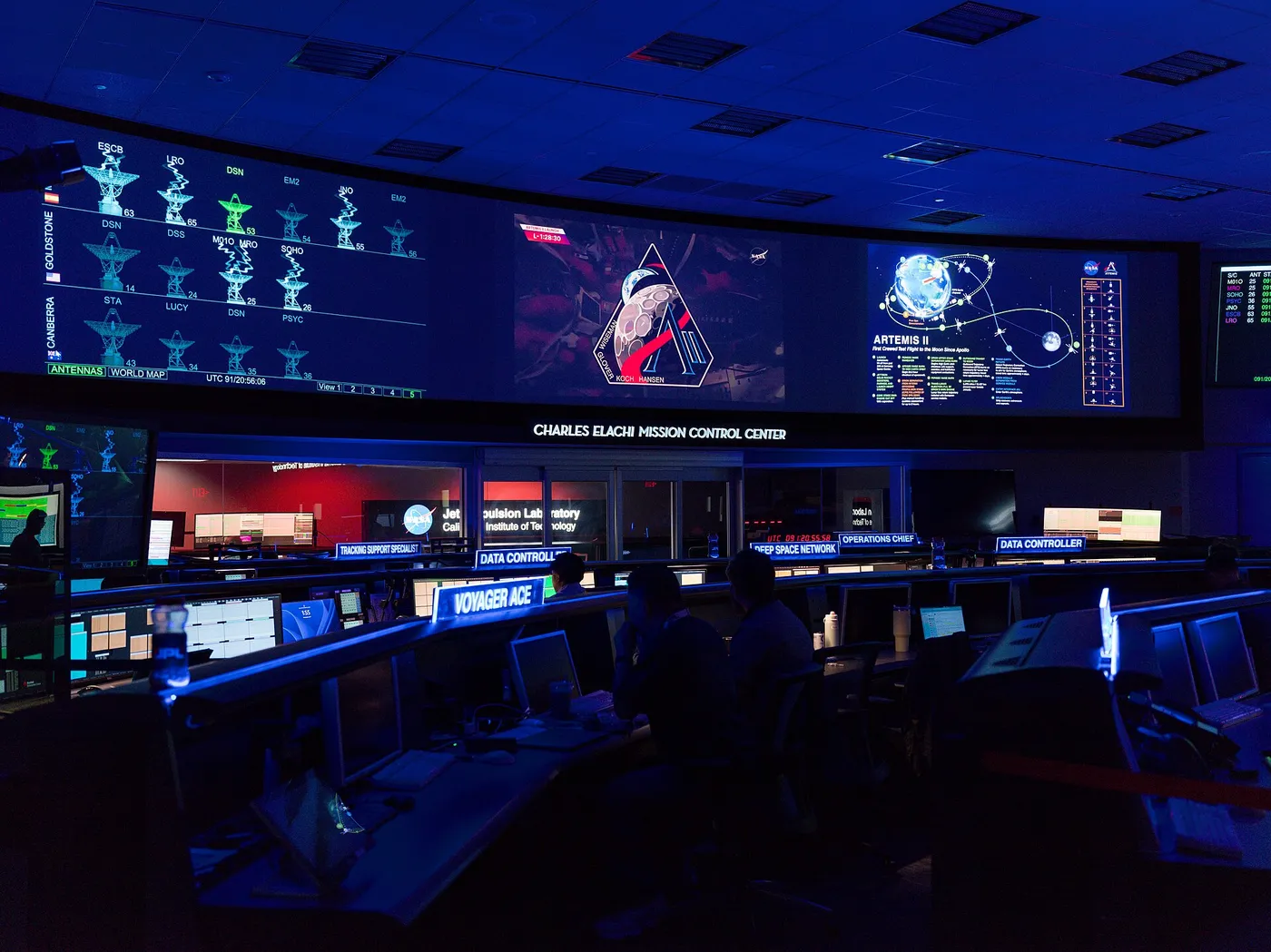
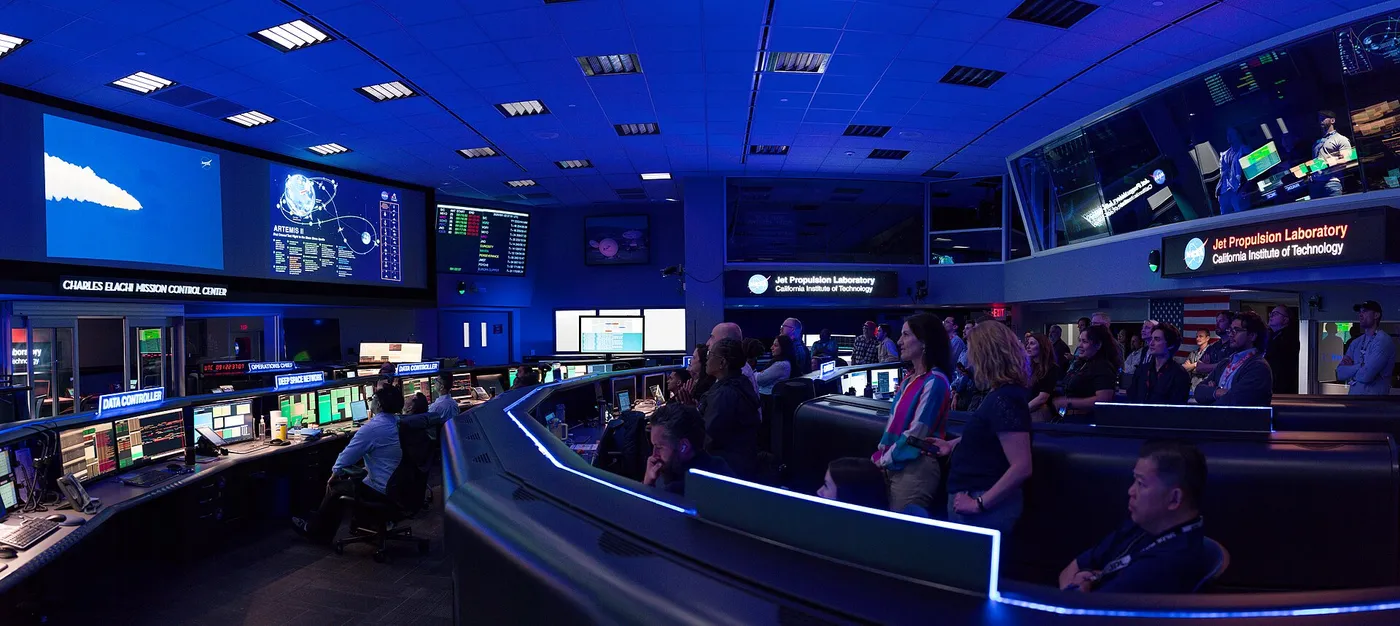

Artemis II will carry four people around the Moon and back, the first crewed flight beyond low Earth orbit since Apollo 17 in December 1972 — a gap of more than half a century, longer than the entire span from the first satellite to the last lunar landing.
The crew is Reid Wiseman, Victor Glover, Christina Koch and, from the Canadian Space Agency, Jeremy Hansen. It is a deliberately representative group: Glover would be the first Black astronaut to fly a lunar mission, Koch the first woman, and Hansen the first person from any country other than the United States to travel to the Moon.
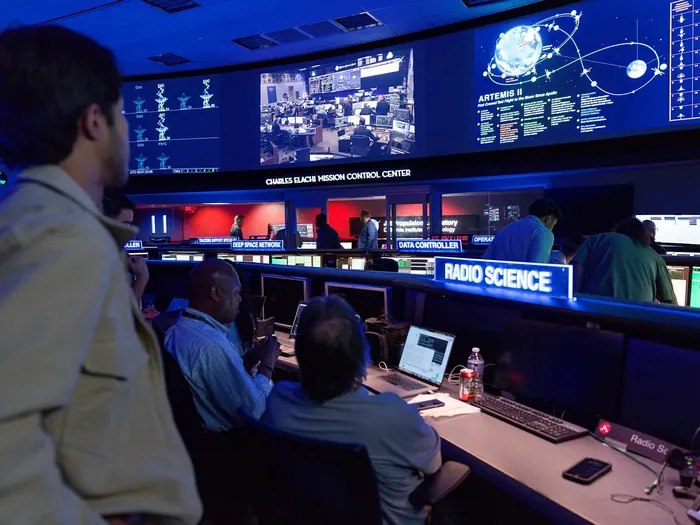
The profile is a free-return trajectory, the same fundamentally safe arrangement Apollo 8 and Apollo 13 used, in which the spacecraft loops around the far side and is brought home by gravity without needing to fire an engine. The mission lasts around ten days and does not enter lunar orbit; its purpose is to prove the vehicle with a crew aboard.
It has slipped repeatedly, chiefly because of the heat shield erosion found after Artemis I, along with problems with the life support and battery systems. The current plan flies a modified re-entry profile intended to avoid the conditions that caused the char loss, rather than waiting for a redesigned shield.
Beyond the flight itself, the mission carries the weight of a programme that has consumed decades and tens of billions of dollars and has not yet put anyone anywhere. Whether the Artemis architecture — an expensive expendable rocket, a commercial lander still in development, and a station in lunar orbit — proves sustainable is the question the rest of the decade will answer.