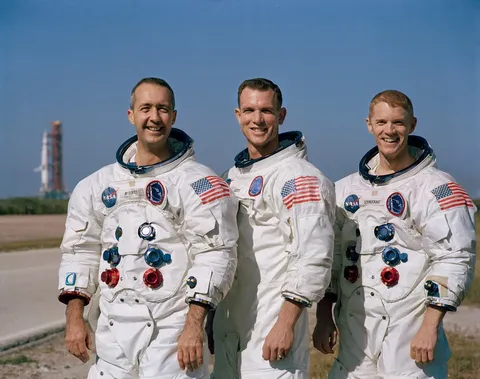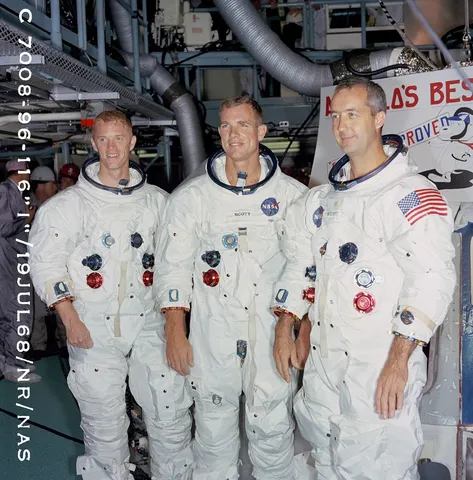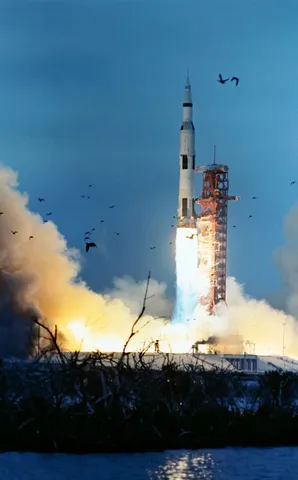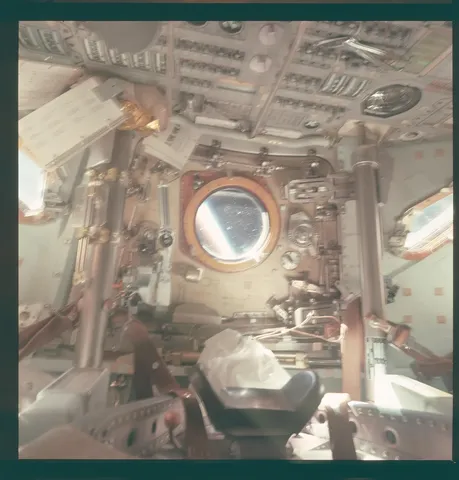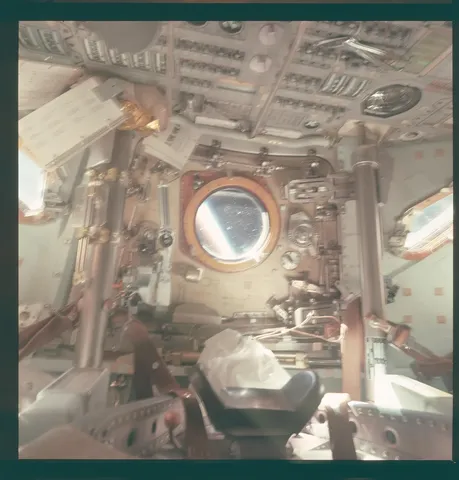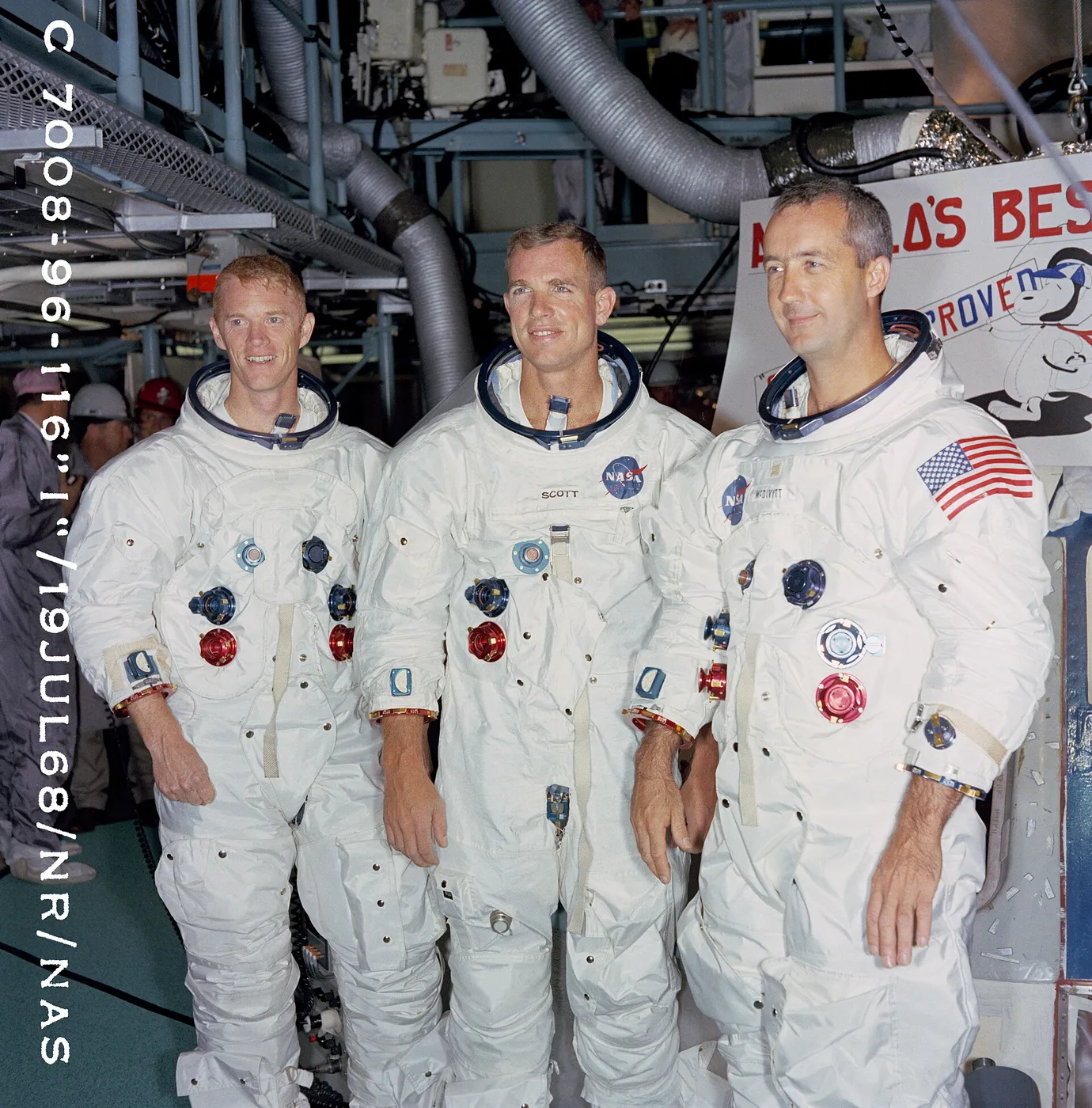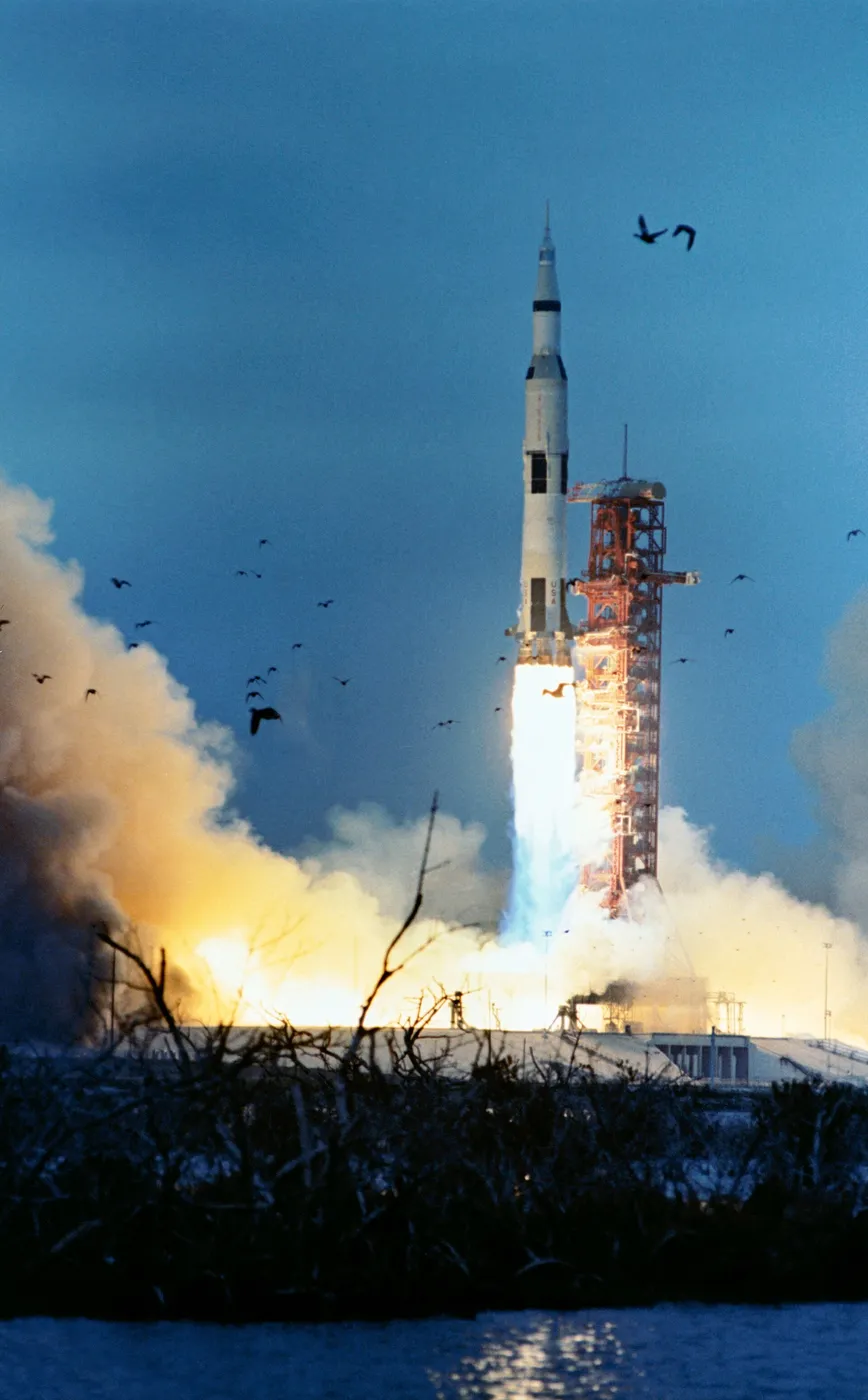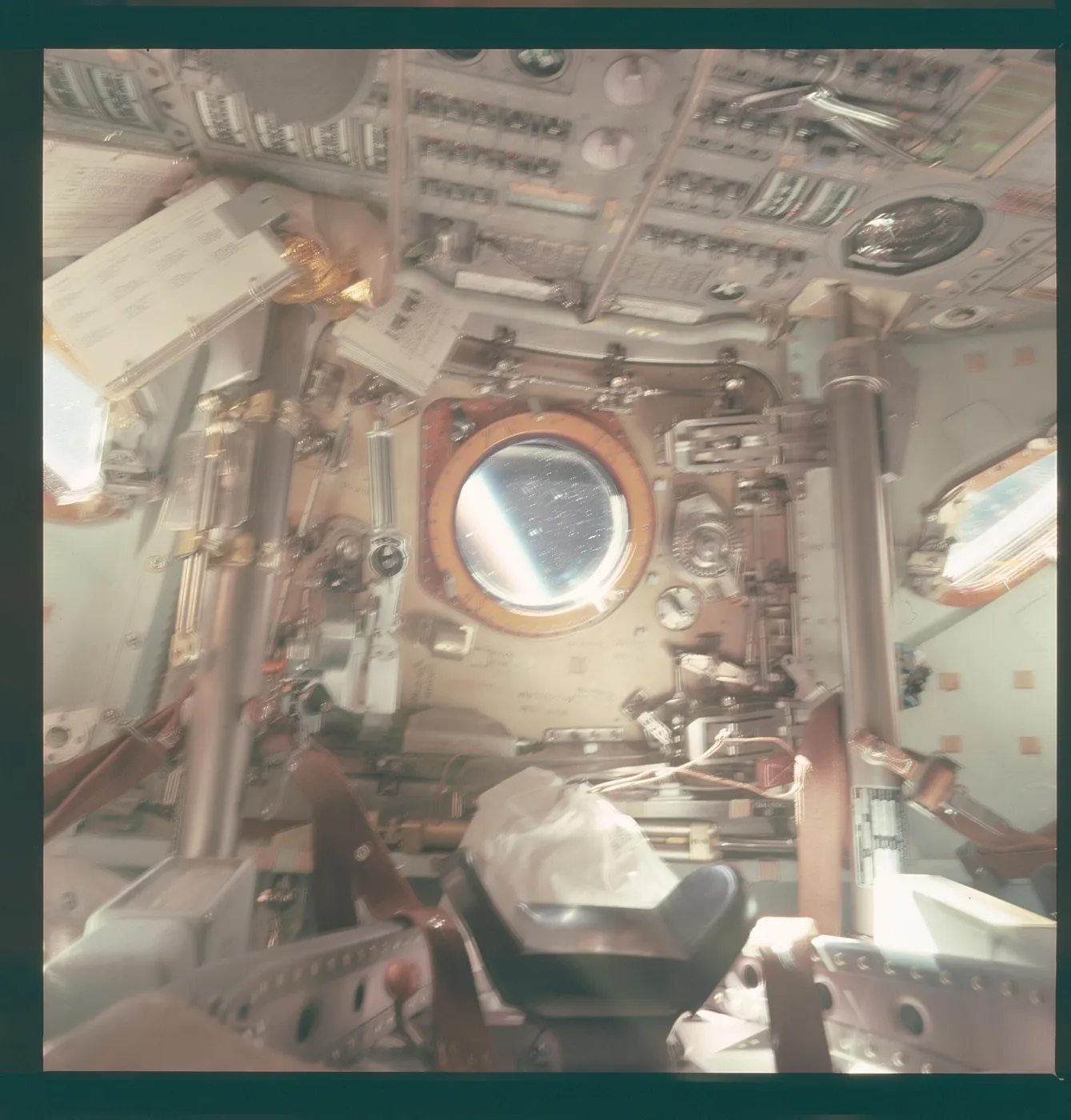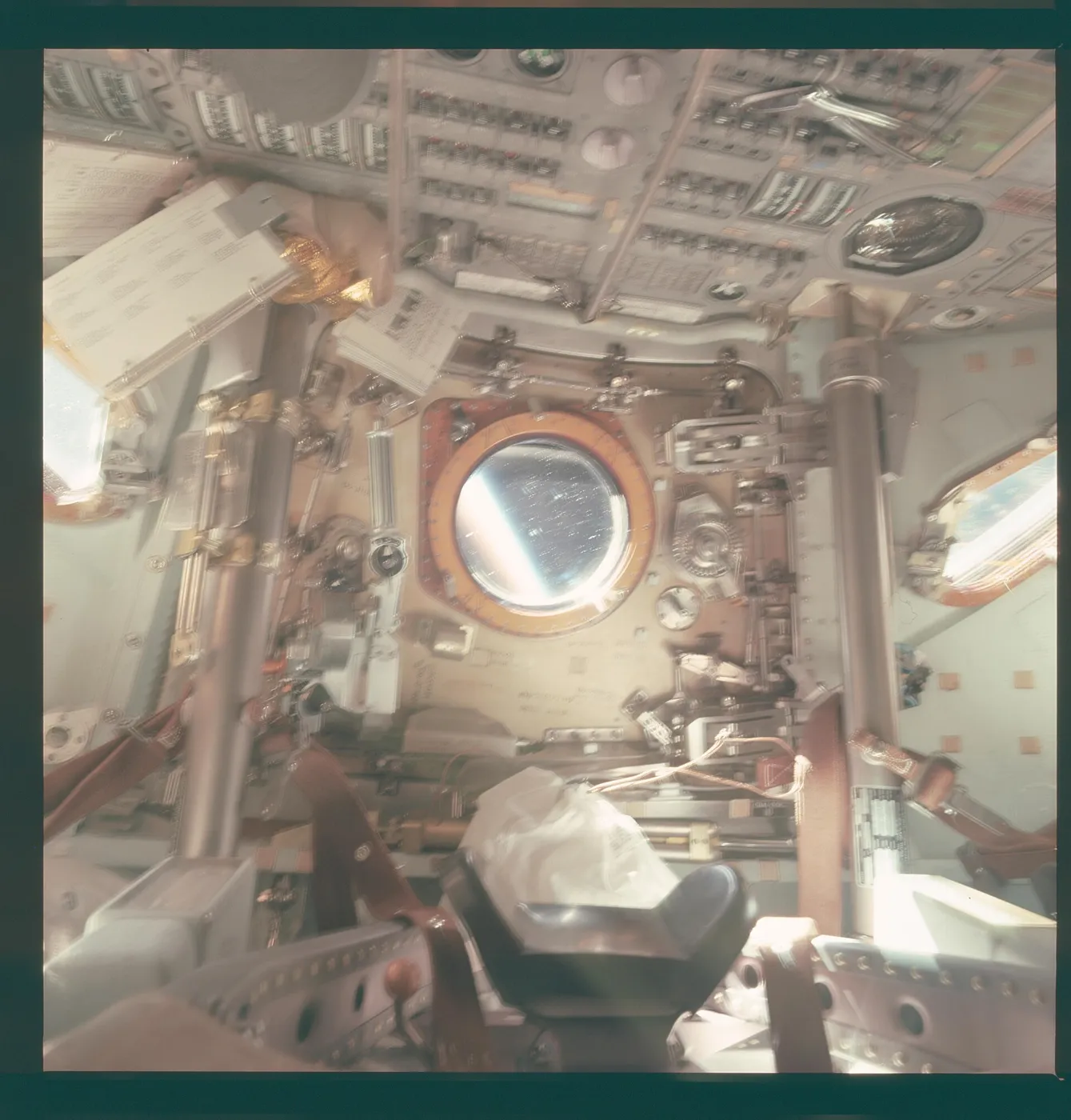
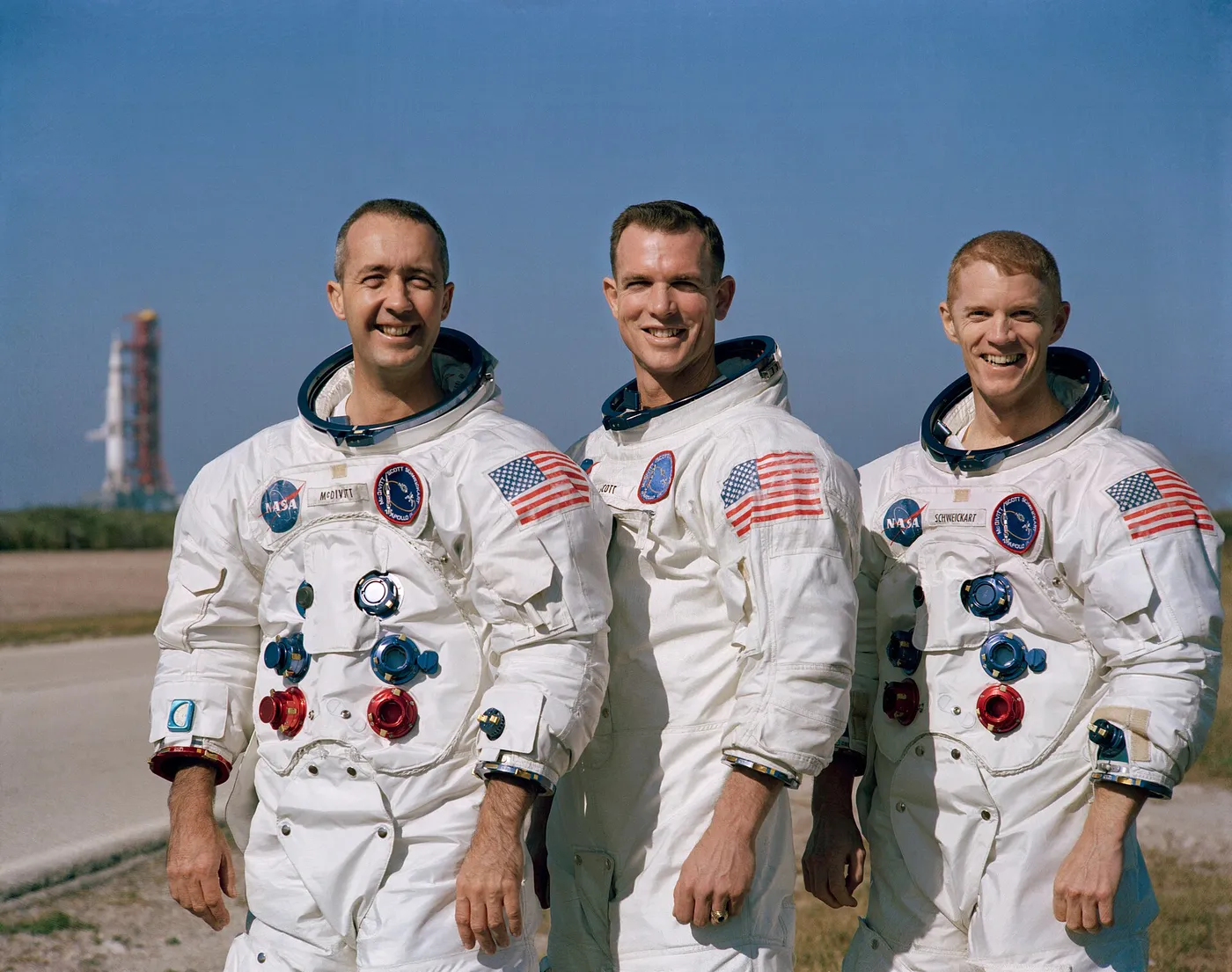
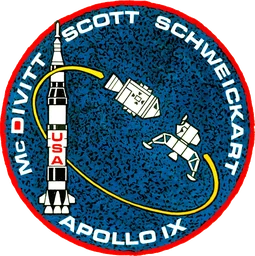
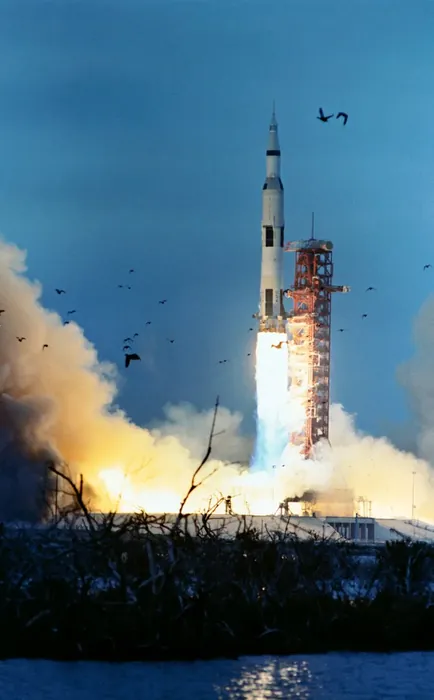
Apollo 9 is the mission the public forgot and the engineers could not have done without. In March 1969, with the clock ticking towards Kennedy's deadline, James McDivitt, David Scott and Rusty Schweickart spent ten days going nowhere at all — circling the Earth, wringing out the one piece of hardware that had never carried a crew. The lunar module had flown once, unmanned and legless. Now someone had to get inside it.
Because two spacecraft would fly separately for the first time, they needed names, and the crew chose with their tongues in their cheeks: the command module was Gumdrop, after the blue wrapping it had arrived in, and the lunar module was Spider, which is exactly what it looked like. NASA's public affairs office winced. The call signs stuck.
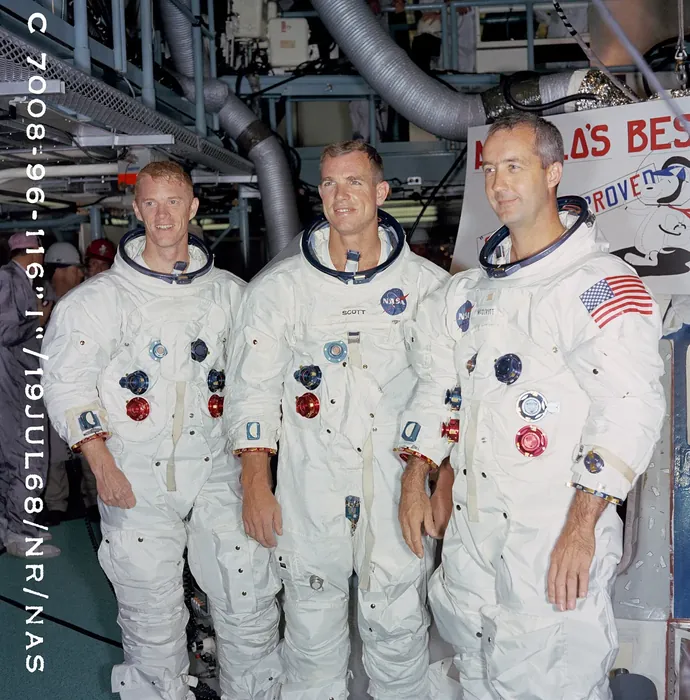
The flight nearly came apart on Schweickart. Space sickness hit him hard — vomiting in a spacecraft is not merely unpleasant but genuinely dangerous in a sealed suit — and a planned spacewalk had to be cut back. He recovered enough to stand in the lunar module's open hatch in boot restraints the crew nicknamed golden slippers, testing the self-contained backpack that every moonwalker would later depend on, while Scott leaned out of Gumdrop's hatch to film him. Schweickart's candour about being ill, at a time when astronauts simply did not admit weakness, cost him professionally and earned him lasting respect.
Then came the real test. McDivitt and Schweickart undocked Spider and flew away — 180 kilometres away — in a machine with no heat shield, which meant that if the ascent engine failed to bring them back they had no way home at all. They jettisoned the descent stage, lit the ascent engine exactly as a crew leaving the Moon would, and chased Gumdrop back down for a rendezvous and docking. It was the whole lunar landing sequence, rehearsed where a rescue was at least conceivable.
Nothing about Apollo 9 photographed well and none of it caught the public imagination, but it retired the last great unknown. The lunar module could keep men alive, fly on its own, split in half on command and find its mother ship again. Two months later a crew would take one to within fifteen kilometres of the lunar surface, and four months after that another would land.