
The lunar module was the strangest machine of the programme, and the most fragile. Built by Grumman for a place with no atmosphere, it never had to be streamlined or strong enough for Earth; its skin in places was thin enough to push a pencil through, and it could not survive re-entry under any circumstances. Before a crew could be asked to fly one down to the lunar surface, somebody had to prove the thing worked at all.
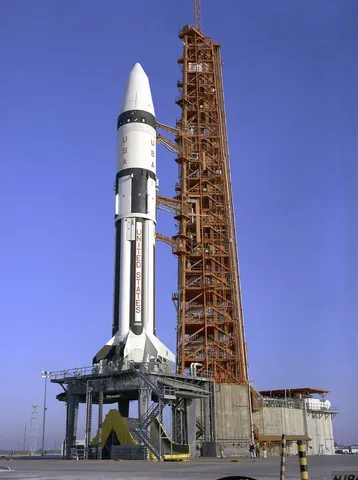
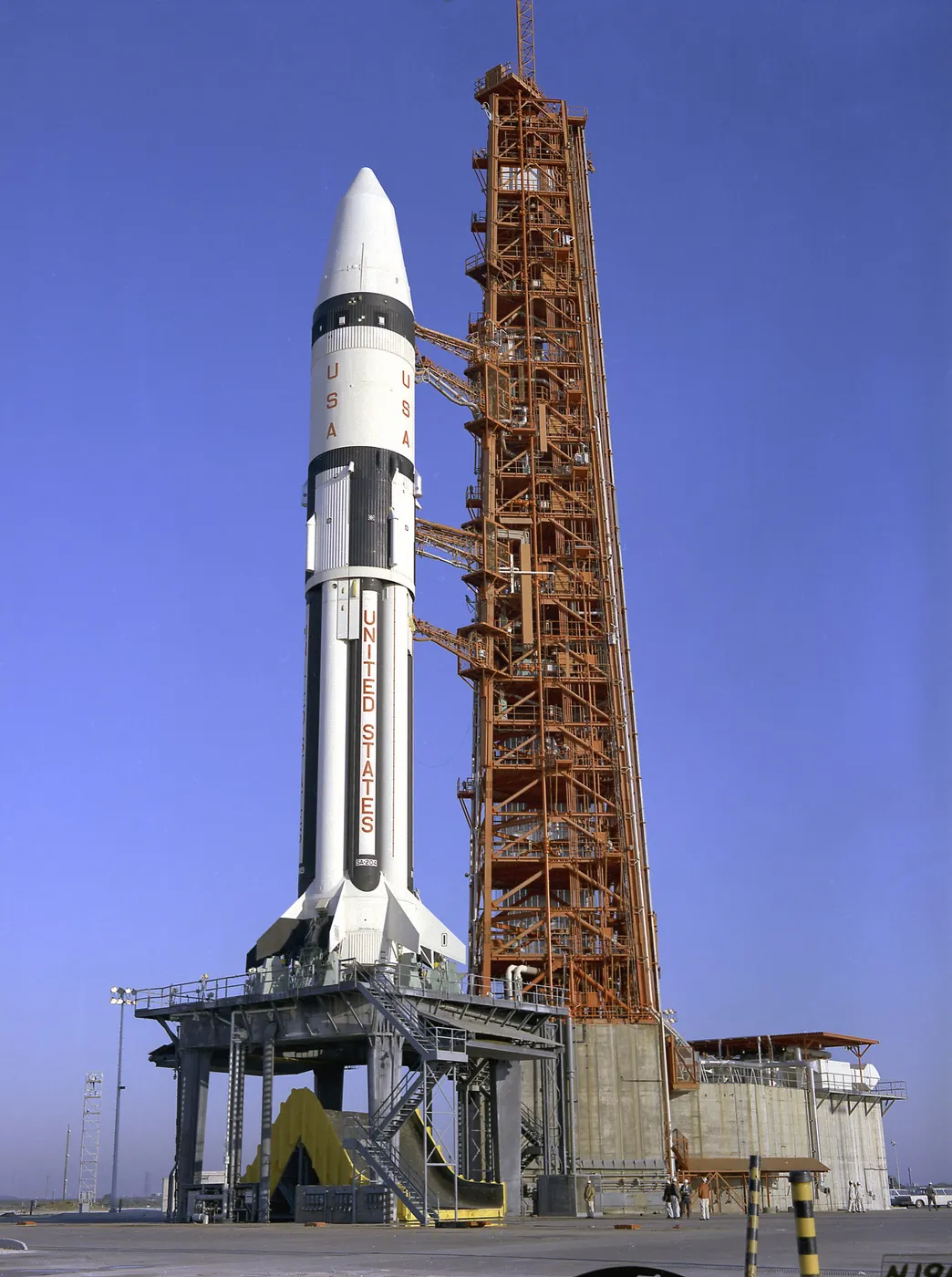
LM-1 flew unmanned on 22 January 1968, launched by a Saturn IB from Pad 37B, and it went up without legs — it was never coming back, so it was never given any. The objectives were the two engines on which every future landing depended: the descent engine that had to be throttled, a rarity in rocketry, and the ascent engine that was the crew's only way off the Moon, a motor with no backup whatsoever.
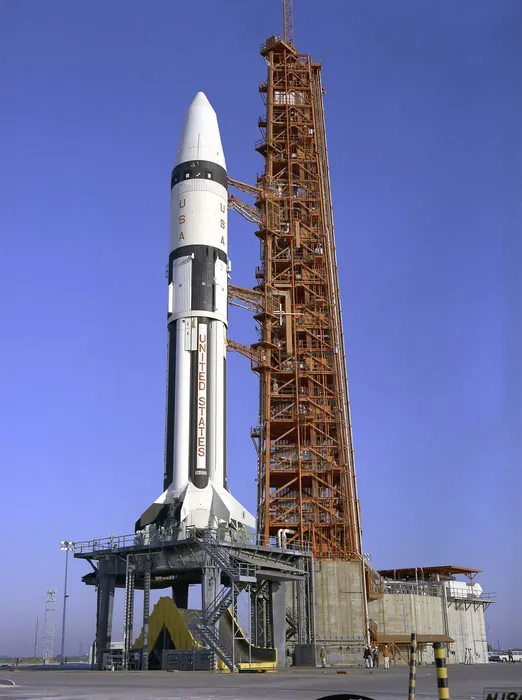
The first descent burn went wrong almost at once. The guidance computer, watching for a velocity change that built more slowly than its programming expected, shut the engine down after four seconds. It was a software assumption rather than a hardware fault, but for a few minutes the mission looked lost. Controllers fell back on a pre-planned alternative, commanding the engine directly, and coaxed the remaining objectives out of the vehicle.
That salvage produced the day's most important result: the so-called “fire in the hole” test, in which the ascent engine was lit while the module was still attached to its descent stage, exactly as it would be during an emergency abort off the lunar surface. The stack split cleanly and the ascent engine ran. It was an ugly, improvised sort of success, but it answered the only question that really mattered.
NASA had planned a second uncrewed lunar module flight and now judged it unnecessary — a decision that saved months on a schedule with a deadline at the end of the decade. LM-1 burned up in the atmosphere three weeks later, unmourned and unphotographed. Fourteen months after it flew, a machine of the same design would settle onto the Sea of Tranquility with two men aboard.