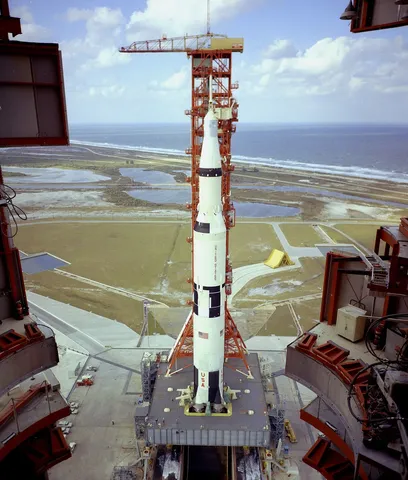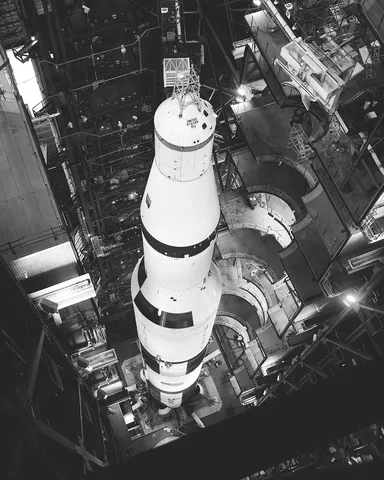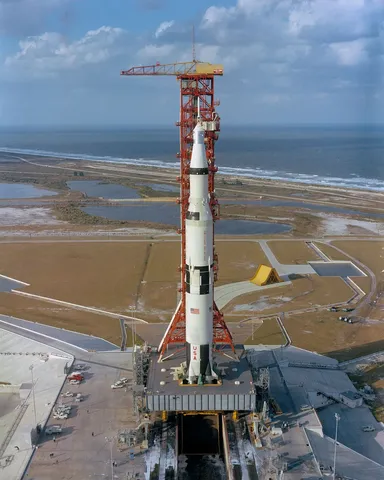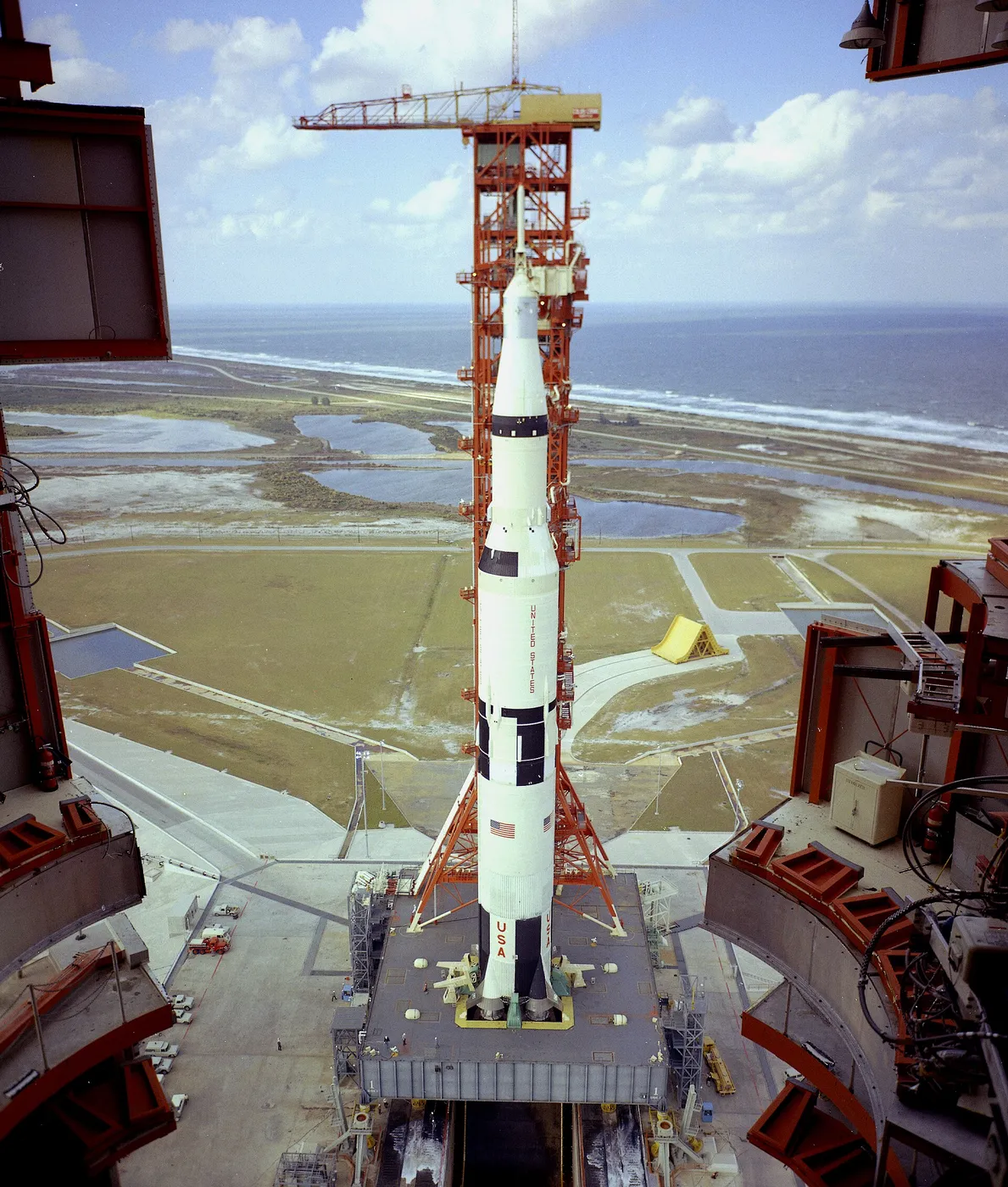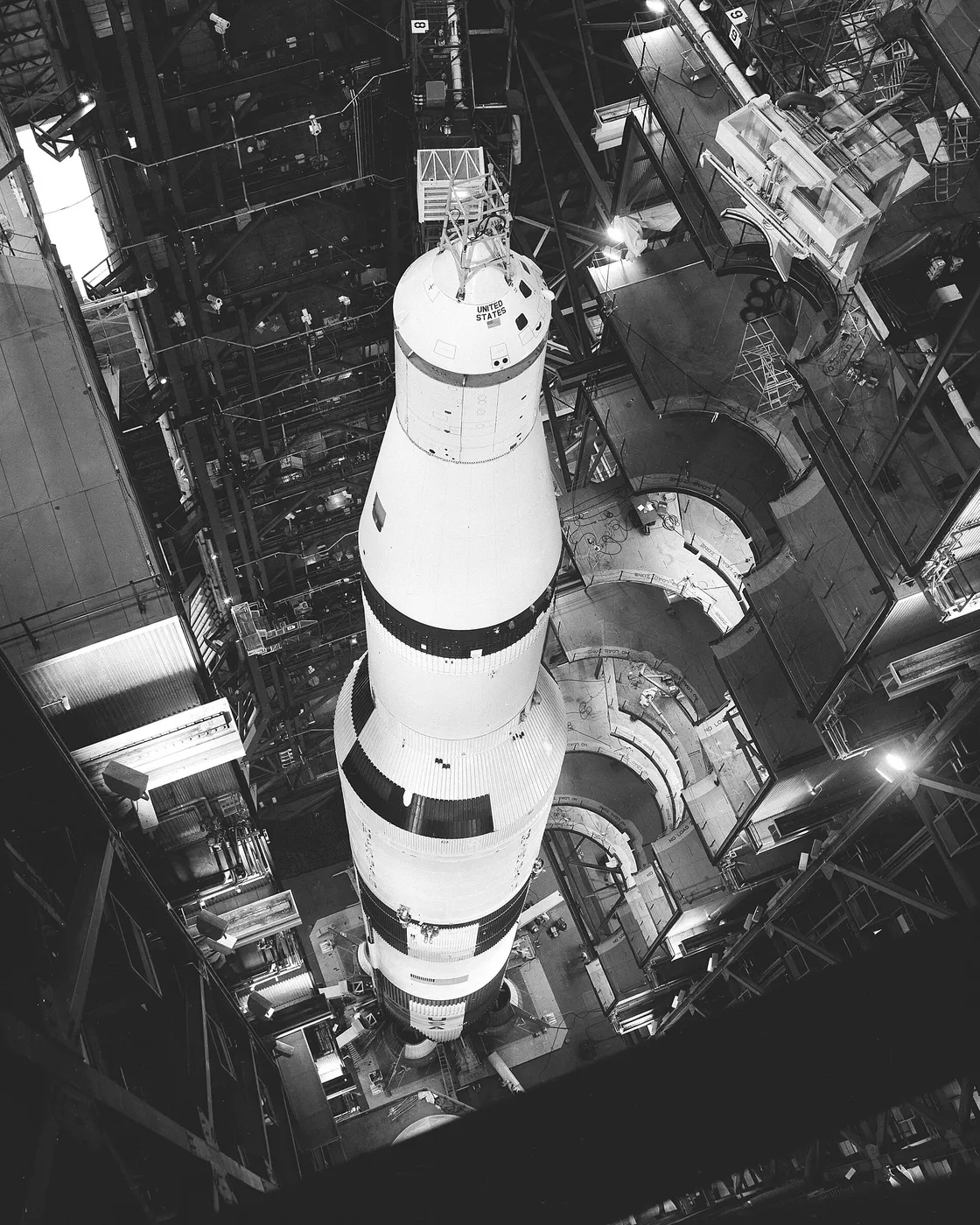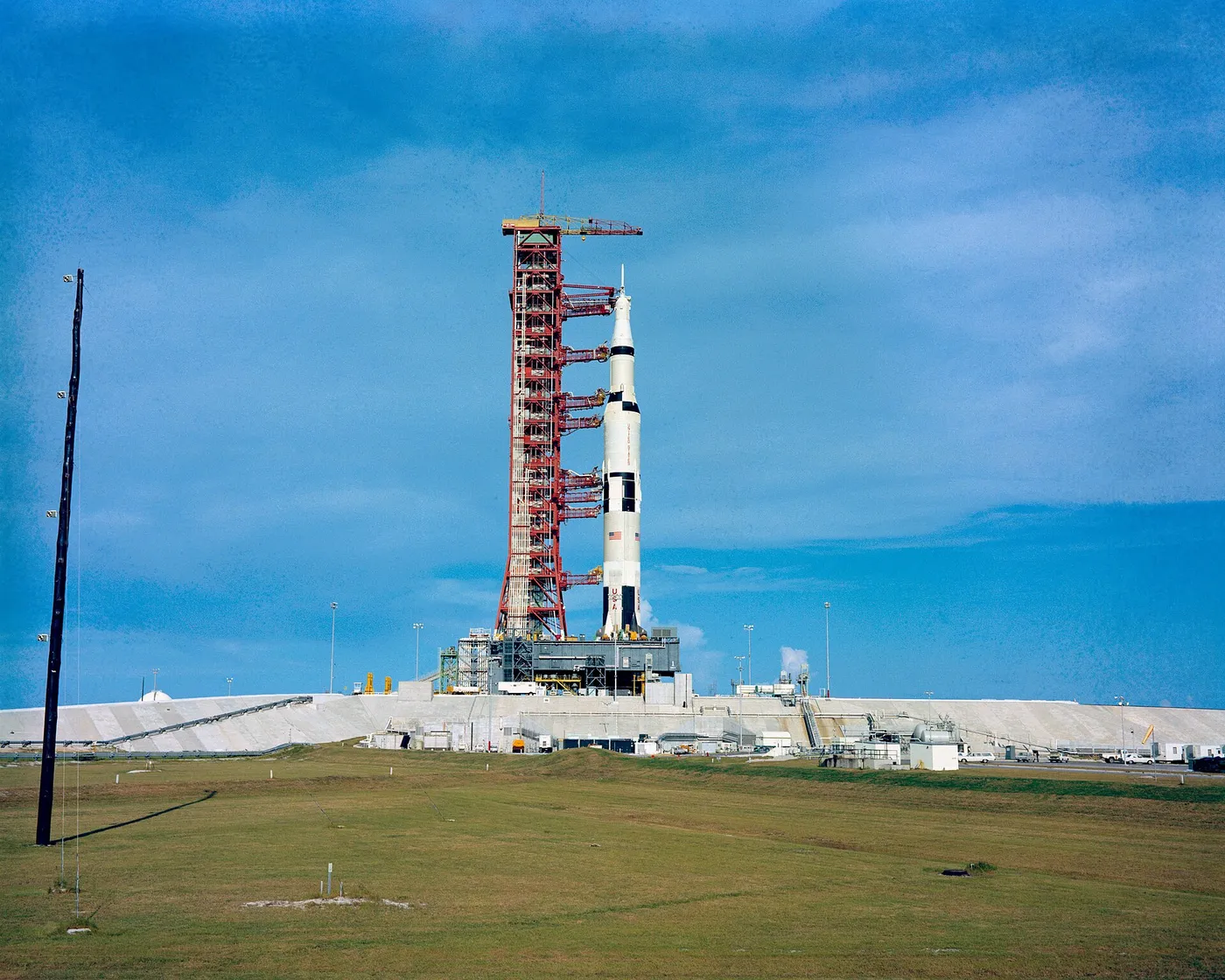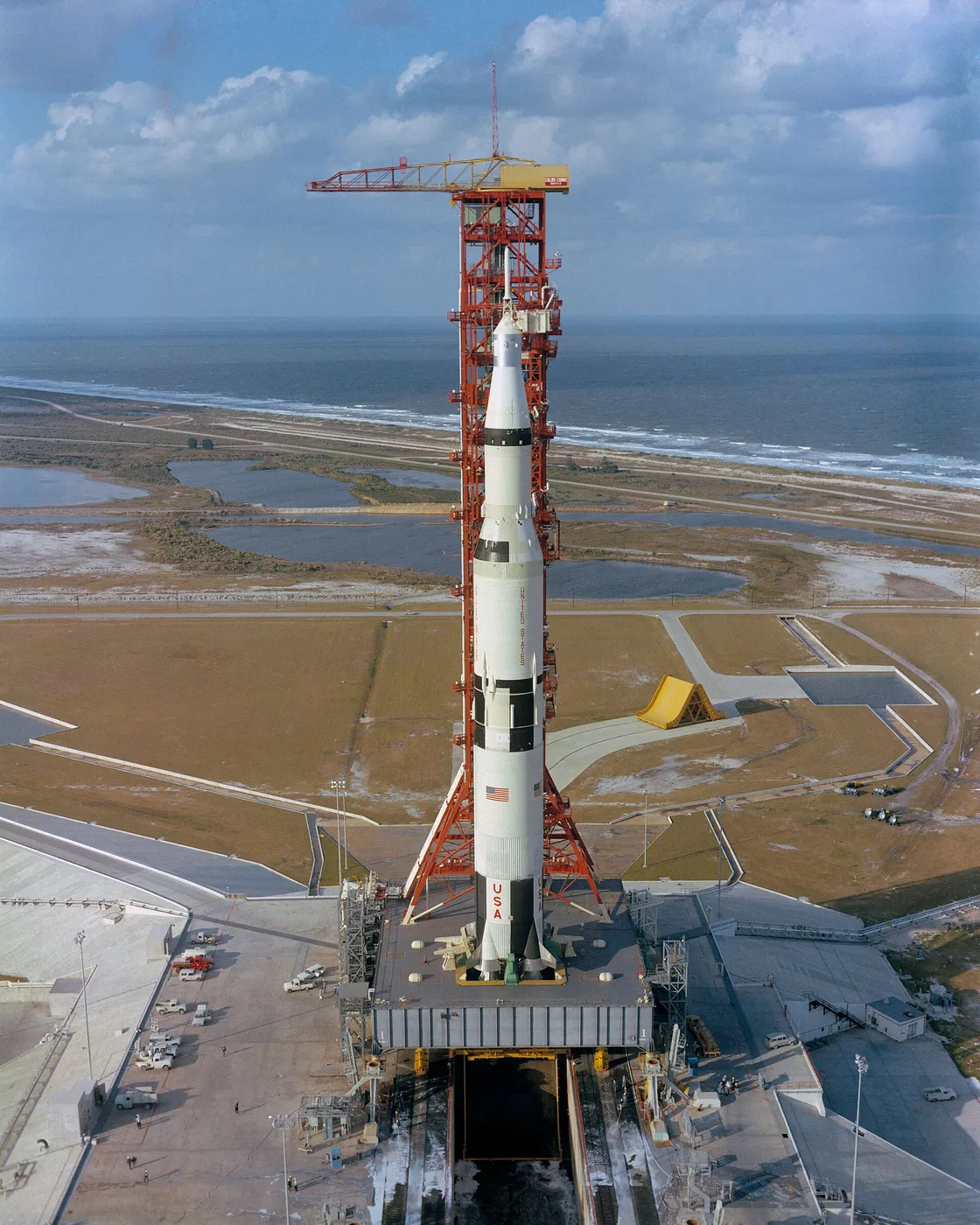

By late 1967 NASA had a Moon rocket that had never flown. The Saturn V stood thirty-six storeys tall, burned three separate stages and carried more explosive energy than anyone had ever deliberately lit, and the conventional wisdom said you tested such a machine one stage at a time over years. George Mueller, running crewed spaceflight at headquarters, refused. His “all-up” doctrine held that every stage should fly live on the first attempt — a gamble that appalled Wernher von Braun's engineers until they did the arithmetic on the calendar and realised there was no other way to reach the Moon by 1970.
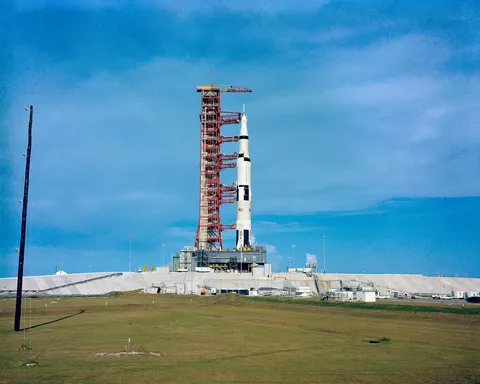
So on 9 November 1967 the whole stack flew at once, uncrewed, on the first launch ever staged from the new Pad 39A. The sound was the part nobody had modelled properly. Five kilometres away in the CBS booth, Walter Cronkite found the ceiling tiles shaking loose around him and ended up bracing the observation window with his hands while shouting over a roar that rattled the whole building — a moment of live television that conveyed the rocket's violence better than any specification could.
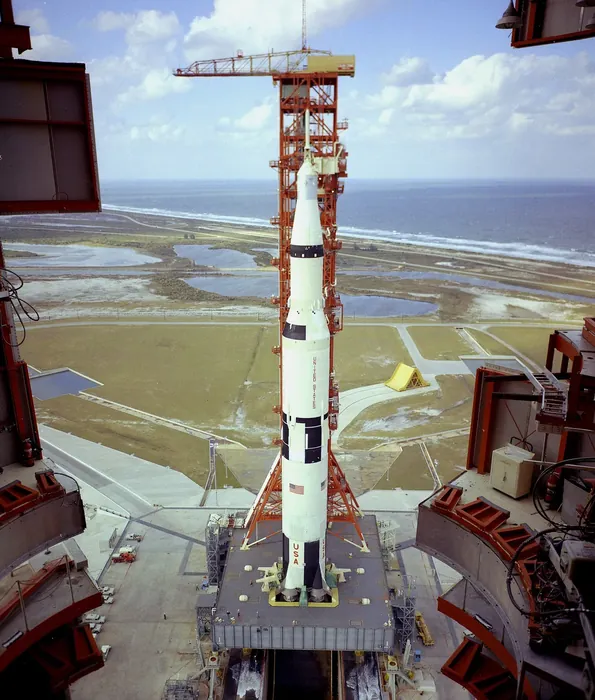
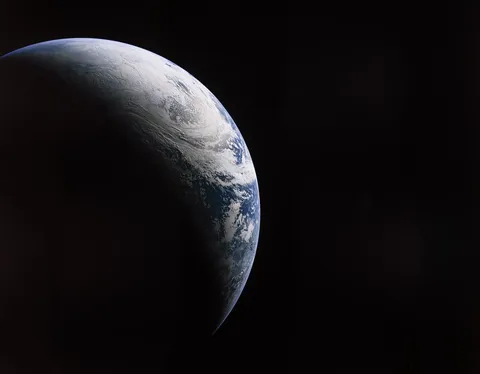
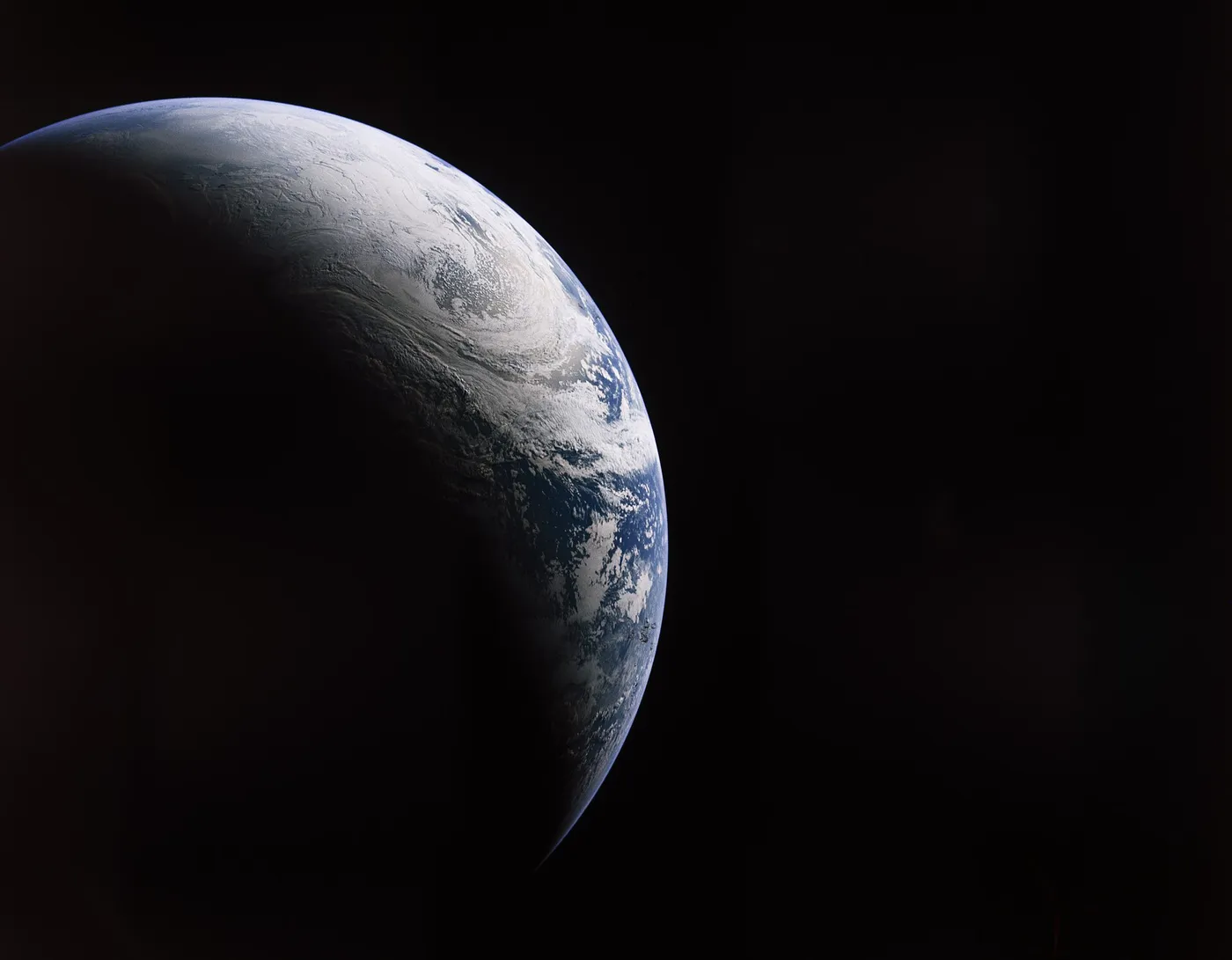
The flight plan was designed to be brutal on purpose. After reaching orbit, the third stage restarted to fling the command module out to some 18,000 kilometres, so that it would fall back and hit the atmosphere at close to the speed of a ship returning from the Moon. The heat shield had to survive roughly 11 kilometres per second and temperatures near 2,800 degrees Celsius — the one thing that absolutely could not be tested any other way.
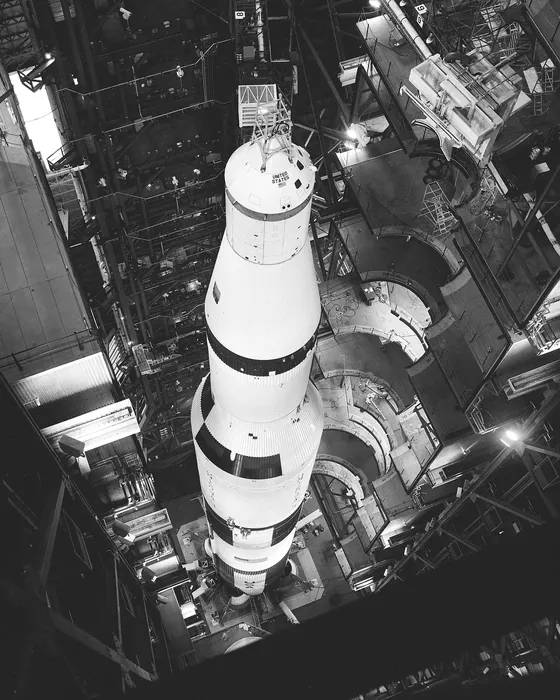
Everything worked. The stages lit and separated on time, the shield came home charred but intact, and the command module was fished out of the Pacific in good order after not quite nine hours of flight. In a single afternoon the all-up gamble had paid off, and a rocket that had never before left the ground was declared very nearly ready to carry people.
For an agency still raw from the pad fire ten months earlier, it was the first unambiguous good news in a year. Apollo 4 proved the launch vehicle, proved the heat shield at lunar speeds, and proved that Mueller had been right to push. The confidence it bought would be spent almost immediately: within thirteen months the same rocket type would carry three men out of Earth's gravity for the first time.