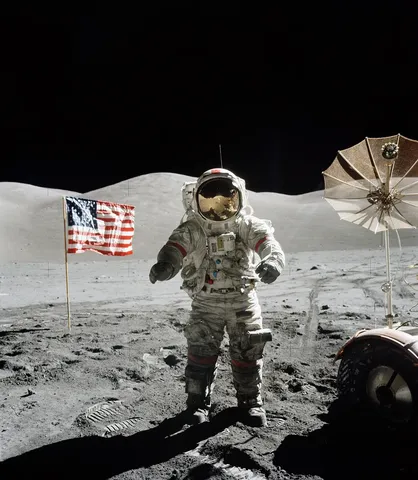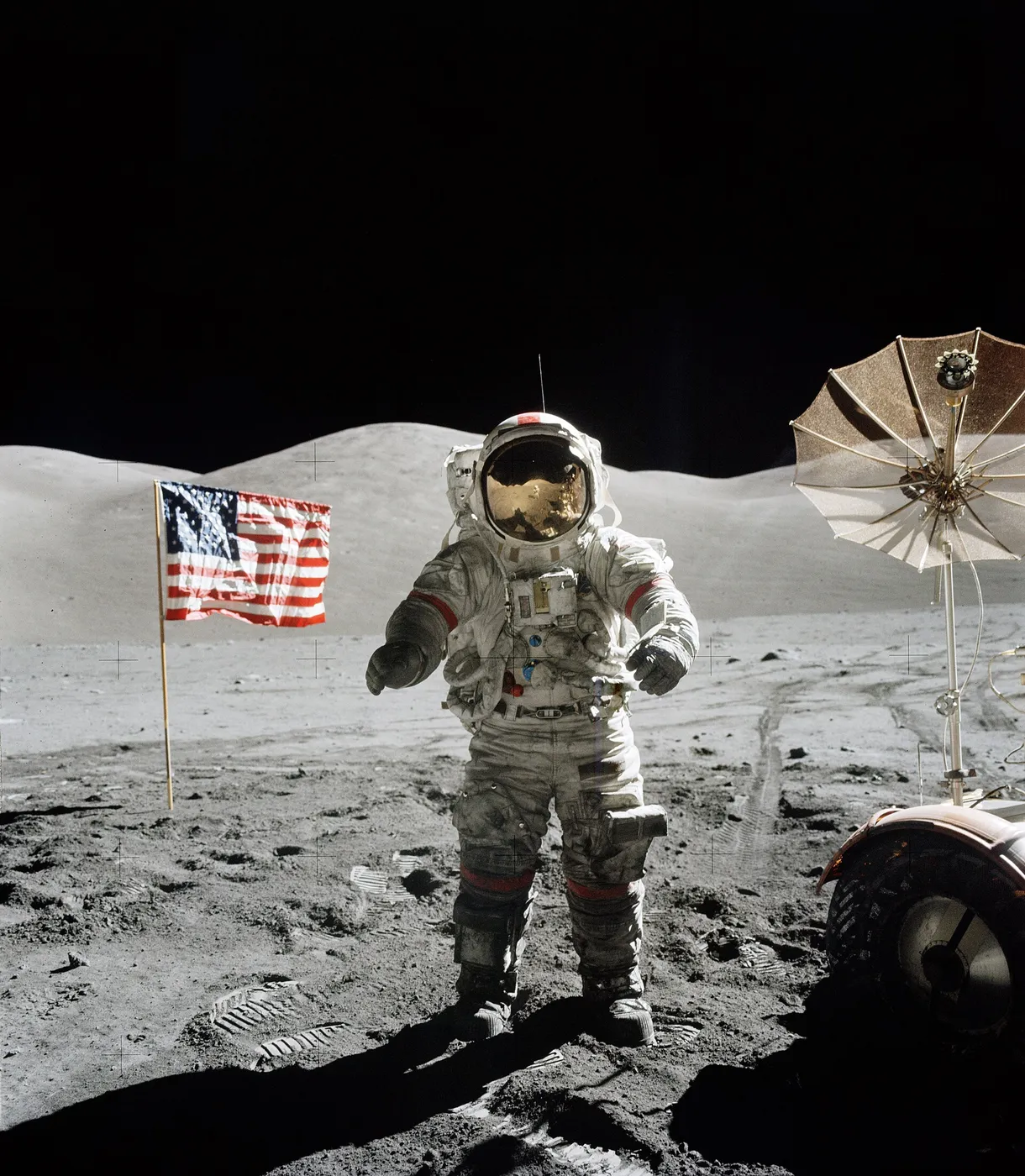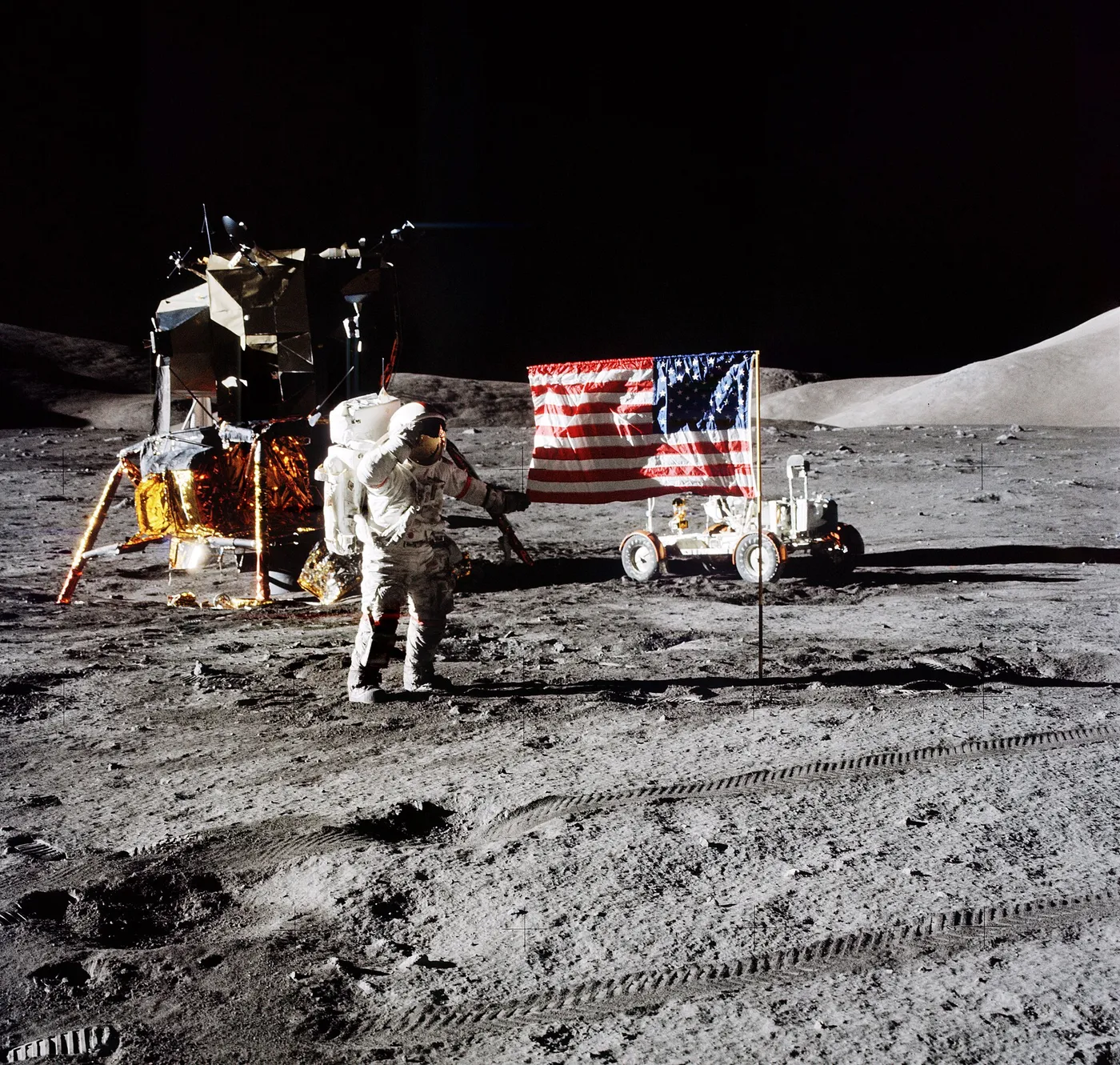

The last flight to the Moon left in the middle of the night. On 7 December 1972 the only night launch of a Saturn V turned the Florida coast to daylight and was seen, some reported, from 800 kilometres away. Aboard were Gene Cernan, Ronald Evans and — after a public campaign by scientists who had watched eleven test pilots go to the Moon ahead of them — Harrison Schmitt, a professional geologist who had bumped an astronaut from the crew.
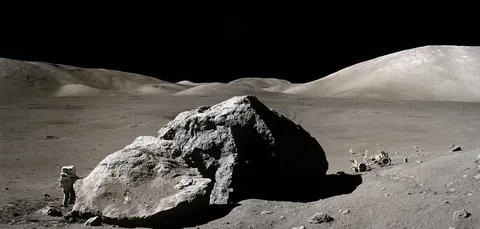
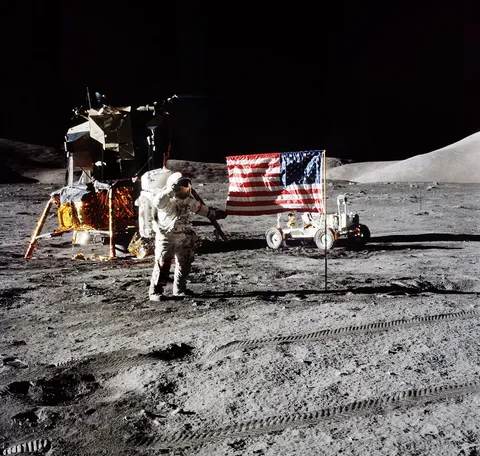
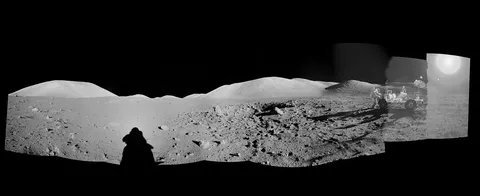
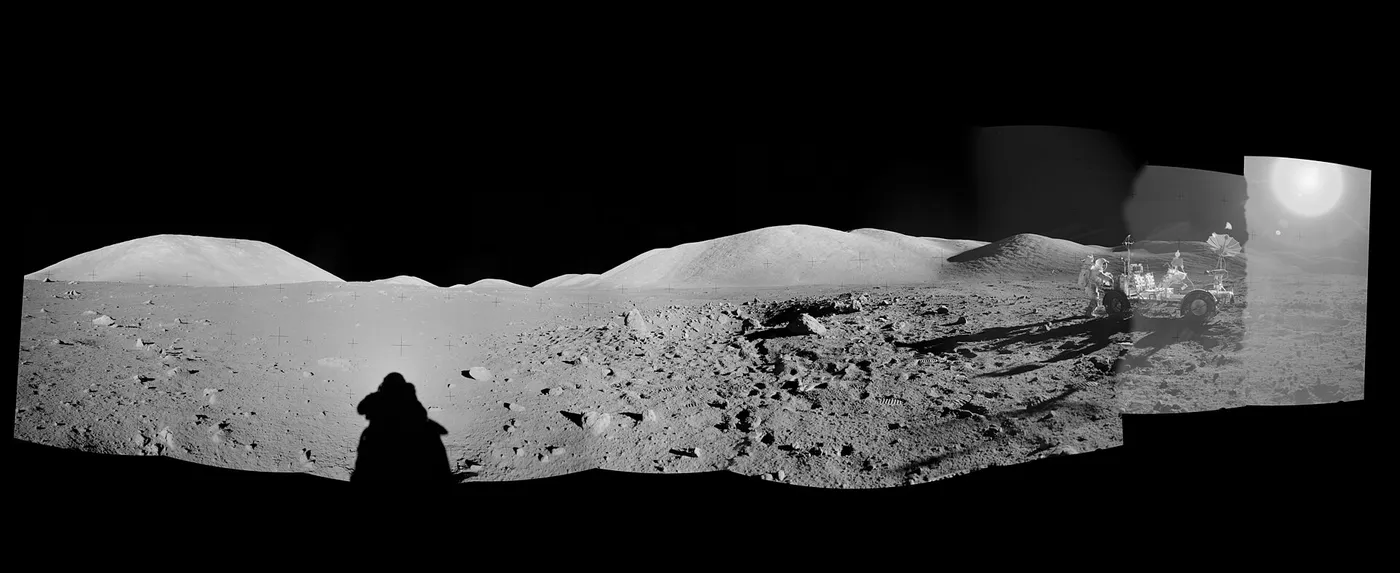
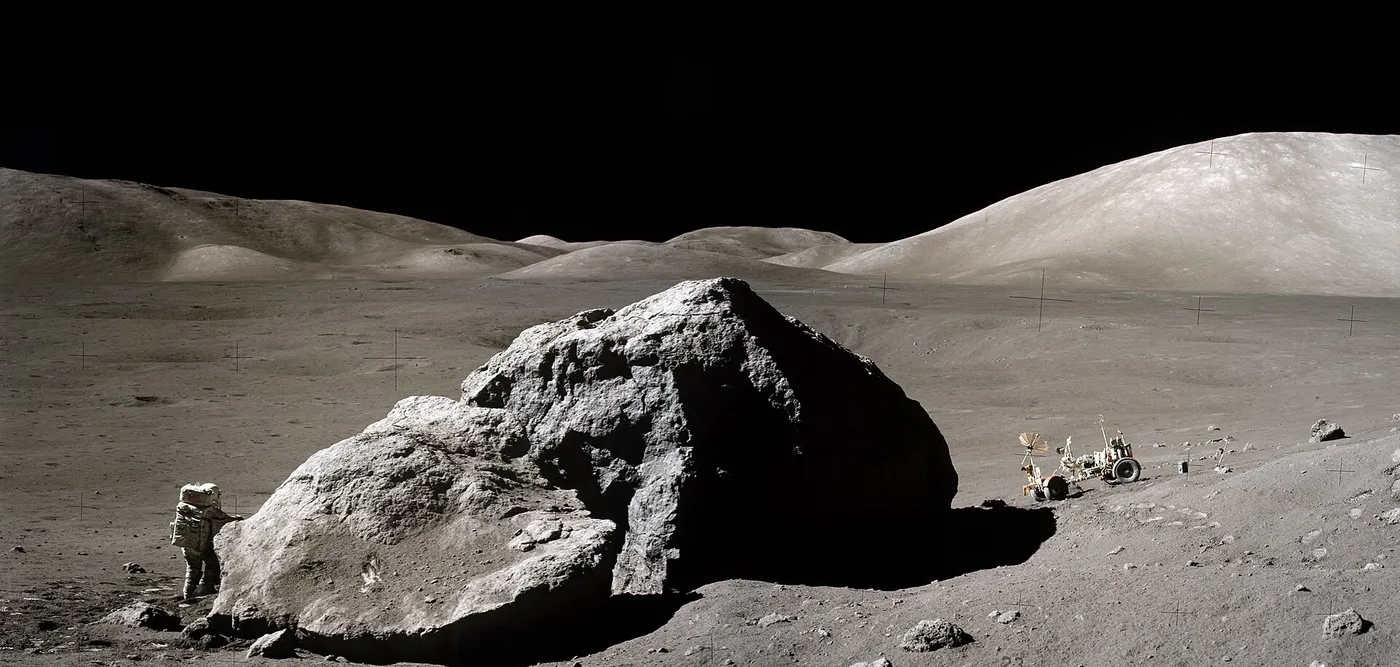
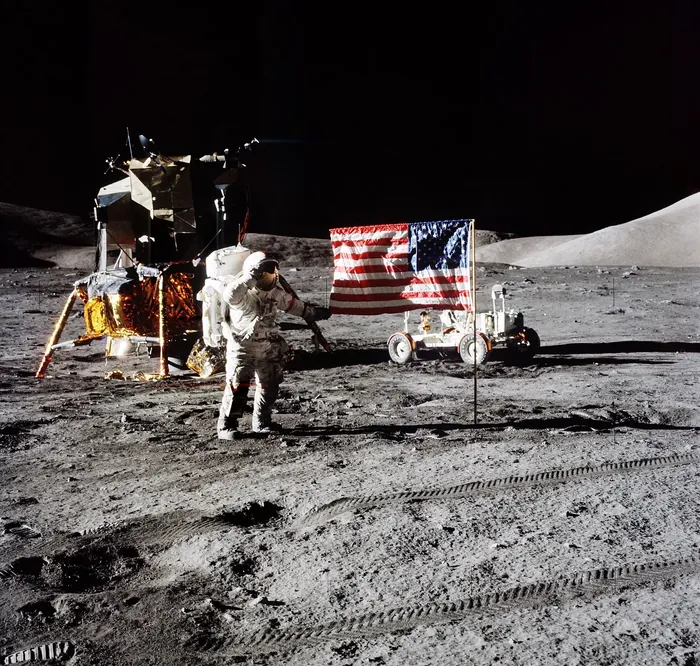
They landed in the Taurus-Littrow valley, a place chosen because it promised both ancient highland material and possible young volcanic deposits, ringed by massifs taller than anything in the Grand Canyon. What followed was the most productive field work of the programme: three excursions totalling some 22 hours outside, 35 kilometres driven, and roughly 110 kilograms of samples — more than any other mission brought home.
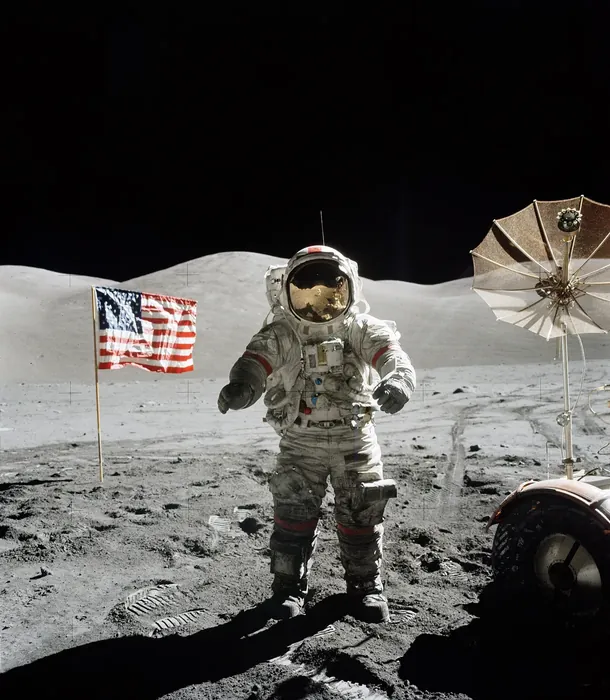
Schmitt's trained eye paid for itself at Shorty crater. Scuffing the surface, he stopped mid-sentence: the soil was orange. In a monochrome world the colour was so improbable that Houston asked him to check his visor. It proved to be countless tiny beads of volcanic glass, sprayed out by a fire fountain some 3.6 billion years ago and buried ever since — evidence of exactly the ancient volcanism the site had been chosen to test for.
The mission also produced the most reproduced photograph in history almost by accident. Five hours out, with the Sun behind them and the whole daylit planet filling the window, one of the crew took a hand-held frame of a complete Earth — Africa, Antarctica, a swirl of cloud over the Indian Ocean. Catalogued as AS17-148-22727, it became the Blue Marble, and it has been printed on more posters, flags and book covers than any picture ever taken. Even the rover took its share of improvisation: a broken fender was patched with laminated maps and clamps to stop rooster-tails of abrasive dust burying the crew.
On 14 December Cernan climbed the ladder for the last time and, knowing exactly what the moment was, said that they left as they came and, God willing, would return, with peace and hope for all mankind. He had already knelt and traced his daughter's initials in the dust. No one has been back. Half a century on, those three letters are presumably still legible, in a valley where nothing moves.