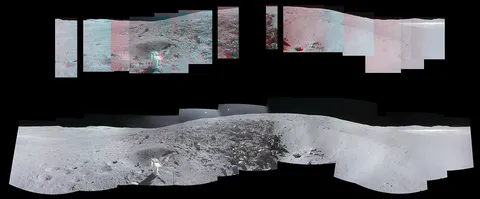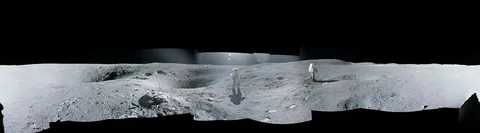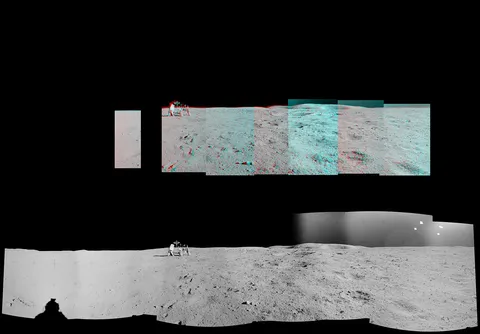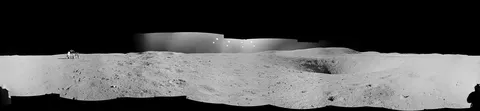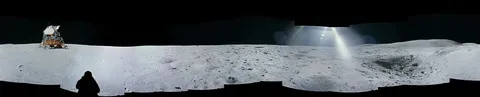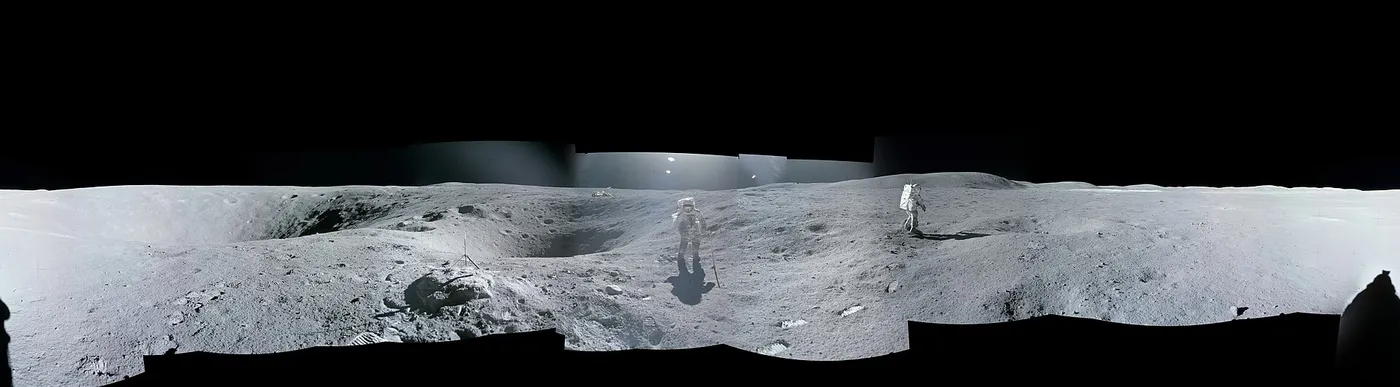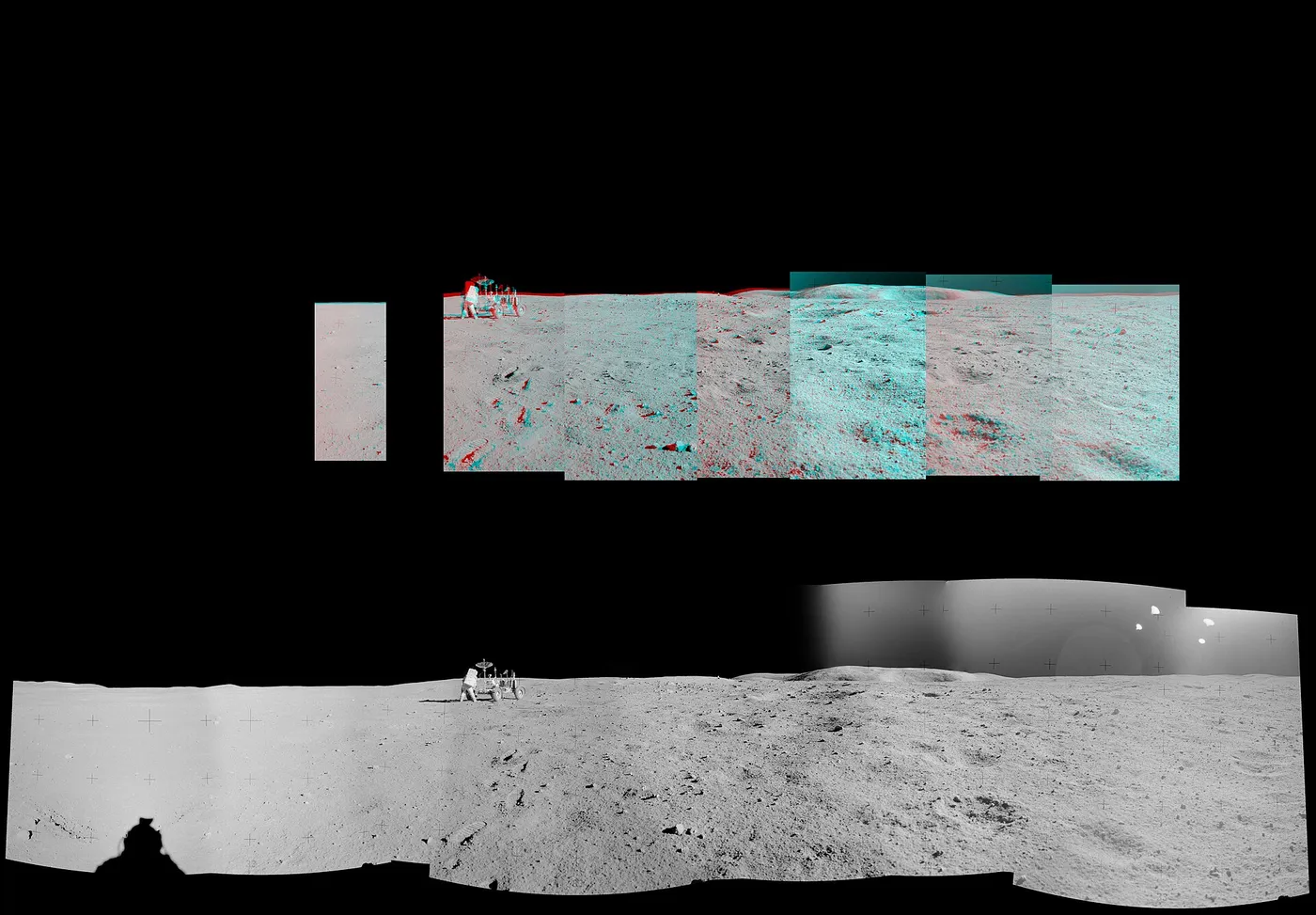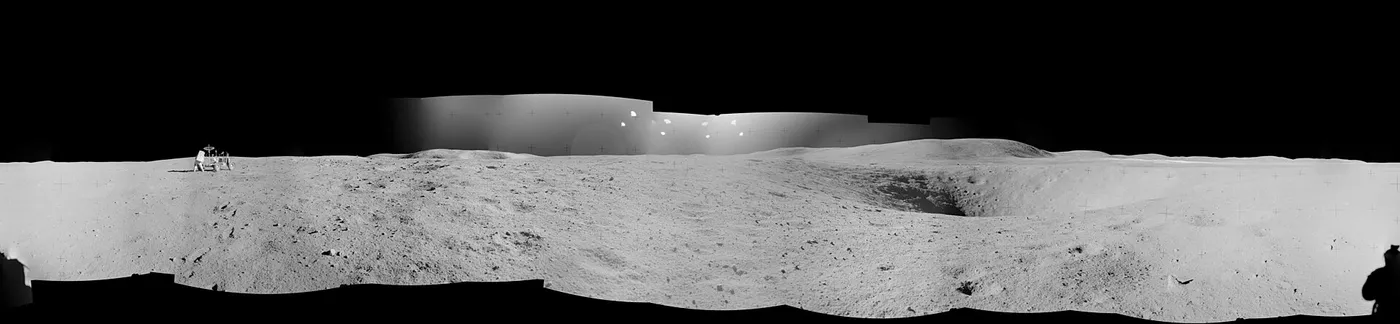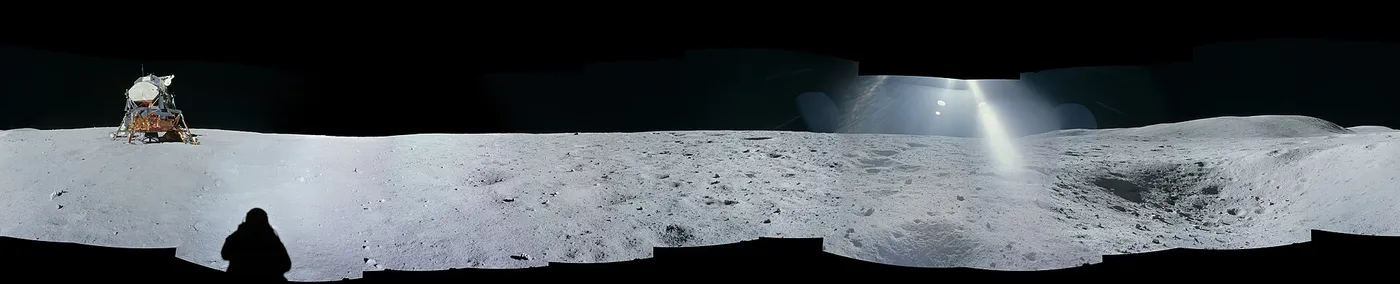
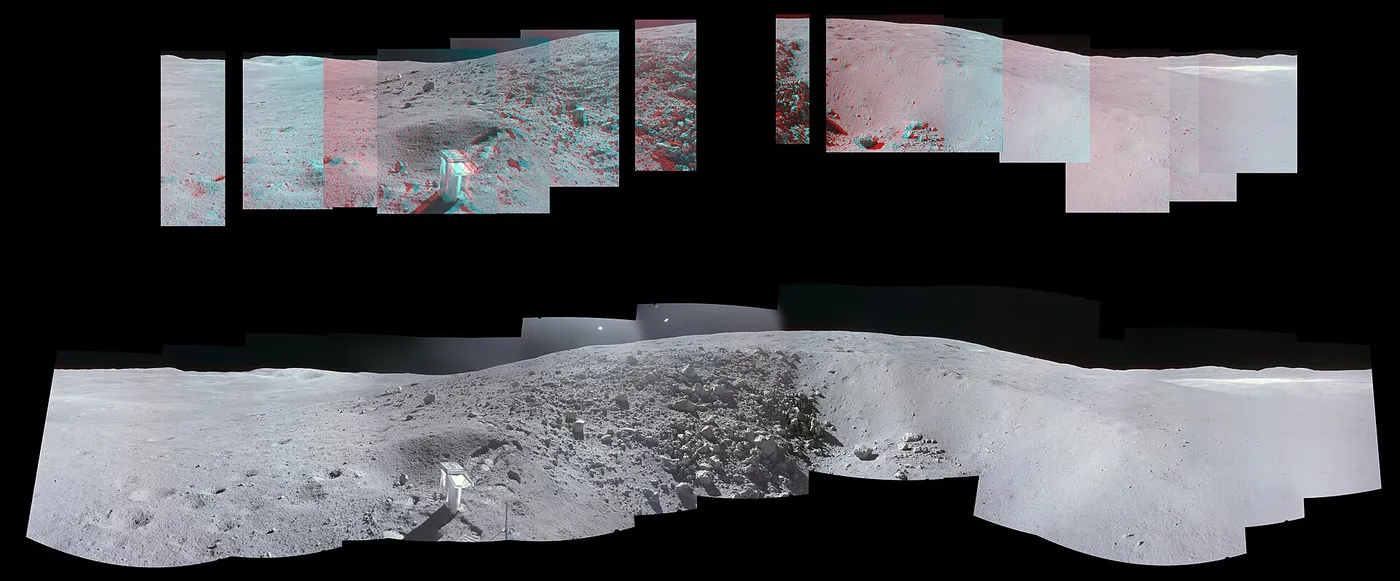
Apollo 16 went looking for volcanoes and found none, which turned out to be the point. In April 1972 John Young and Charlie Duke landed in the Descartes Highlands, a rugged, bright region that geologists were confident had been built by volcanic activity — the smooth plains and hills looked, from orbit, exactly like lava country. The mission was designed around that expectation.
Getting there was not straightforward. In lunar orbit, a test of the command module's engine produced an alarming oscillation in the backup gimbal system, and for nearly six hours Houston debated aborting the landing outright while the two spacecraft flew in formation waiting for a verdict. Engineers eventually decided the wobble was harmless, and Orion was cleared to descend — the closest any landing came to being cancelled after arrival.
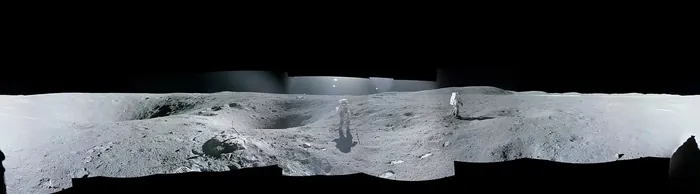
On the surface the rocks told a different story from the one everyone expected. Almost everything Young and Duke collected was breccia — shattered rock welded together by impacts, not lava. The volcanic hypothesis for the highlands collapsed, and with it a good deal of confident pre-flight interpretation. It was a reminder, expensively obtained, that reading geology from orbit is not the same as picking it up.
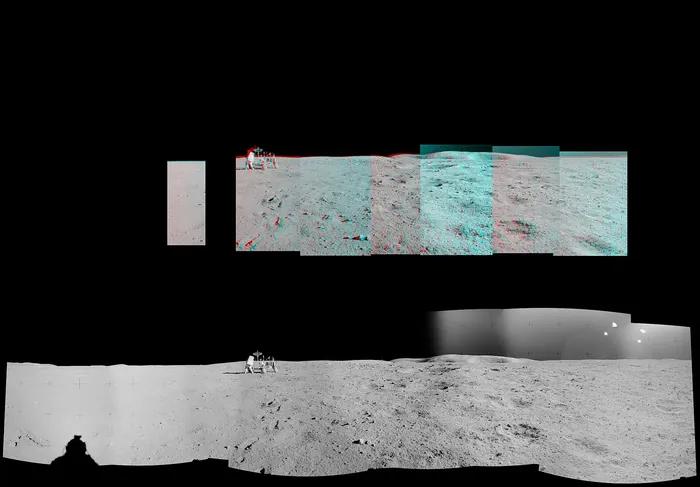
The pair drove more than 26 kilometres and Young, an engineer to his bones, staged what he called the lunar grand prix, throwing the rover through turns and over bumps while Duke filmed the wheels leaving the ground — footage engineers wanted badly and no simulation could produce. They also could not resist the gravity: both men jumped, Duke leapt too high, tipped backwards and landed on his life-support backpack, a moment that could have killed him and instead just frightened them both quiet.
Duke was 36, the youngest person ever to walk on the Moon, and before leaving he set down a plastic-wrapped photograph of his wife and two sons, with a message on the back saying this is the family of astronaut Duke from planet Earth, who landed in April 1972. He has said since that the sun has almost certainly bleached it blank by now. The gesture outlasts the image.