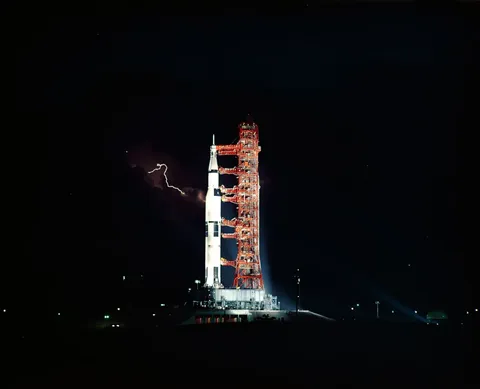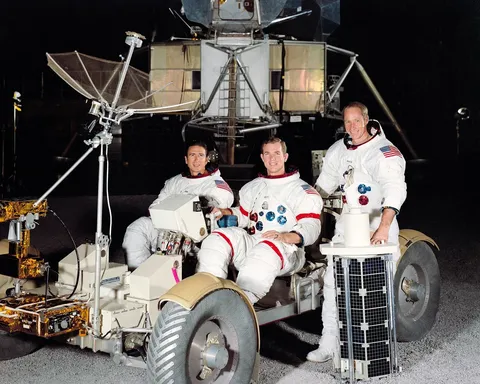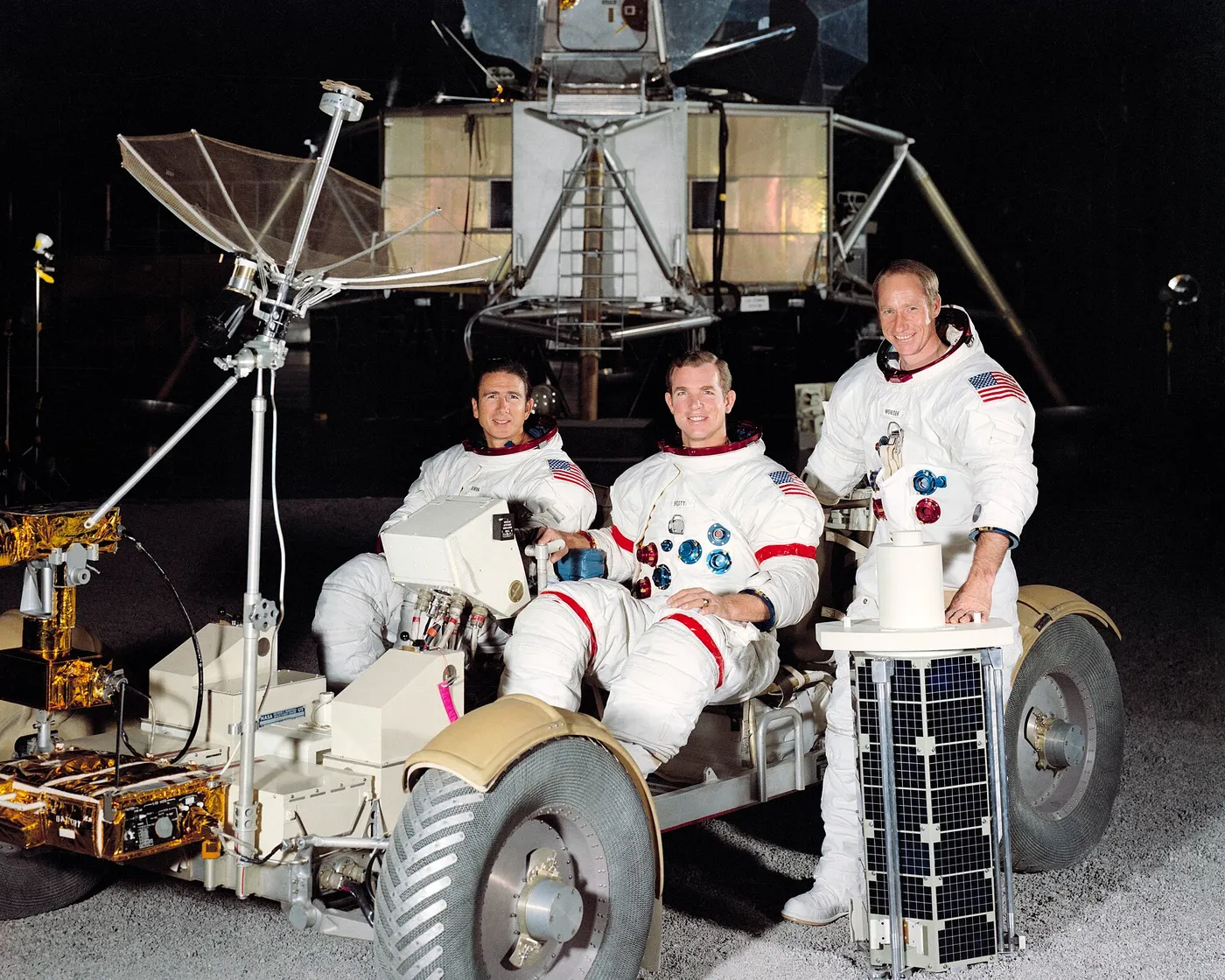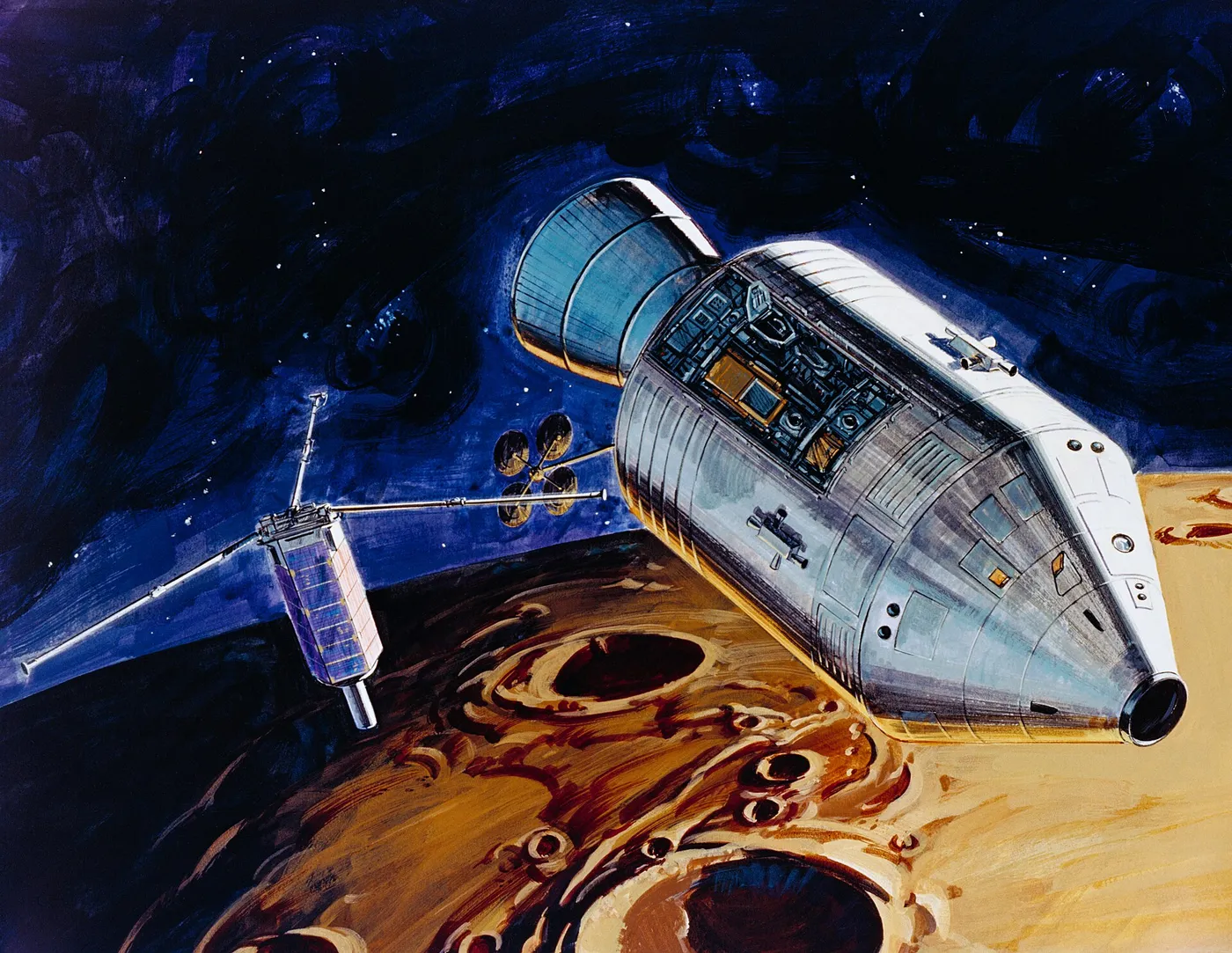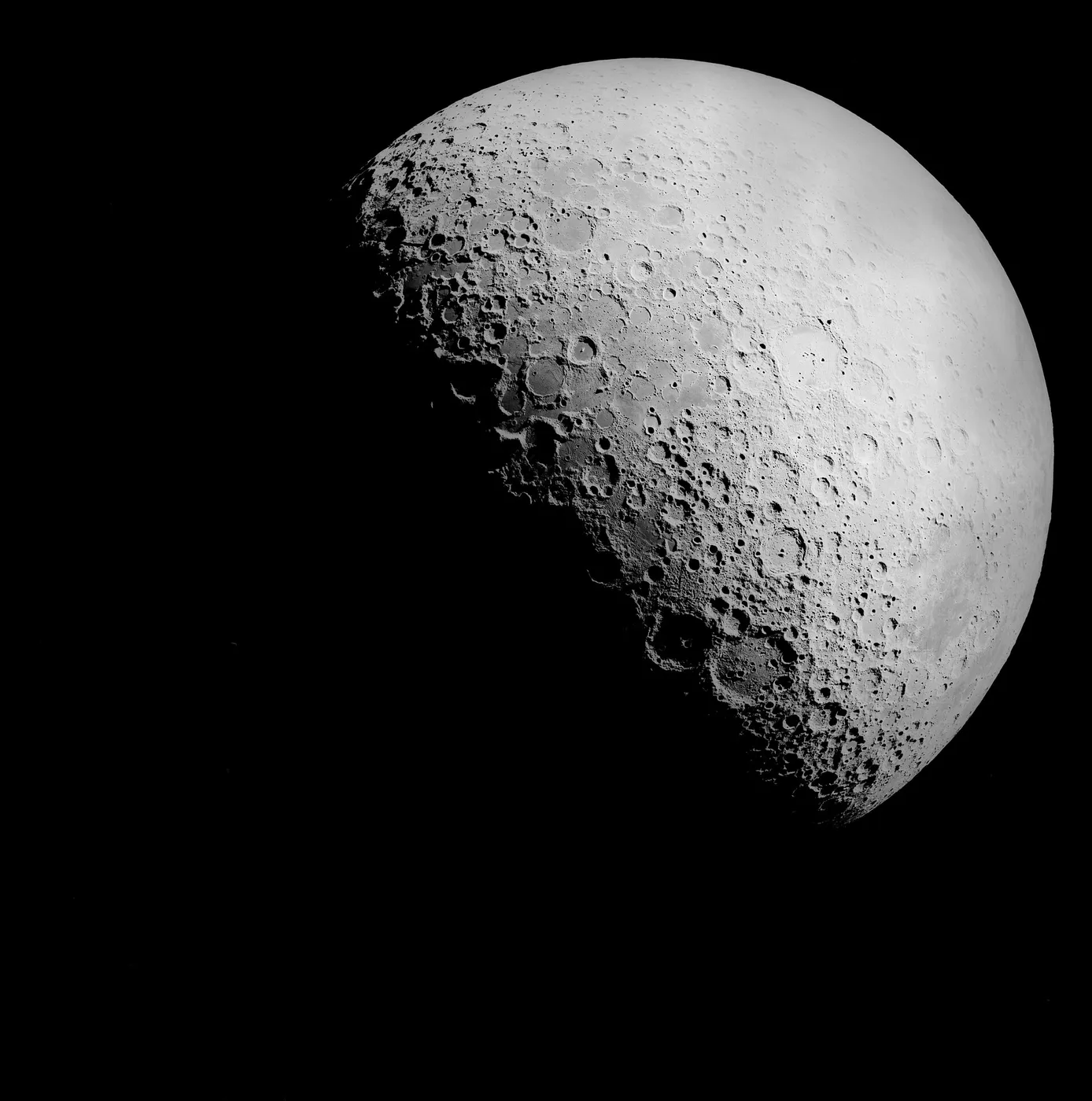
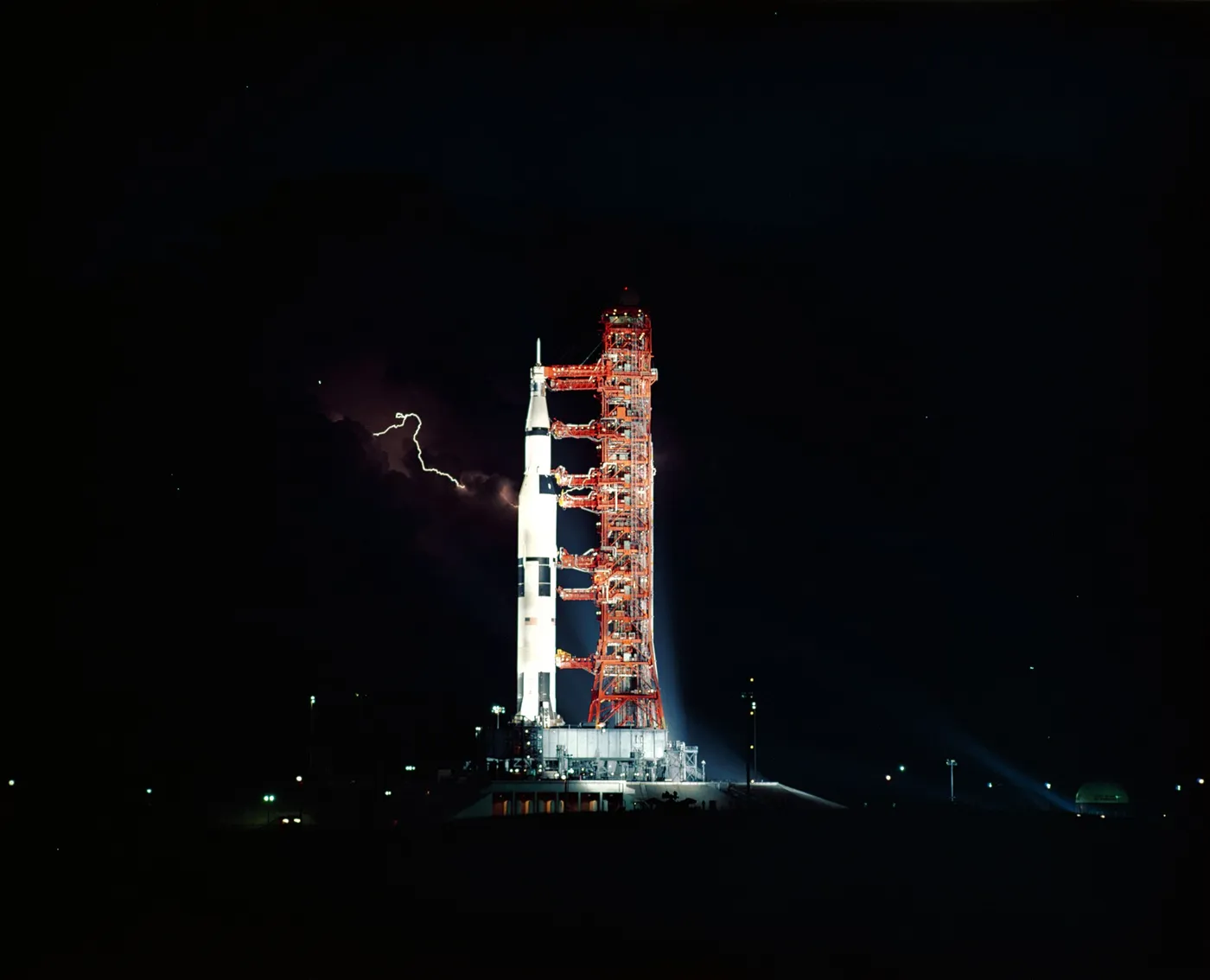
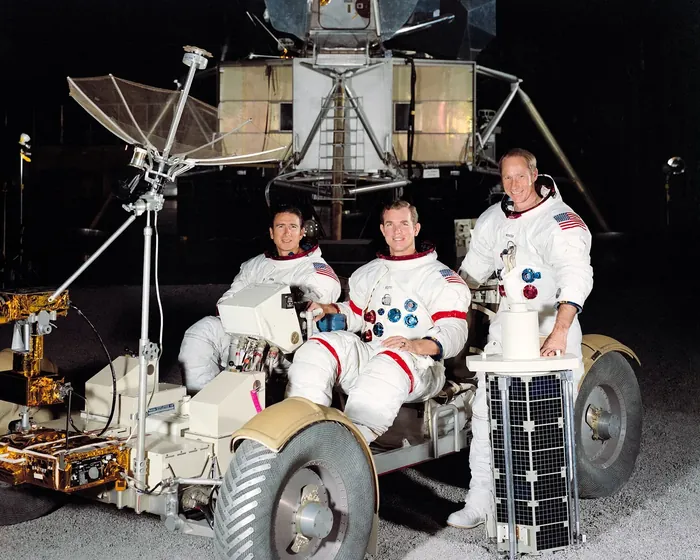
Apollo 15 was where the programme stopped proving it could land and started doing science. It was the first of the extended J-missions: a beefed-up lunar module able to stay three days, better suits, and above all a folding electric car. David Scott and James Irwin set down in July 1971 at Hadley-Apennine, hemmed in by mountains rising four kilometres above the plain and a canyon-like rille cut into the surface — the most spectacular ground anyone had attempted.
The Lunar Roving Vehicle changed everything. Where earlier crews had trudged a few hundred metres from the ladder, Scott and Irwin drove some 28 kilometres across three excursions, stopping at the edge of Hadley Rille to look down into a gorge that no photograph has ever quite conveyed. The rover was slow, skittish and steered from a hand controller, and it turned two men on foot into a genuine field expedition.
The prize came on the second day at Spur crater, when Scott spotted a pale crystalline rock sitting on a pedestal of dust, as if displayed. They knew immediately what it might be, and the transcript catches the excitement breaking through the discipline. It was anorthosite, roughly four billion years old, a piece of the Moon's original crust — the press promptly named it the Genesis Rock, and it is still one of the most studied samples ever returned.
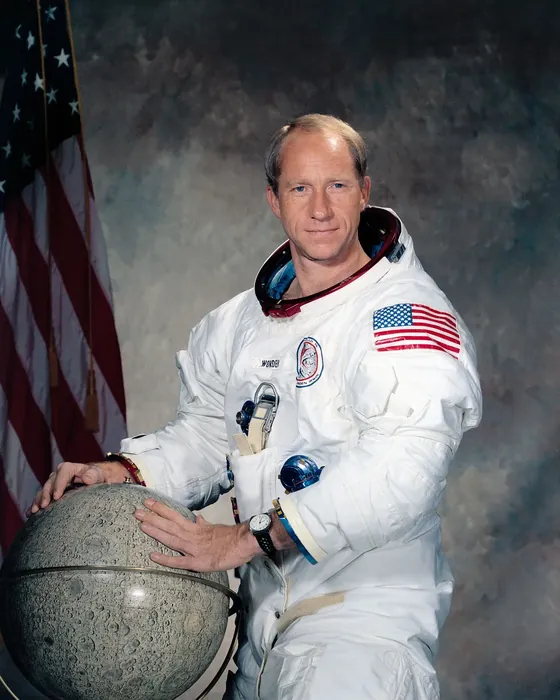
Scott also had a piece of theatre in mind. With the television camera running he held out a geological hammer and a falcon feather, dropped them together, and let the world watch them hit the dust at the same instant — Galileo's argument, finally staged in a vacuum. More privately, the crew left a small aluminium figure lying in the dust beside a plaque bearing the names of the fourteen astronauts and cosmonauts who had died, American and Soviet alike. It remains the only memorial on another world.
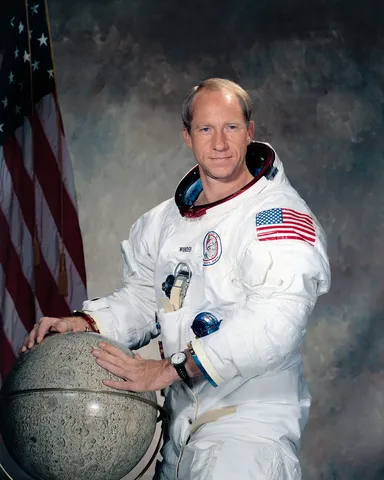
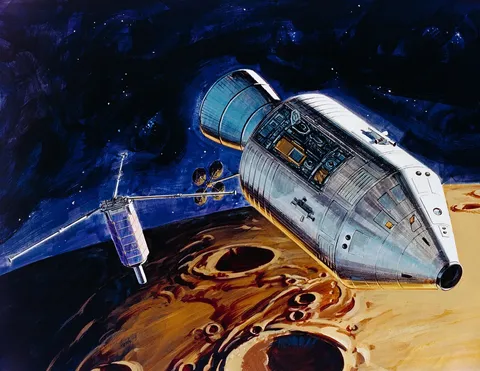
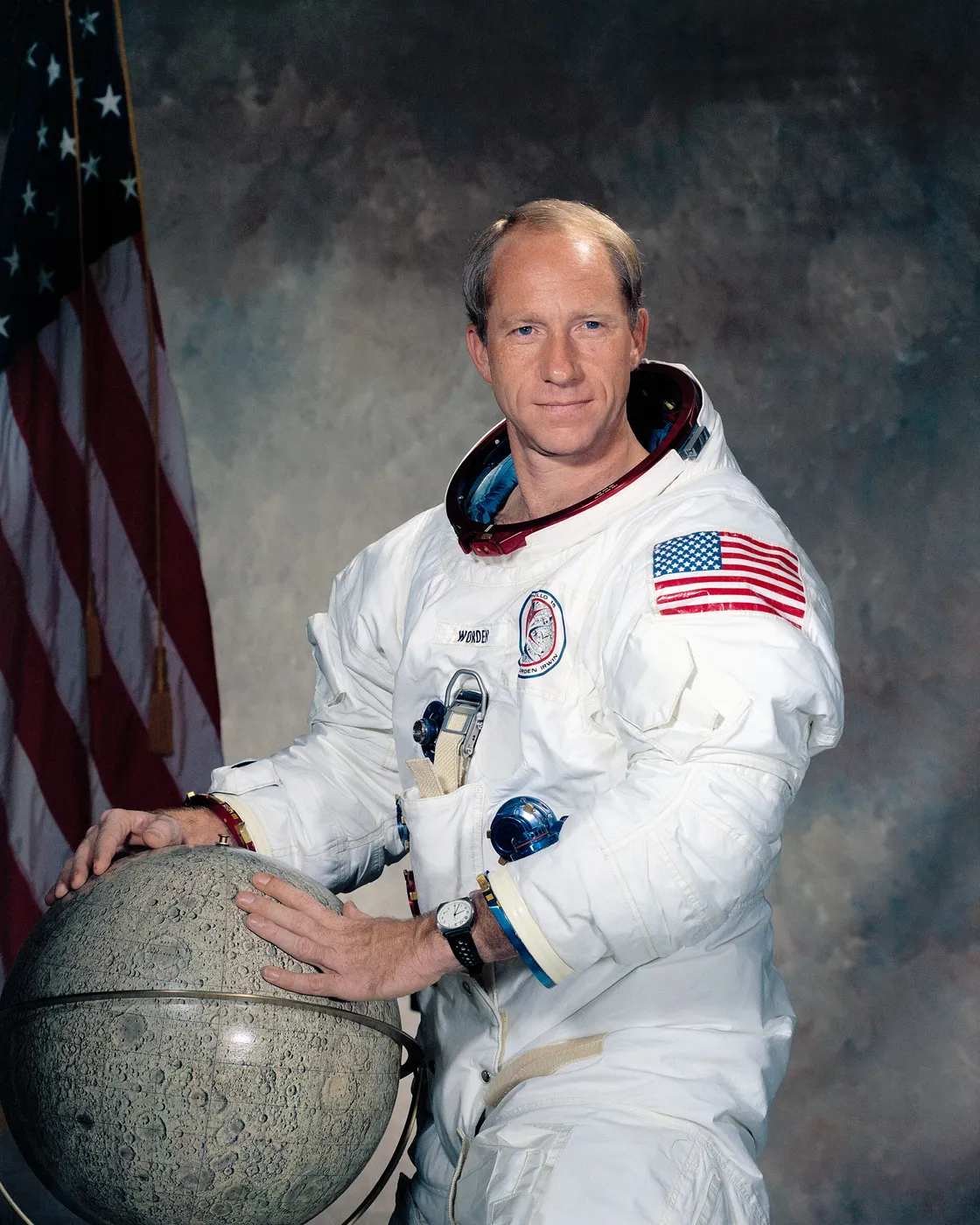
The mission's coda was less noble. Coming home, Alfred Worden made the first deep-space walk, crawling out between the Earth and the Moon to retrieve film cassettes with nothing but blackness in every direction. Then it emerged that the crew had carried roughly 400 unauthorised postal covers to the surface, some of which were sold. The reprimands ended all three men's flying careers — a shabby end for a mission that had otherwise raised the whole programme's ambition.