
Overview
H3-24 | Martian Moon eXplorer (MMX)
To Be DeterminedYoshinobu Launch Complex LP-2, Tanegashima Space Center, Japan
October 31, 2026 — 00:00 UTC
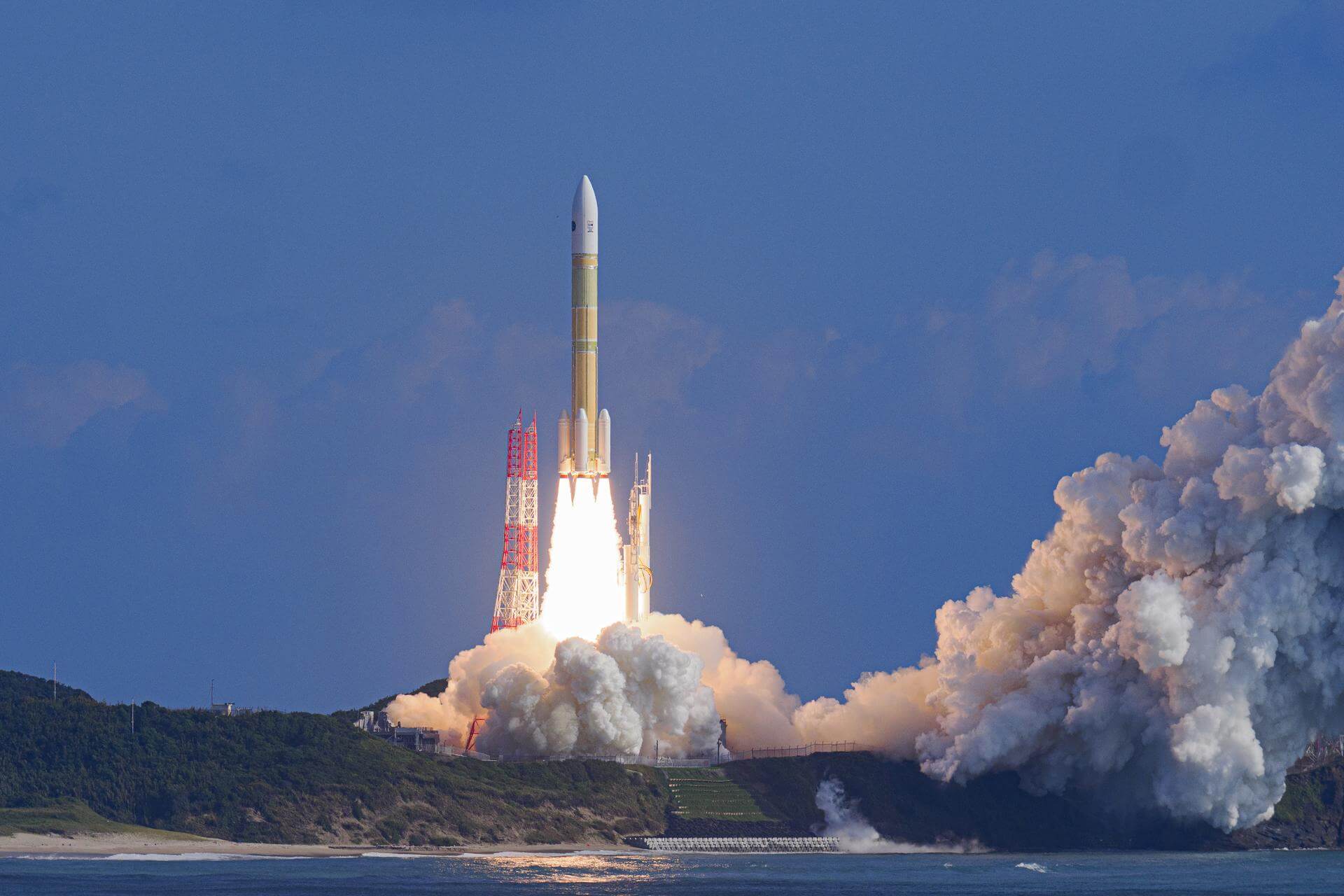
Image credit: Mitsubishi Heavy Industries

Launch Provider
Mitsubishi Heavy Industries
- Country
- Japan
- Founded
- 1884
- Leadership
- President: Seiji Izumisawa
- Launch Record
- 55 success, 2 failed
Mitsubishi Heavy Industries, Ltd. is a Japanese multinational engineering, electrical equipment and electronics company headquartered in Tokyo, Japan. MHI is one of the core companies of the Mitsubishi Group. MHI's products include aerospace components, air conditioners, aircraft, automotive components, forklift trucks, hydraulic equipment, machine tools, missiles, power generation equipment, printing machines, ships and space launch vehicles. Through its defense-related activities, it is the world's 23rd-largest defense contractor measured by 2011 defense revenues and the largest based in Japan.
Mission
Martian Moon eXplorer (MMX)
- Type
- Planetary Science
- Target Orbit
- Mars Orbit
MMX is a Japanese scientific mission to land on Phobos, one of the two moons of Mars, to collect samples before bringing them back to Earth. The mission includes a small French/German rover to explore the surface of Phobos.
Launch Vehicle
H3-24
- Height
- 63.0 m
- Diameter
- 5.27 m
- Liftoff Thrust
- 12142.0 kN
- Mass to GTO
- 7900.0 kg
- Reusable
- No
- Maiden Flight
- 2025-10-26
- Launch Success
- 1 / 1
- Consecutive Success
- 1
The H3 Launch Vehicle is an expendable launch system in development in Japan. Each H3 booster configuration has a two-digit and a letter designation that indicates the features of that configuration. The first digit represents the number of LE-9 engines on the main stage, either "2" or "3". The second digit indicates the number of SRB-3 solid rocket boosters attached to the base of the rocket, and can be "0", "2" or "4". All layouts of solid boosters are symmetrical. The letter in the end shows the length of the payload fairing, either short "S" or long "L". For example, an H3-24L has two engines, four solid rocket boosters, and a long fairing, whereas an H3-30S has three engines, no solid rocket boosters, and a short fairing.
Launch Site
Yoshinobu Launch Complex LP-2, Tanegashima Space Center, Japan
The Tanegashima Space Center is the largest rocket-launch complex in Japan. It is located on the southeastern tip of Tanegashima, an island located south of Kyushu, an island and region and Japan. It was established in 1969 when the National Space Development Agency of Japan (NASDA) was formed, and is now run by JAXA. The activities that take place at TNSC include assembly, testing, launching, and tracking satellites, as well as rocket engine firing tests.
Latest Updates
NET October.
January 07, 2026 — 15:51 UTC
Delayed to 2026 launch window due to H3 launch vehicle unavailability.
December 06, 2023 — 11:07 UTC